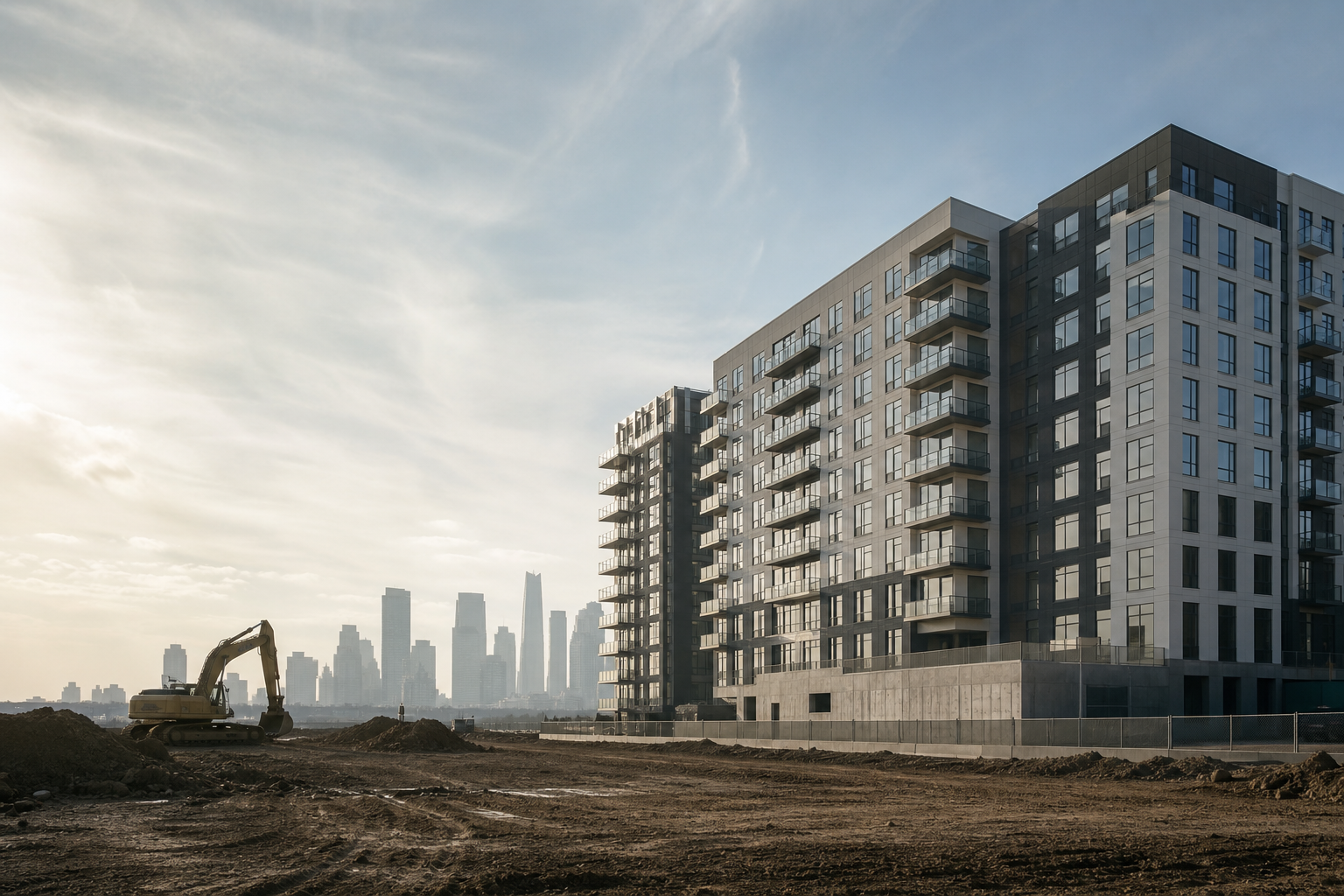
The capital stack got resolved on the debt side, not the equity side. Bonaventure broke ground on Attain at Swift Creek, a 344-unit community at 6805 Greenyard Road in Chesterfield County, Virginia. The $93.3 million project — $271,221 per unit, or roughly $256 per square foot against an average unit size of 1,058 square feet — is financed with a 40-year fixed-rate HUD Section 221(d)(4) loan originated by Walker & Dunlop.
Bonaventure is carrying the project on its own balance sheet through construction while it pursues a long-term equity partner. It is the firm's third groundbreaking of 2026; the three projects total nearly 950 units and $246.2 million.
This desk covered a Bay Area developer two days ago filling a construction gap with preferred equity priced at nearly 22% of the stack. This is the other answer to the same problem. Rather than pay for expensive mezzanine capital, Bonaventure used a construction-to-permanent instrument that is fixed, fully amortizing and non-recourse, and put its own balance sheet behind the rest while it shops the equity.
The trade-offs are real and they are not financial. HUD processing is slow, prevailing-wage requirements apply, and the sponsor accepts program-level oversight for the life of the loan. What it buys is the elimination of the two risks that have killed the most 2023–2026 vintage deals: construction-loan takeout risk and rate risk at stabilization. There is no refinance date to survive.
Sequencing matters as much as structure. Breaking ground before the equity partner is signed means marketing a project that is already funded, already priced and already under construction — a materially different pitch than a pro forma.
Implications. A 40-year fixed agency execution converts a development into something closer to a bond, which widens the buyer pool to core and insurance capital that will not touch construction risk. The cost is optionality — you cannot easily sell out of a 221(d)(4). For anyone underwriting Sun Belt and Mid-Atlantic starts right now, the question is no longer whether construction debt is available. It is which structure you are willing to be locked into for forty years.
Related coverage
Key Takeaways
- When equity is expensive, the cheapest partner is a forty-year fixed-rate loan.
- A construction-to-perm agency execution removes takeout risk and stabilization rate risk in one instrument.
- The cost of that certainty is optionality — you cannot easily sell out of a 221(d)(4).
Bonaventure via Connect CRE, Aug 27 2026 — https://www.connectcre.com/stories/bonaventure-breaks-ground-on-93m-development-in-virginia/
Never miss a Signal
Get the daily brief that busy CRE professionals rely on.