The Signal:
- The anchor box is no longer a department store or a discounter. It is a gym.
- 320 for-sale townhomes inside a retail-anchored project is a different risk profile than 320 apartments.
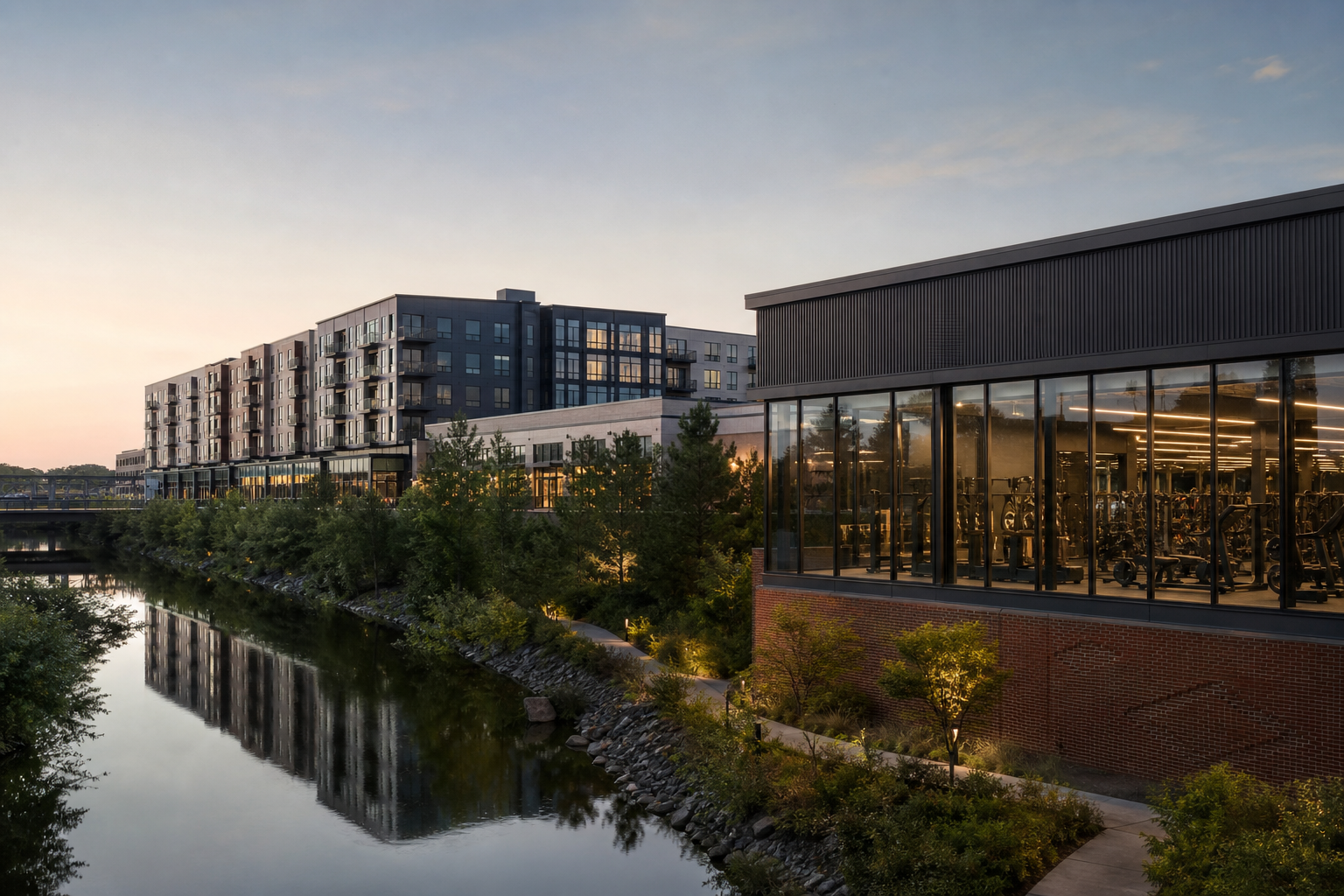
Two structural shifts are visible in a single leasing announcement. The first is what qualifies as an anchor. A 30,000 square foot fitness concept sitting alongside a 35,000 square foot Whole Foods means the traffic-generating tenant is now a service use that cannot be delivered by a distribution center. Grocery and fitness are the two categories that reliably bring the same customer back multiple times a week, and both are e-commerce resistant for the same reason.
The second is the housing mix. Most mixed-use of the last decade defaulted to apartments because rental cash flow is easier to underwrite and easier to finance. Frederick Brickworks is delivering 332 apartments and 320 for-sale townhomes through merchant builders Wormald and NVR.
That combination changes the capital structure materially. For-sale product converts land basis into velocity; proceeds recycle at closing rather than capitalizing into a stabilized value years out. It also imports homebuilder risk: absorption pace, mortgage rates at delivery, and standing-inventory carry, none of which behave like lease-up risk. Using NVR, a public builder, transfers a meaningful share of that exposure off the master developer's balance sheet.
Frederick is the right test market for it. It is far enough from Washington and Baltimore to have its own price point, close enough to capture spillover demand, and 65 acres is enough land to phase without cannibalizing.
The number to watch is 2028. Phase 1 completion is two years out, which means this project underwrites through a construction-cost and rate environment nobody can currently forecast.
Implications: For retail developers, the anchor question has moved from credit tenancy to visit frequency, and fitness now competes with grocery on that metric. For mixed-use sponsors, pairing for-sale and rental housing in one project blends two unrelated risk curves and requires two separate capital strategies. For land owners near secondary metros, 65-acre assemblages are viable again when the program includes for-sale product that can absorb the basis. For lenders, a merchant-builder takedown structure is the mechanism that makes the residential component financeable; confirm it exists before crediting the absorption schedule.
Related coverage
Key Takeaways
- When the anchor is a gym and a third of the housing is for sale, the developer is underwriting frequency and velocity rather than credit and cap rate.
- The anchor question has moved from credit tenancy to visit frequency, and fitness now competes with grocery on that metric
- For-sale housing converts land basis into velocity but imports homebuilder risk that does not behave like lease-up risk
- A public merchant builder takedown transfers absorption exposure off the master developer's balance sheet
- Blending rental and for-sale housing in one project requires two separate capital strategies, not one
- A 2028 Phase 1 delivery underwrites through a cost and rate environment nobody can currently forecast
Connect CRE - Club Studio to Co-Anchor $450M Mixed-Use Development in Maryland, August 17 2026
Never miss a Signal
Get the daily brief that busy CRE professionals rely on.