➤ Key Highlights
29 large AI infrastructure projects are underway or planned across the U.S., many in rural markets
16 projects are actively under construction; 13 remain in planning
Hotels near select sites saw 15%+ annualized occupancy gains during peak construction phases
New hotel supply remains limited despite demand, reflecting developer caution
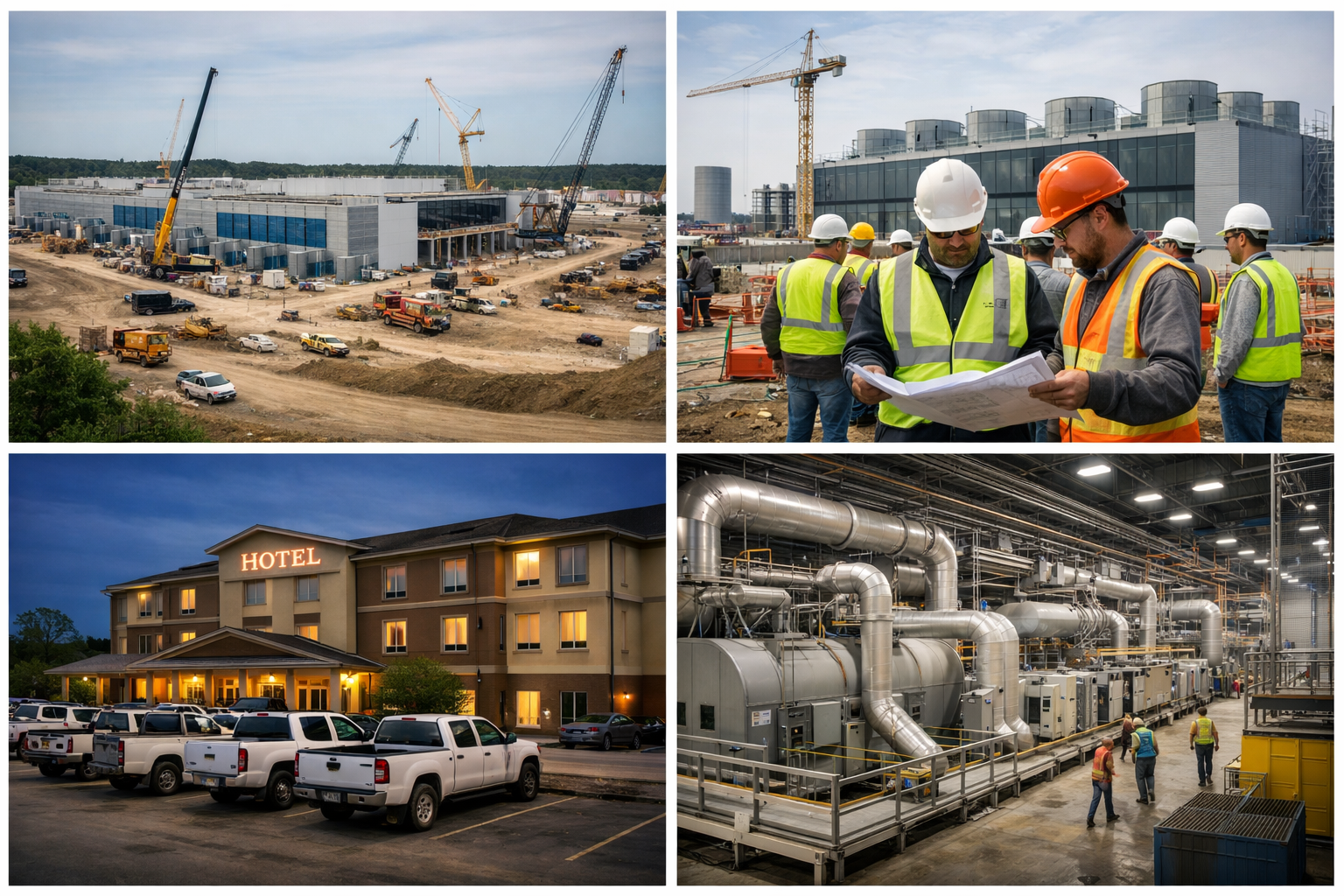
According to Costar ajor AI infrastructure projects — primarily data centers — are increasingly locating in sparsely populated regions with access to power and water. These projects require large, temporary construction labor forces that rely almost entirely on nearby hotels rather than permanent housing.
Because these markets typically have thin hotel inventory, even modest labor inflows have driven noticeable occupancy gains. CoStar measured performance within 5–15 miles of active sites and found sustained increases near projects in locations such as Homer City, PA and Abilene, TX, where annualized occupancy rose more than 15%.
However, CoStar also notes a critical constraint: once construction wraps, permanent staffing levels drop sharply, and hotel demand typically fades as operations shift to remote monitoring and lean on-site teams.

➤ TAKEAWAY
This is not a secular hotel demand story. It’s a construction-cycle utilization story.
Here’s where people get this wrong:
❌ Treating AI data centers like factories with permanent employment
❌ Underwriting new hotel supply off peak construction demand
❌ Assuming long-term ADR durability once projects stabilize
Here’s what actually works:
✅ Existing limited-service hotels near large, multi-phase builds
✅ Assets with low basis that can monetize a 24–48 month demand window
✅ Operators who understand construction crew patterns, not leisure or corporate travel
The restraint shown by hotel developers matters. Only six of the 16 active projects saw nearby hotel supply additions — a sign the market recognizes this demand as temporary, not structural.


