The Signal:
- Convention-anchored hotel development is proceeding through a high-rate cycle.
- Public and private capital are co-underwriting the demand base.
- The bet is on group and convention demand, not transient RevPAR.
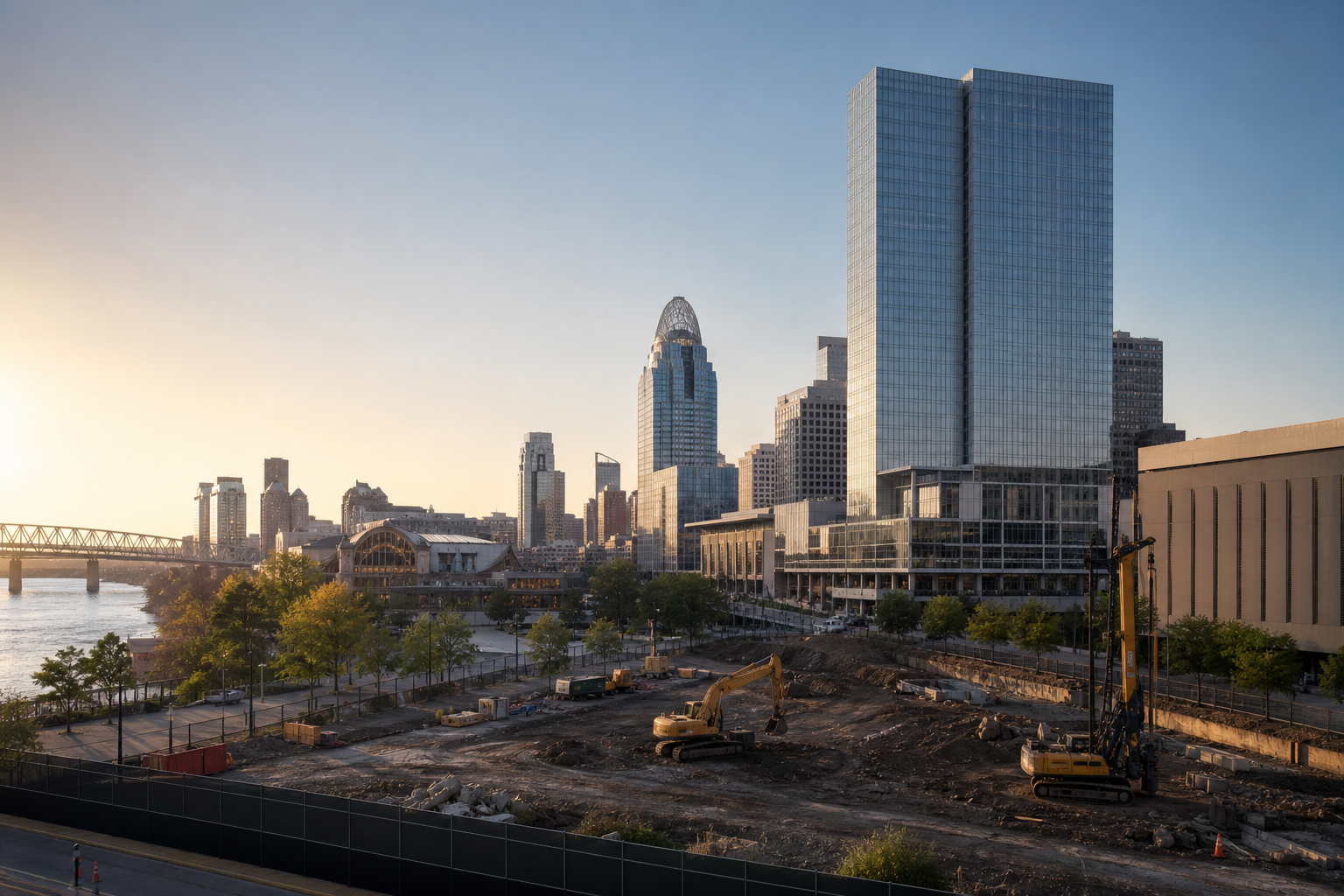
While transient hotel performance wobbles quarter to quarter, convention-anchored development keeps moving because its demand base is contracted group business, not walk-in room nights. Cincinnati's $540M headquarters hotel is a bet on filling a convention center, not chasing nightly rates.
The financing structure is the tell. A public/private revitalization plan spreads risk across the city, the state, and private developers — the only way a 700-room, multi-year hotel pencils when capital is expensive and construction costs remain elevated.
The structural read is that hospitality's durable development capital is flowing to demand generators — convention centers, stadiums, transit — where a public partner anchors the pro forma.
Implications: Markets with committed convention infrastructure can still attract large-scale hotel capital in a hard rate environment. Developers get cover to build where a public partner shares delivery risk. For investors, group-demand hotels underwrite more defensively than transient assets.
Related coverage
Key Takeaways
- Convention-anchored hotels are still breaking ground because their demand is contracted, not transient — and a public partner carries the pro forma. Convention-anchored hotel development is proceeding through a high-rate cycle. Public and private capital are co-underwriting the demand base. The bet is on group and convention demand, not transient RevPAR.
WVXU — Construction starts on Cincinnati's downtown headquarters hotel, July 21, 2026 · Fox19 — Ground broken on 700-room Marriott hotel in downtown Cincinnati, July 21, 2026 · WCPO — Construction begins on $540M convention headquarters hotel, July 2026
Never miss a Signal
Get the daily brief that busy CRE professionals rely on.