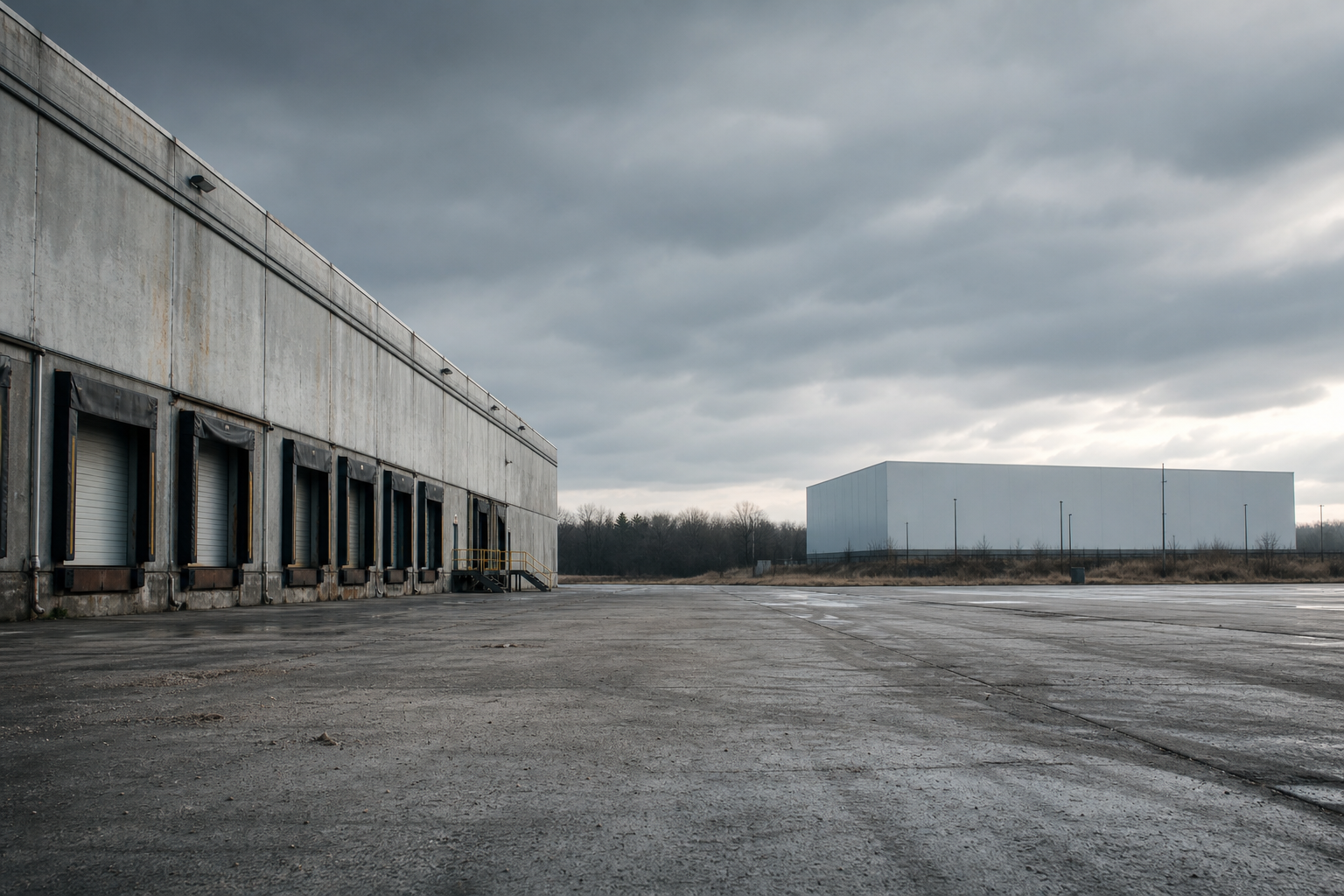
The headline number is negative. The composition is not. U.S. cold storage posted negative net absorption in the first half of 2026 — the sector's first negative first half since 2007. Roughly 56 million cubic feet of move-outs against 41 million cubic feet of deliveries pushed vacancy to 7.7%.
Cold storage spent five years being underwritten as a scarcity trade. Rents doubled. Merchant builders chased the spread. The first half of 2026 is the bill arriving — but not evenly. Roughly 73% of vacant cold-storage square footage now sits in older facilities. Legacy assets have been giving back space since 2022 while post-2020 product keeps filling.
Demand did not disappear. Online grocery grew 21.5% year over year in July while in-store sales fell 2.6%. Temperature-sensitive pharmaceuticals now account for roughly 35% of pharma sales, up from 26% in 2017, and Newmark projects 8.3% compound annual growth in biologics cold-chain demand through 2033. That is a durable demand curve pointed at a specific kind of building.
The constraint is the building. At $130 to $350 per square foot, ground-up cold storage only pencils as build-to-suit, owner-user or pre-leased. At $100 to $150 per square foot, converting a dry warehouse pencils far more often. Newmark expects both to be the dominant delivery paths from here.
Grocery is the drag. Food prices remain more than 30% above 2019 levels, SNAP benefits were reduced, and gas prices spiked since March. Unit sales fell 1.8%, with fresh produce hit hardest — though frozen produce grew more than 5%.
Implications. Underwrite the vintage, not the sector. A 1990s freezer and a 2023 automated facility in the same market are not the same asset and should not share a cap rate. If you own legacy stock, your exit is a conversion buyer pricing off $100–$150/sf, not a stabilized buyer pricing off replacement cost. If you are building, the only defensible pro forma is a signed tenant.
Related coverage
Key Takeaways
- Cold storage didn't lose demand — it lost the right to charge scarcity rent for obsolete buildings.
- The competitive threat to a legacy freezer is a dry warehouse with a better roof and a cheaper path to conversion.
- Vintage belongs in the credit memo next to market and sponsor.
Newmark 1H 2026 U.S. Cold Storage Market Overview via Connect CRE, Aug 28 2026 — https://www.connectcre.com/stories/cold-storage-faces-a-transition-as-long-term-demand-continues-building/ · Newmark 1H 2026 U.S. Cold Storage Market Overview — https://www.nmrk.com/insights/market-report/1h-2026-u-s-cold-storage-market-overview
Never miss a Signal
Get the daily brief that busy CRE professionals rely on.