📢Good morning, today’s Signals are brought to you by CRE 360 Signal™.
Buyer sentiment for core multifamily assets improved significantly in Q4 2025, according to the latest underwriting survey from CBRE. While investor optimism increased, underwriting assumptions—including cap rates, IRR targets, and rent growth expectations—remained largely stable for the second consecutive quarter.
🎧 Busy to read? Catch the Daily Podcast (Subscribe on YouTube, Apple, Spotify)➤ SIGNAL
Investor sentiment toward core multifamily acquisitions strengthened in the fourth quarter of 2025. According to CBRE’s Q4 Multifamily Underwriting Survey, 76% of respondents reported positive sentiment for core acquisitions, up from 64% in Q3 and 44% a year earlier.
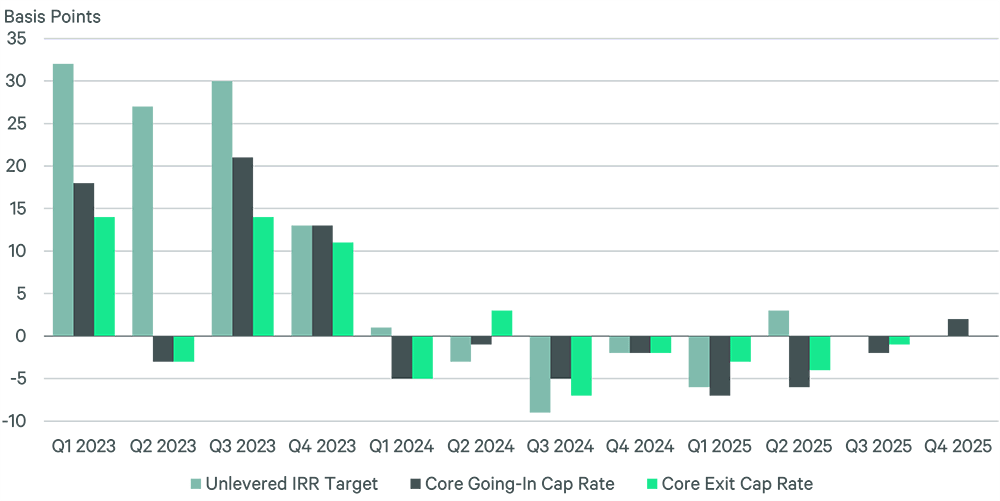
Quarterly Changes in IRR Target & Cap Rates for Core Multifamily Assets
Source: CBRE
The improvement in sentiment coincided with a 9% year-over-year increase in multifamily investment volume in 2025, with CBRE expecting similar growth in 2026.
Despite improving investor outlook, underwriting metrics changed only slightly. The average going-in cap rate for core multifamily assets increased by 2 basis points to 4.75%, while the average exit cap rate remained at 4.95%. Unlevered IRR targets held steady at 7.70% for the third consecutive quarter.
The spread between going-in and exit cap rates for core assets narrowed to 20 basis points, well below the typical historical range of 50–60 basis points. CBRE expects this spread to widen gradually over the next two years as going-in cap rates compress more than exit cap rates.
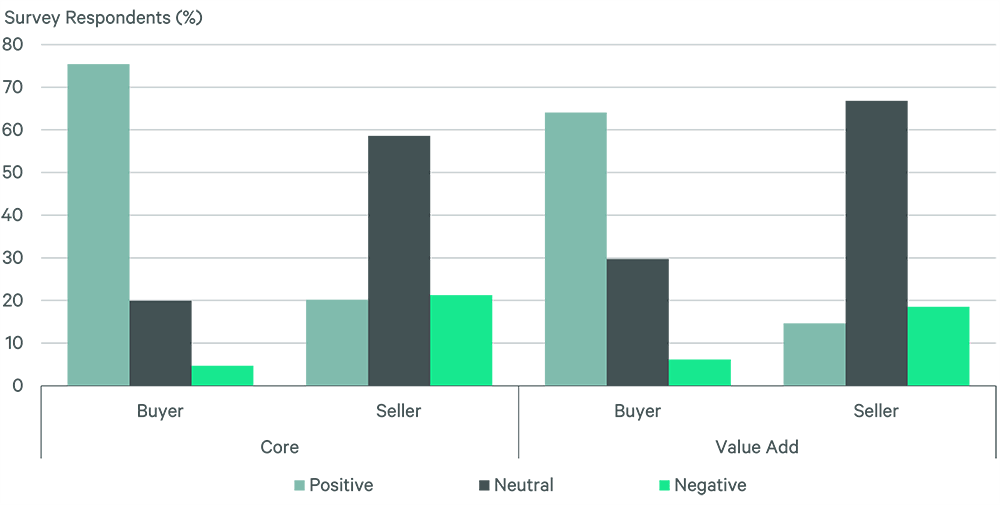
Buyer & Seller Sentiment for Core & Value-Add Multifamily Assets
Source: CBRE
Underwriting assumptions for rent growth moderated slightly. Expected annual rent growth over the next three years declined to 2.7% for core assets and 3.1% for value-add properties, reflecting slower rent growth in several markets during the second half of 2025.
Positive sentiment among value-add buyers declined modestly to 63% of respondents, down from 70% in Q3. Seller sentiment for both core and value-add assets remained largely neutral.
Across markets, underwriting assumptions were mostly stable. Sixteen of the 19 markets tracked by CBRE recorded unchanged IRR targets, and no market saw cap rate movements greater than 25 basis points.
Key Takeaway
While core buyer sentiment improved significantly during the quarter, the survey indicates that underwriting assumptions across the multifamily sector remain largely unchanged.
CBRE notes that bid-ask spreads between buyers and sellers are gradually narrowing, although some investors remain hesitant to bring assets to market. However, the firm expects selling activity to increase as buyers take advantage of improving liquidity in the debt markets and more attractive financing conditions.
CRE 360 Signal™ — Commercial Real Estate Intelligence
▼ EDITORIAL DESK TOP PICKS
Amazon Plans Major Office Footprint Reduction — The tech giant is preparing to shrink its office portfolio significantly as AI and hybrid work reshape space demand.
Banks Boost Apartment Lending Even as Troubled Loans Increase — Lenders are expanding multifamily lending despite rising CRE distress in other sectors.
CRE Transaction Activity Projected to Top $66B Early in 2026 — Market data suggests a modest recovery in early-year deal volume across major property sectors.
Private Equity Continues Buying Public REITs — Take-private deals are accelerating as investors target undervalued listed real estate companies.
AI Is Reshaping Real Estate Decision-Making — Predictive analytics tools are rapidly transforming investment strategy and building operations.
Cybersecurity Risks Becoming Major Concern for Real Estate Firms — Increasing cybercrime is forcing property companies to upgrade digital protections.
CRE Investment Activity Expected to Rise 16% in 2026 — Market forecasts suggest a strong rebound driven largely by income returns rather than appreciation.
Industrial and Multifamily Expected to Lead CRE Recovery — Analysts see these sectors driving the next cycle while office recovery lags.
Apartment Market Showing Early Signs of Turnaround — Multifamily fundamentals may be stabilizing after rent declines in several markets.

Get Core Multifamily Sentiment Improves as Investment Activity Picks Up in your inbox
Survey shows improving acquisition sentiment while cap rates, IRR targets and rent assumptions remain largely unchanged.