📢 CRE 360 Signal™.
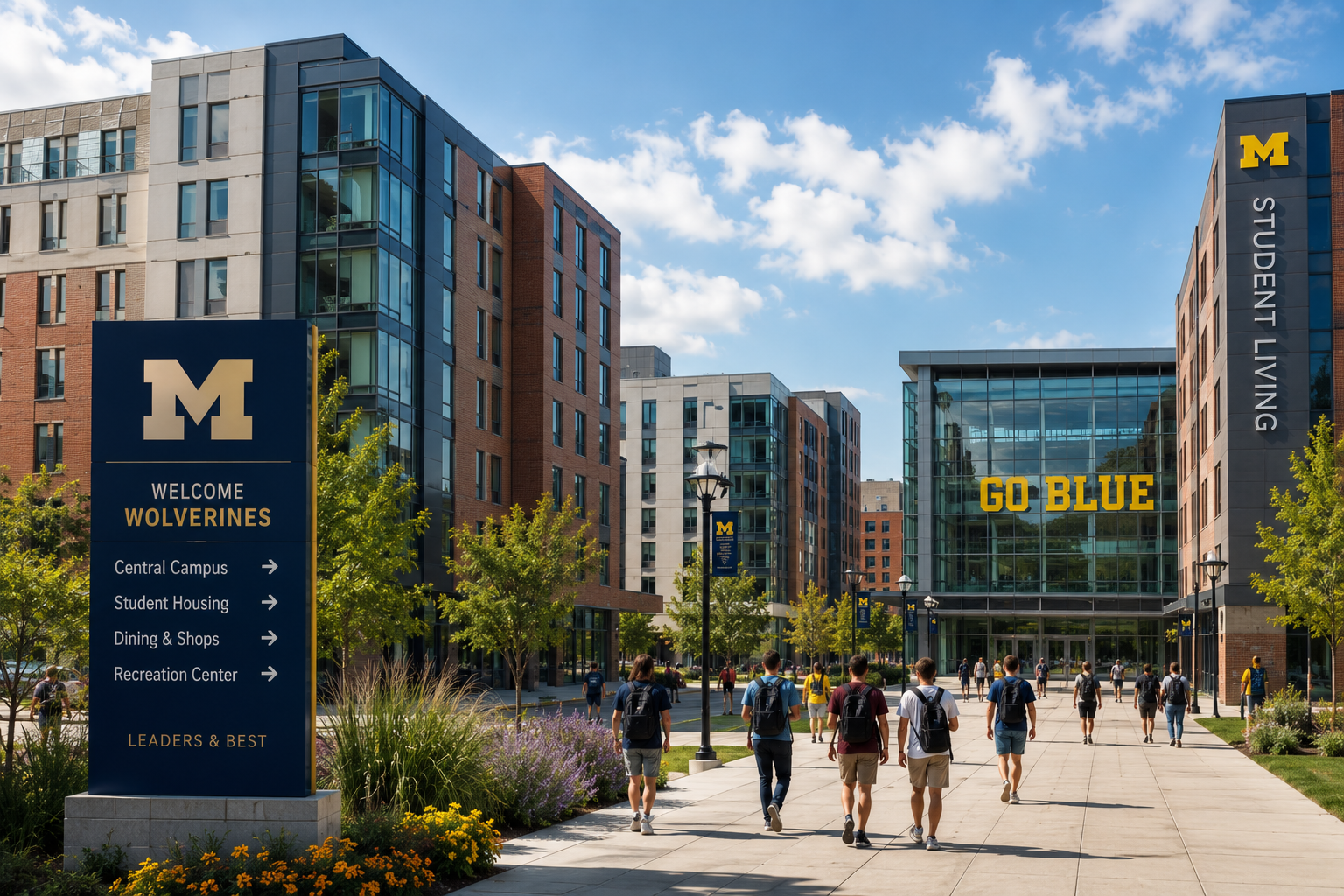
Core Spaces closed its third fund at $1.64 billion — 64% above its $1 billion target — with 17 institutional LPs and an 80% re-up rate. The platform controls 74,440 beds and a 53,860-bed pipeline restricted exclusively to Tier 1 flagship public universities. This is not a fund close story. It is the moment institutional capital formally separated student housing from conventional multifamily and gave it its own allocation slot — the same reclassification industrial went through from 2016 to 2019.
🎧 Busy to read? Catch the Daily Podcast (Subscribe on YouTube, Apple, Spotify)➤ SIGNALS
Core did not close a large fund — it closed a discretionary closed-end vehicle, a structure almost never used in student housing, which has historically run on programmatic JV equity and deal-by-deal syndications. The distinction matters operationally: discretionary capital means Core breaks ground without a syndication round, executes acquisitions without partner-approval lag, and moves from LOI to close faster than any programmatic JV competitor. At a flagship Power 5 campus where available sites are scarce and entitlement timelines run years, a 12-to-18-month head start is not a marginal edge — it is structural monopoly on the next supply cycle. The 80% LP re-up rate validates the platform's durability: in a fundraising environment where many managers are reporting sub-50% re-ups after the 2022-to-2024 rate cycle, Core's figure signals its prior fund survived without LP attrition.
The demand fundamentals are tighter than they have been in five years. Yardi's 200-university preleasing tracker shows 65.5% through March 2026, versus 62.1% a year earlier — a 340 basis point acceleration against the slowest new supply pipeline since 2021. Student housing demand is enrollment-driven, not employment-driven, making it structurally counter-cyclical: when the labor market softens and households delay formation, graduate school enrollment goes up. Core's restriction to Tier 1 flagship universities is not aesthetic — it is a liquidity decision. A 300-bed development at Michigan or Ohio State carries an exit buyer pool of six to ten institutional operators. A comparable development at a regional directional school carries two or three. That exit liquidity gap compounds into 50 to 100 basis points of cap rate spread at disposition.
The institutional bifurcation is already visible. Marcus & Millichap's Pine Rock sale in mid-May — a B/C vintage asset near a directional school — cleared nearly 200 basis points wide of a comparable Power 5-adjacent deal in the same week. This is the early-2010s industrial separation playbook replaying: gateway assets with institutional tenant bases repriced as a premium sub-class first, then the rest of the sector followed over five years. Student housing at flagship universities is at the beginning of that arc.
IMPLICATIONS
Landowners with entitled sites adjacent to Power 5 campuses should update valuations immediately. Core's discretionary vehicle creates an institutional bid at those sites that did not exist at this scale six months ago. Combined with Blackstone's American Campus Communities platform and Greystar's student housing arm, there is now genuine competitive tension at the top of the market — real price discovery for the first time this cycle.
Construction lenders should apply the flagship-versus-directional filter as a primary underwriting variable. A purpose-built development at a flagship campus with 60%+ preleasing by March is a fundamentally different credit than a speculative build at a regional school — different exit pool, different renewal durability, different replacement-cost protection. Pricing both at the same spread is a mispricing the market will correct. Multifamily allocators still treating student housing as a sub-sector should reconsider: it now has its own closed-end institutional vehicle, a benchmarked preleasing metric, and a distinct underwriting thesis. It has earned its own line item.
Key Takeaways
Core Spaces did not just close the largest student housing fund in history — it permanently separated the asset class from multifamily in the institutional allocation stack, and every flagship university landowner, competing developer, and construction lender now has to update their model.
CRE 360 Signal™ — Commercial Real Estate Intelligence
▼ EDITORIAL DESK TOP PICKS
Capital Markets / Debt / Distress
Extend-and-pretend era is ending for troubled CRE loans — Bloomberg reports lenders are increasingly forcing sales, write-downs, and foreclosures instead of extending weak office debt.
2025 CMBS reappraisals show median 53% value decline — Trepp says $23B of collateral was reappraised at steep discounts, highlighting the depth of office distress.
Office loans continue driving CMBS special servicing higher — GlobeSt reports refinancing failures are pushing more office-backed debt into distress workouts.
20 Times Square loan sent back to special servicing — The ground-lease debt tied to the Times Square hotel/retail property missed maturity.
CMBS maturity pressure intensifies in May — Trepp says May 2026 maturities are highly concentrated in office assets and refinancing remains difficult.
Commercial mortgage originations jump 52% year-over-year — ConnectCRE reports CRE lending activity has reached its strongest level in five years.
Office / Leasing / Workplace
Penn Station district office boom accelerates — WSJ reports Midtown West office demand is surging around Vornado’s redeveloped Penn Station corridor.
Brookfield closes $1.9B refinance for Two Manhattan West — CoStar says lenders are still aggressively financing top-tier office product.
Office fit-out costs structurally reset higher — JLL says average office buildout costs in North America reached roughly $295 per SF.
Return-to-office growth slowed in April — Commercial Property Executive reports rising commuting costs may be softening office attendance momentum.
Baker McKenzie expands to 122K SF at 10 Bryant Park— Large law firms continue anchoring premium Midtown office demand.
AI startup Forus signs 25K SF SoHo office lease — Commercial Observer reports AI firms are increasingly becoming meaningful office tenants in Manhattan.
Industrial / Logistics / Data Centers
Blackstone data-center REIT raises $1.75B in IPO — Reuters says investors continue pouring capital into digital infrastructure platforms.
Nebius breaks ground on 400-acre Missouri data-center campus — The company’s first U.S. gigawatt-scale AI campus is moving forward near Kansas City.
Data-center power demand drives 76% jump in grid prices — Bloomberg says hyperscaler demand is materially reshaping U.S. electricity economics.
U.S. may finance nuclear reactors tied to AI infrastructure — Bisnow reports the Energy Department is exploring support for reactors powering data centers.
New state legislation targets data-center expansion — S&P says lawmakers in nine states are proposing restrictions or moratoriums on large projects.
Google files plans for new Virginia data-center campus — DCD reports Google is continuing hyperscale expansion outside Richmond.
Data centers now driving industrial demand nationally — Bisnow says logistics and manufacturing tied to AI infrastructure are reshaping industrial development.
Texas powered-land race intensifies for hyperscale users — Multiple developers filed plans for large AI-focused campuses outside Austin.
Multifamily / Housing / Hospitality
San Jose office tower secures $74M for residential conversion — Multi-Housing News says adaptive reuse financing continues accelerating.
Upper West Side apartment tower refinanced with $355M loan — Multifamily debt remains available for high-quality urban assets.
Orlando apartment absorption drops 60% — GlobeSt says slowing population growth is softening multifamily demand in key Sun Belt metros.
Multifamily rent declines reach nearly three years — GlobeSt reports monthly rent softness is spreading, though unevenly by unit type.
Charlotte hotel being converted into student housing — ConnectCRE says adaptive reuse remains one of the most active redevelopment themes.
Hyatt Regency Ontario lands $103.5M financing package — JLL arranged tax-exempt bonds and C-PACE financing for the hotel repositioning.
Retail / Construction / Broader Signals
Construction input costs jump 6.2% in first four months — ENR says 2026 cost inflation has already exceeded the previous three years combined.
Retail redevelopment and leasing momentum continues building — ICSC says lender activity and retailer expansion remain strong entering summer 2026.
TA Realty buys Atlanta Whole Foods-anchored retail center — Grocery-anchored retail remains one of the strongest investment categories.
Construction costs reaccelerate due to energy shock — GlobeSt reports rising energy and materials prices are again pressuring development feasibility.

Related coverage
Get Core Spaces Closes $1.64B — Student Housing Just Graduated to Its Own Asset Class in your inbox
An 80% LP re-up rate and a 74,440-bed platform confirm institutional capital has permanently separated student housing from multifamily.