📢 CRE 360 Signal™.
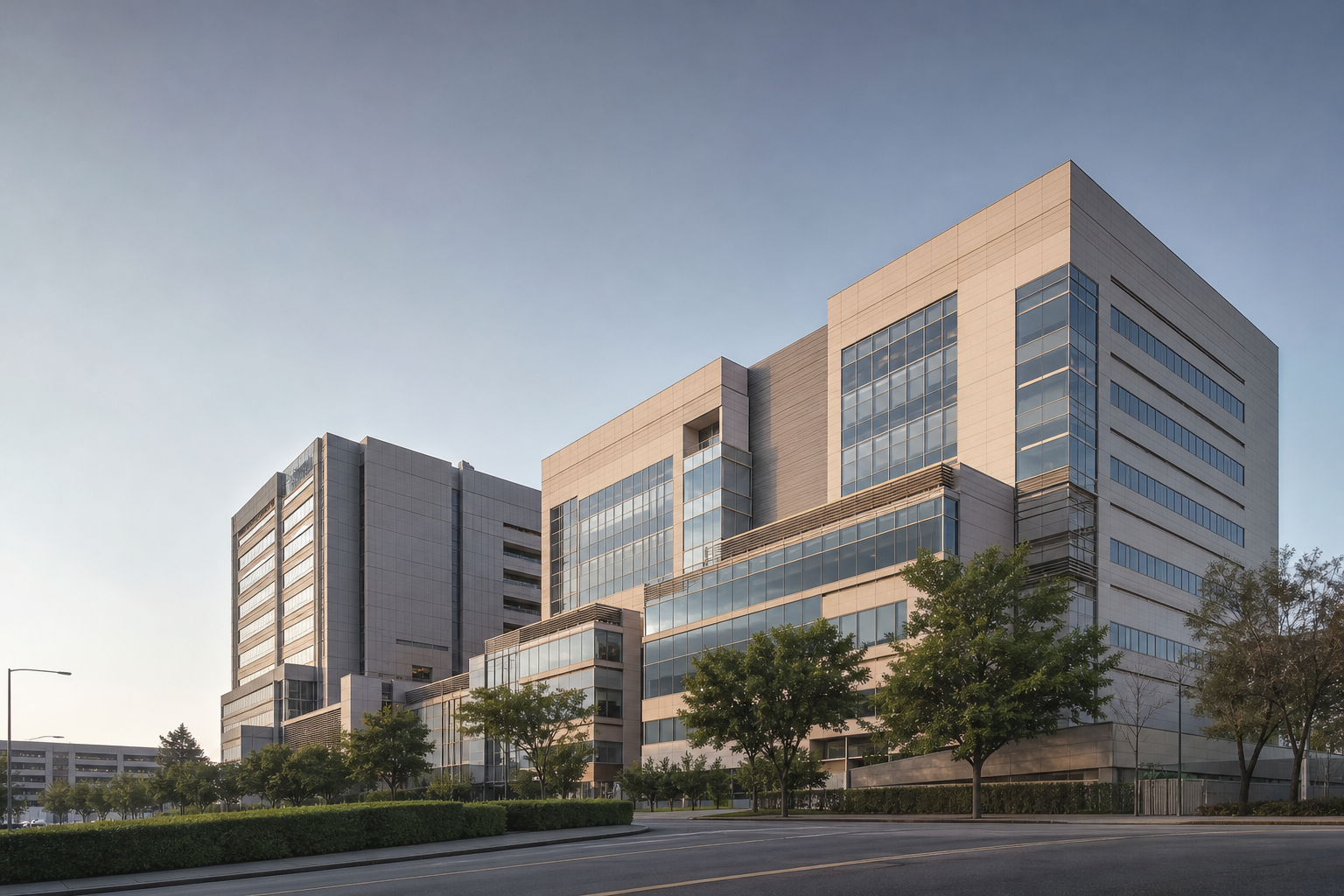
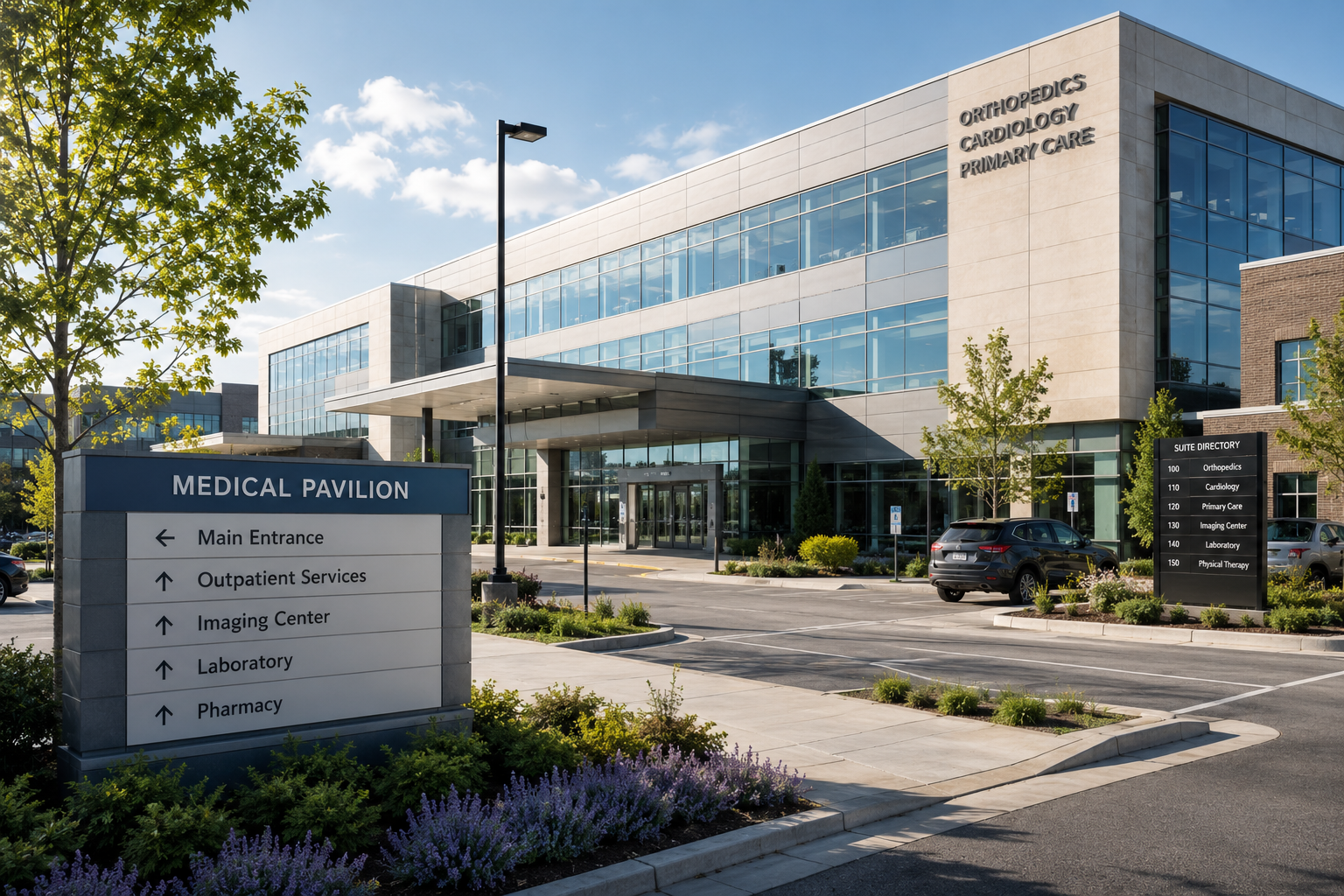
Medical outpatient building investment hit $2.9 billion in Q1 2026 — up 78% year-over-year — as average cap rates broke below 7% for the first time since Q3 2024. Welltower's $7.2 billion portfolio disposition to Remedy Medical Properties and Kayne Anderson is setting the institutional benchmark, and four consecutive quarters of positive net absorption confirm the operating story. The asset class is compressing. What is not in any cap rate is the policy risk bearing down on the hospital-tenant credit that underwrites most of those leases.
🎧 Busy to read? Catch the Daily Podcast (Subscribe on YouTube, Apple, Spotify)➤ SIGNALS
CBRE's Q1 2026 figures are unambiguous: average MOB sale price at $310 per square foot — a 55% premium to traditional office. Trailing 12-month volume of $13.9 billion is 15% above the five-year quarterly average. Asking rents at a record $25.40 per square foot. Net absorption positive for the fourth consecutive quarter. The cap rate compression to 6.9% is being driven by two simultaneous forces: Welltower's 296-asset, 18-million-square-foot sale to Remedy and Kayne Anderson is setting a live institutional comp, and allocators who missed Healthpeak's Janus Living IPO are treating MOB as the next available pure-play healthcare premium trade.
The operating fundamentals are real. U.S. outpatient procedure volumes are growing at 4.2% annually as hospital systems shift elective and routine care into outpatient settings with better reimbursement structures and patient experience scores. The demographic math — 10,000 Baby Boomers per day reaching Medicare eligibility through 2030 — functions as a demand floor independent of economic cycle. Four consecutive quarters of positive absorption in the 40 primary medical markets tracked by CBRE confirm the thesis is converting into leasing activity, not just investment narrative.
What is missing from current underwriting is a legislative risk premium. The Markey-Warren Stop Medical Profiteering and Theft Act would empower HHS to review hospital lease agreements and close REIT tax-treatment provisions on healthcare rental income. The OBBBA's projected $1 trillion in healthcare spending cuts carries a CBO estimate of 14.2 million Americans losing insurance coverage — directly pressuring the Medicaid-anchored tenant base that underlies a significant share of community-level MOB product. A 6.9% cap on a Medicaid-anchored MOB and a 6.9% cap on a hospital-system-guaranteed MOB are not the same instrument. Current pricing treats them identically.
IMPLICATIONS
MOB buyers closing at sub-7% caps should explicitly underwrite the policy-risk tail for Medicaid-anchored tenants. The legislative risk may never convert into an actual haircut — but accepting it without a spread premium is not institutional underwriting; it is hope. Sellers of stabilized MOB — especially health-system-guaranteed assets — are in the strongest pricing window since 2022. The Welltower disposition sets the ceiling comp, the Janus IPO reset the pure-play multiple, and that window will not stay open past a legislative inflection point.
Developers considering new MOB construction should note that four quarters of positive absorption have tightened vacancy below 8% in most primary medical markets. Ground-up projects with sub-5% local vacancy and a signed health-system anchor LOI are fundable at current spreads. Speculative development without pre-leasing in markets where hospital capital plans are uncertain carries a risk profile the current cap rate environment does not compensate.
Key Takeaways
MOB's 78% volume surge and sub-7% cap rates are justified by the demographic tailwind — but no one is pricing the legislative risk to hospital-tenant credit into those caps, and the market that ignores binary policy risk long enough eventually discovers it the hard way.
CRE 360 Signal™ — Commercial Real Estate Intelligence
▼ EDITORIAL DESK TOP PICKS
Capital Markets / Debt / Distress
Extend-and-pretend era is ending for troubled CRE loans — Bloomberg reports lenders are increasingly forcing sales, write-downs, and foreclosures instead of extending weak office debt.
2025 CMBS reappraisals show median 53% value decline — Trepp says $23B of collateral was reappraised at steep discounts, highlighting the depth of office distress.
Office loans continue driving CMBS special servicing higher — GlobeSt reports refinancing failures are pushing more office-backed debt into distress workouts.
20 Times Square loan sent back to special servicing — The ground-lease debt tied to the Times Square hotel/retail property missed maturity.
CMBS maturity pressure intensifies in May — Trepp says May 2026 maturities are highly concentrated in office assets and refinancing remains difficult.
Commercial mortgage originations jump 52% year-over-year — ConnectCRE reports CRE lending activity has reached its strongest level in five years.
Office / Leasing / Workplace
Penn Station district office boom accelerates — WSJ reports Midtown West office demand is surging around Vornado’s redeveloped Penn Station corridor.
Brookfield closes $1.9B refinance for Two Manhattan West — CoStar says lenders are still aggressively financing top-tier office product.
Office fit-out costs structurally reset higher — JLL says average office buildout costs in North America reached roughly $295 per SF.
Return-to-office growth slowed in April — Commercial Property Executive reports rising commuting costs may be softening office attendance momentum.
Baker McKenzie expands to 122K SF at 10 Bryant Park— Large law firms continue anchoring premium Midtown office demand.
AI startup Forus signs 25K SF SoHo office lease — Commercial Observer reports AI firms are increasingly becoming meaningful office tenants in Manhattan.
Industrial / Logistics / Data Centers
Blackstone data-center REIT raises $1.75B in IPO — Reuters says investors continue pouring capital into digital infrastructure platforms.
Nebius breaks ground on 400-acre Missouri data-center campus — The company’s first U.S. gigawatt-scale AI campus is moving forward near Kansas City.
Data-center power demand drives 76% jump in grid prices — Bloomberg says hyperscaler demand is materially reshaping U.S. electricity economics.
U.S. may finance nuclear reactors tied to AI infrastructure — Bisnow reports the Energy Department is exploring support for reactors powering data centers.
New state legislation targets data-center expansion — S&P says lawmakers in nine states are proposing restrictions or moratoriums on large projects.
Google files plans for new Virginia data-center campus — DCD reports Google is continuing hyperscale expansion outside Richmond.
Data centers now driving industrial demand nationally — Bisnow says logistics and manufacturing tied to AI infrastructure are reshaping industrial development.
Texas powered-land race intensifies for hyperscale users — Multiple developers filed plans for large AI-focused campuses outside Austin.
Multifamily / Housing / Hospitality
San Jose office tower secures $74M for residential conversion — Multi-Housing News says adaptive reuse financing continues accelerating.
Upper West Side apartment tower refinanced with $355M loan — Multifamily debt remains available for high-quality urban assets.
Orlando apartment absorption drops 60% — GlobeSt says slowing population growth is softening multifamily demand in key Sun Belt metros.
Multifamily rent declines reach nearly three years — GlobeSt reports monthly rent softness is spreading, though unevenly by unit type.
Charlotte hotel being converted into student housing — ConnectCRE says adaptive reuse remains one of the most active redevelopment themes.
Hyatt Regency Ontario lands $103.5M financing package — JLL arranged tax-exempt bonds and C-PACE financing for the hotel repositioning.
Retail / Construction / Broader Signals
Construction input costs jump 6.2% in first four months — ENR says 2026 cost inflation has already exceeded the previous three years combined.
Retail redevelopment and leasing momentum continues building — ICSC says lender activity and retailer expansion remain strong entering summer 2026.
TA Realty buys Atlanta Whole Foods-anchored retail center — Grocery-anchored retail remains one of the strongest investment categories.
Construction costs reaccelerate due to energy shock — GlobeSt reports rising energy and materials prices are again pressuring development feasibility.

Related coverage
Get MOB Cap Rates Pierce 7% — Healthcare Real Estate Is the Next Compressed Asset Class in your inbox
Q1 volume up 78% YoY to $2.9B, average pricing at $310/SF — but legislative risk to hospital-tenant credit is not in any cap rate today.