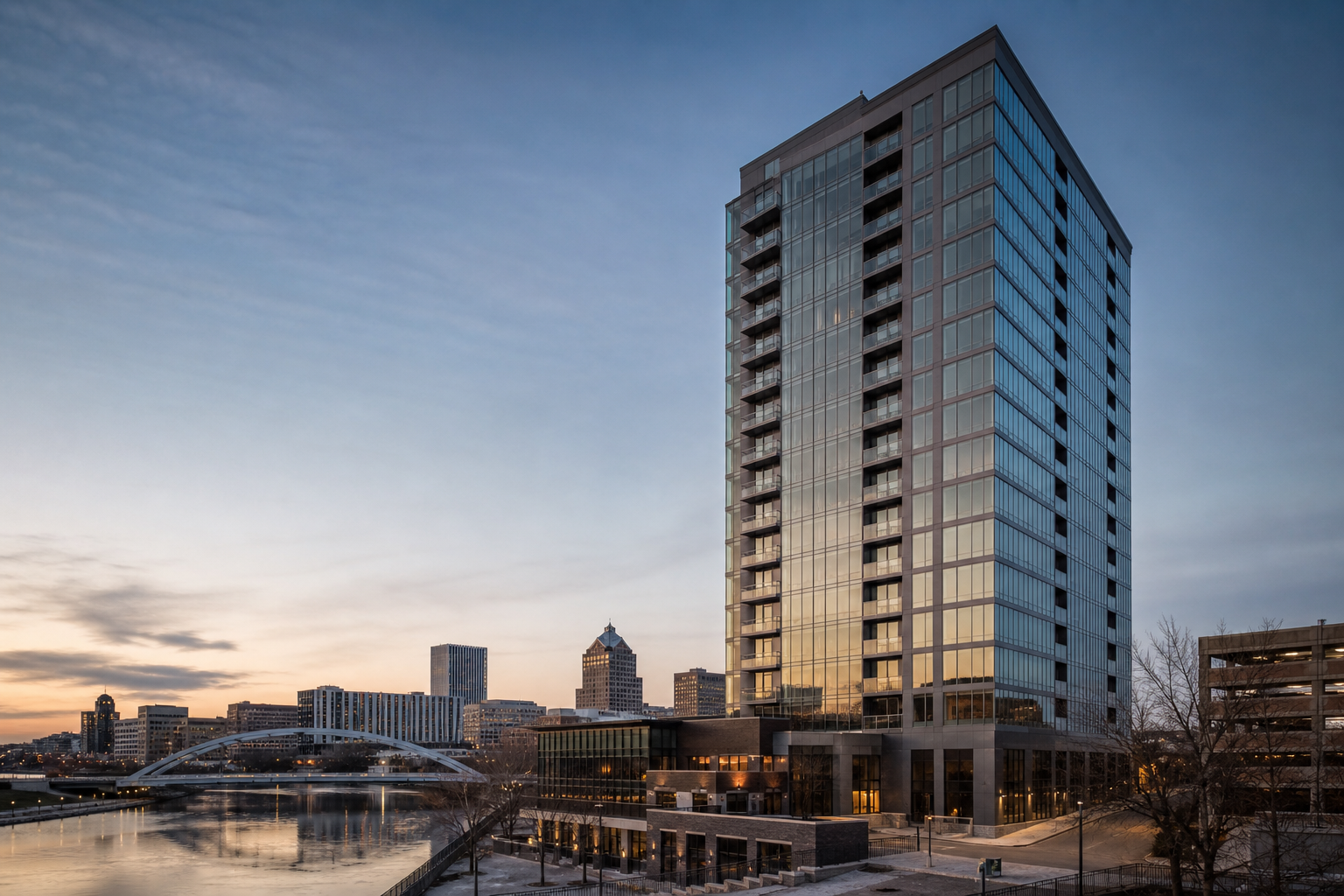
Most apartment pro formas have one revenue line. This one has two. 221 units lease conventionally. The other 52 turn on a hotel-like cycle — short-term and month-to-month stays serving people who come to Rochester because of the Mayo Clinic and leave when treatment or a rotation ends.
That is a real and durable demand pool, and it is badly served today. Traveling clinicians, visiting medical staff and families of long-stay patients need something between a hotel room and a twelve-month lease. Almost nobody builds for it.
It is also a different risk. Short-stay revenue carries hotel characteristics inside a multifamily structure: higher gross rents per unit, materially higher turnover and operating cost, more management intensity, and far more sensitivity to a single institutional demand driver. Underwritten as apartments, those 52 units look like a yield premium. Underwritten honestly, they are a small hospitality business that must be staffed, marketed and reserved for accordingly.
The concentration risk is stated plainly by the site itself. This is not diversified metro demand — it is one hospital system. The Mayo Rochester campus and the Destination Medical Center program are the entire thesis. That is a strong thesis and a narrow one.
Parking at 1.003 stalls per unit is the quiet tell. That ratio does not pencil in most Midwest markets. It works here only because the primary demand pool walks to a hospital campus. Change the location by half a mile and the parking assumption fails.
Anyone underwriting healthcare-adjacent housing should price the short-stay tranche against hotel comparables — RevPAR, turnover cost, seasonality — rather than blending it into an apartment rent roll where its volatility disappears.
Related coverage
Key Takeaways
- A fifth of this tower is a hotel — underwrite it like one
- Healthcare-adjacent housing is a distinct product with its own operating model, financed through P3 rather than merchant development
- A 1.003 stalls-per-unit ratio only works because the demand pool walks to a hospital campus
Connect CRE — Sherman Associates Closes $136M Financing for Rochester MF Project · KTTC — Developer announces massive apartment complex for downtown Rochester (Aug 26, 2026) · Commercial Real Estate Direct — Sherman Associates Lands $136.5Mln Loan for Rochester, Minn., Residential Project (Aug 28, 2026)
Never miss a Signal
Get the daily brief that busy CRE professionals rely on.