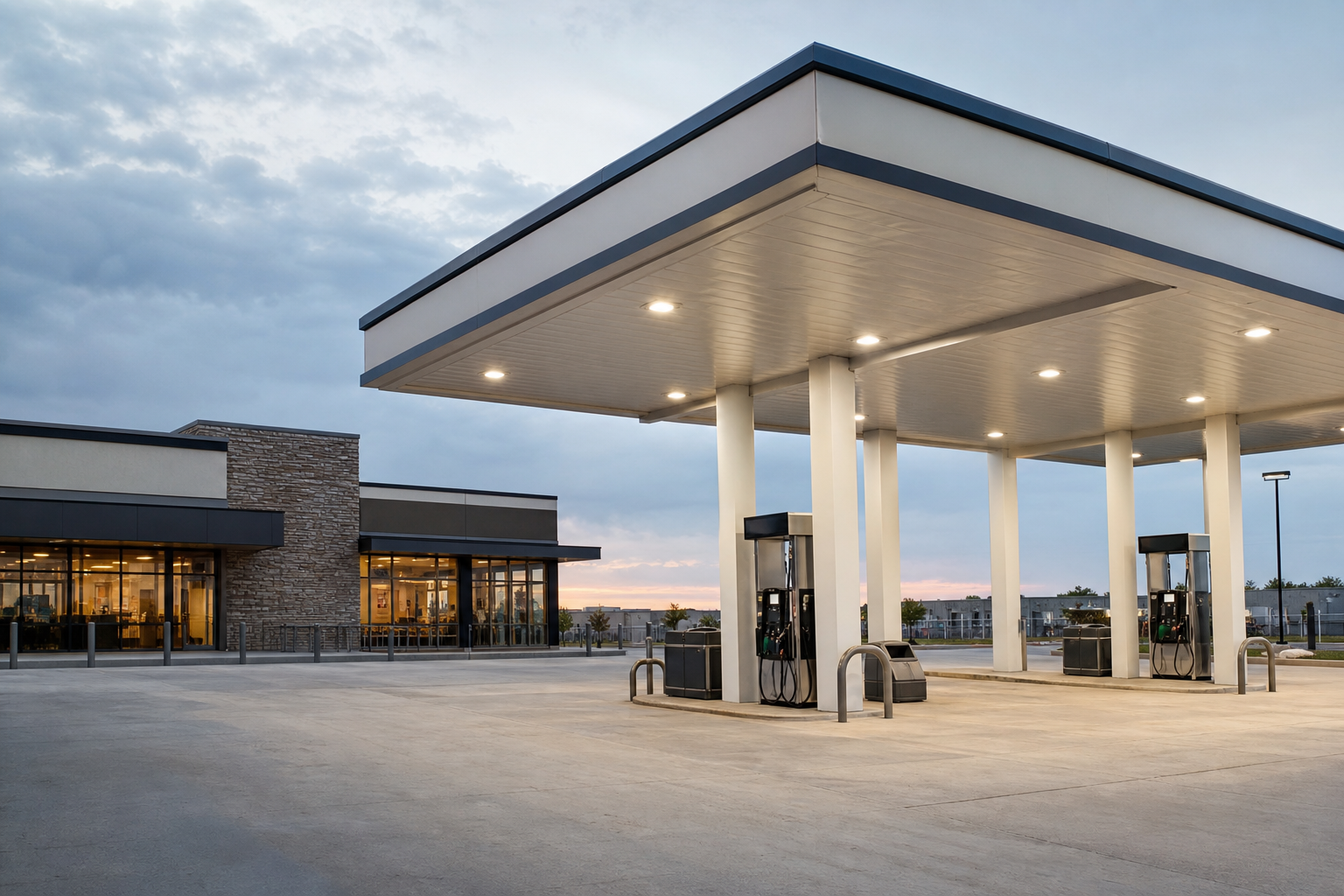
- Funded with unsettled forward equity, a new unsecured term loan and identified dispositions - structured to be leverage-neutral.
- The unitary lease is the structural feature: 41 individual stores become four cross-defaulted credit obligations.
- This is the largest net-lease sale-leaseback print of the week.
Getty Realty closed a $260.9 million sale-leaseback with Refuel Operating Company, taking title to 41 convenience-and-fuel stores across South Carolina, North Carolina, Texas and Mississippi. Refuel operates roughly 250 locations across five southeastern states and keeps running all 41.
The lease structure is the deal. Rather than 41 separate leases, the properties in each state sit under a single unitary lease - four in total - each with a 20-year initial term, multiple renewal options and rent escalations every five years. A unitary lease means the tenant cannot cherry-pick: it keeps the whole state basket or defaults on the whole state basket.
That is how single-tenant fuel and convenience credit gets financeable at institutional scale. Individually, a 5,000-square-foot store on 2.5 acres with an unrated operator is a private-capital asset. Bundled into four cross-defaulted obligations with two decades of term, it is a bond-like cash flow a REIT can lever against.
The concentration is the other half. Pro forma, Refuel jumps to Getty's third-largest tenant at about 7.7 percent of annualized base rent - a meaningful single-name exposure created in one transaction. Getty funded it with unsettled forward equity, a new unsecured term loan and identified dispositions, keeping leverage flat.
The physical spec explains the underwriting. Large-format stores with proprietary hot food and branded quick-service restaurants earn most of their margin inside the building, not at the pump, which is what makes the rent durable as fuel volumes decline.
Implications
For 1031 and private buyers, this is the comp that matters at the other end of the market. Institutional capital paying up for bundled, cross-defaulted c-store credit sets the cap-rate ceiling that individual store trades get benchmarked against.
Watch the concentration, not the yield. A tenant at 7.7 percent of base rent is a name that has to be underwritten as a credit, not as real estate. The four-state unitary structure limits contagion between baskets but does nothing about a single operator's balance sheet.
The leverage-neutral funding - forward equity plus term loan plus dispositions - is how net-lease REITs are buying this year without issuing into weak equity prices. Expect more sale-leasebacks structured to avoid a capital raise.
Structure creates credit: four cross-defaulted leases did what 41 individual ones never could.
Key Takeaways
- The unitary lease, not the cap rate, is what turns 41 unrated convenience stores into institutional-grade credit.
- One transaction moved a single operator to 7.7 percent of Getty's rent roll - concentration created in a day, underwritten for 20 years.
GlobeNewswire (Getty Realty Corp. press release), Sept. 22, 2026 - Getty Realty Corp. Announces $260.9 Million Sale Leaseback Transaction with Refuel Operating Company · CSP Daily News, Sept. 22, 2026 - Getty Realty closes $260.9M sale-leaseback deal with Refuel
Never miss a Signal
Get the daily brief that busy CRE professionals rely on.