The Signal:
- The dead-big-box problem is being solved by grocery, not demolition.
- An anchor landlord is manufacturing new rent from vacancy.
- Grocery backfill keeps a center's traffic engine intact.
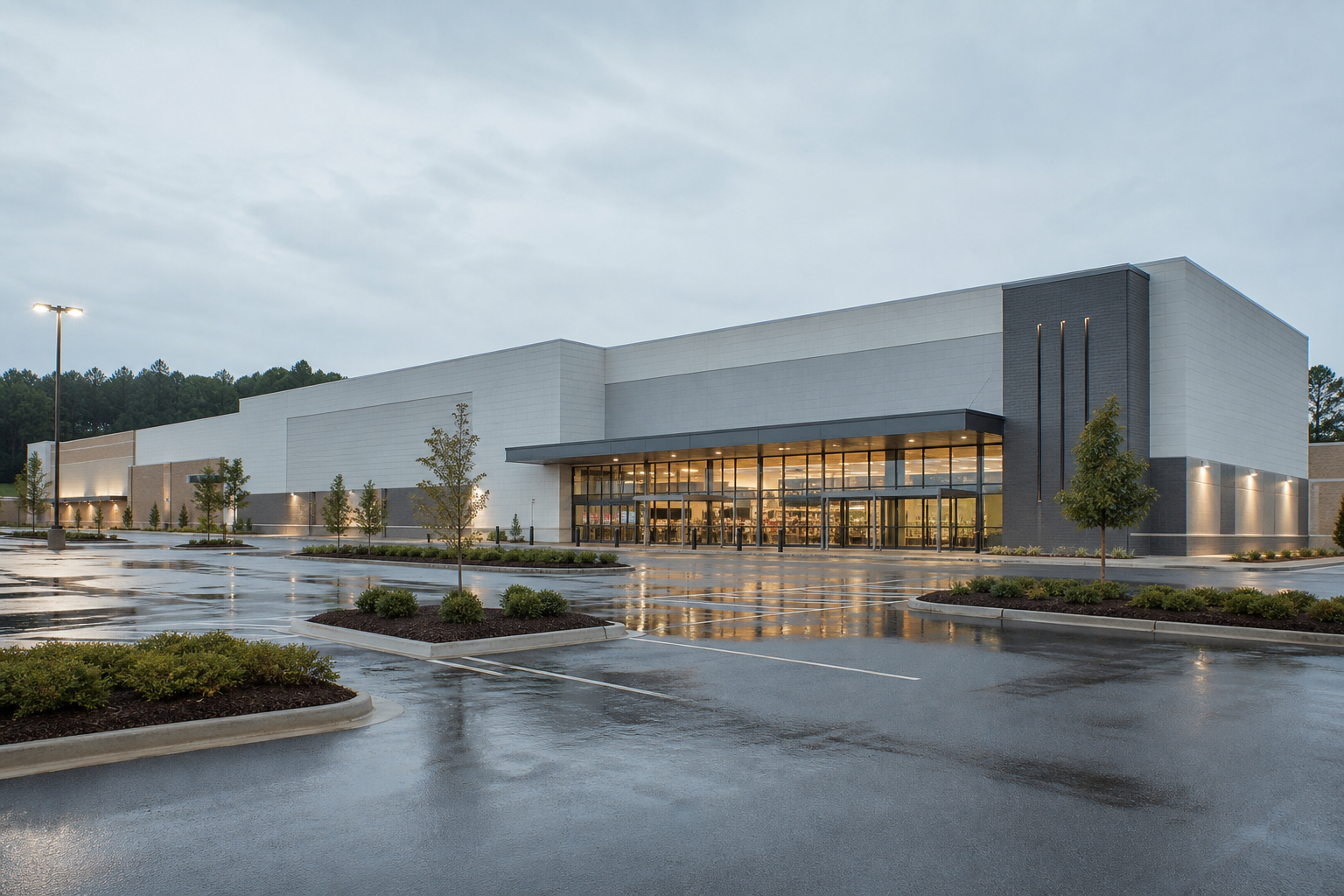
The most valuable move in retail right now is not building, it is re-tenanting the vacancies the last cycle created. A vacated Walmart is a traffic hole at the heart of a center.
Dropping in a full-format grocer with fuel and pharmacy restores the anchor draw and re-rates the inline space around it.
The economics favor the landlord. Grocery is among the stickiest, most defensive anchor uses, and splitting the box, 118,000 SF to Kroger and roughly 60,000 SF to a second tenant, can lift blended rent above a single big-box lease. The July 28 approval converts a two-year vacancy into a signed, entitled redevelopment.
Implications: For owners of centers with dark big boxes, grocery backfill is the clearest path to re-rating a distressed anchor. For grocers, vacated big-box space is cheaper and faster than ground-up. For lenders, an entitled grocery anchor materially de-risks the center's income.
Key Takeaways
- Turning a dead Walmart into a Kroger Marketplace is the defining retail move of this cycle, value is created by backfilling vacancy, not building new.
- The dead-big-box problem is being solved by grocery, not demolition
- An anchor landlord is manufacturing new rent from vacancy
- Grocery backfill keeps a center's traffic engine intact
Connect CRE, Kroger Taking Over Most of Shuttered Dunwoody Walmart Store, July 2026 · Rough Draft Atlanta, Dunwoody approves new Kroger at former Walmart site, July 28, 2026
Never miss a Signal
Get the daily brief that busy CRE professionals rely on.