➤ SIGNAL
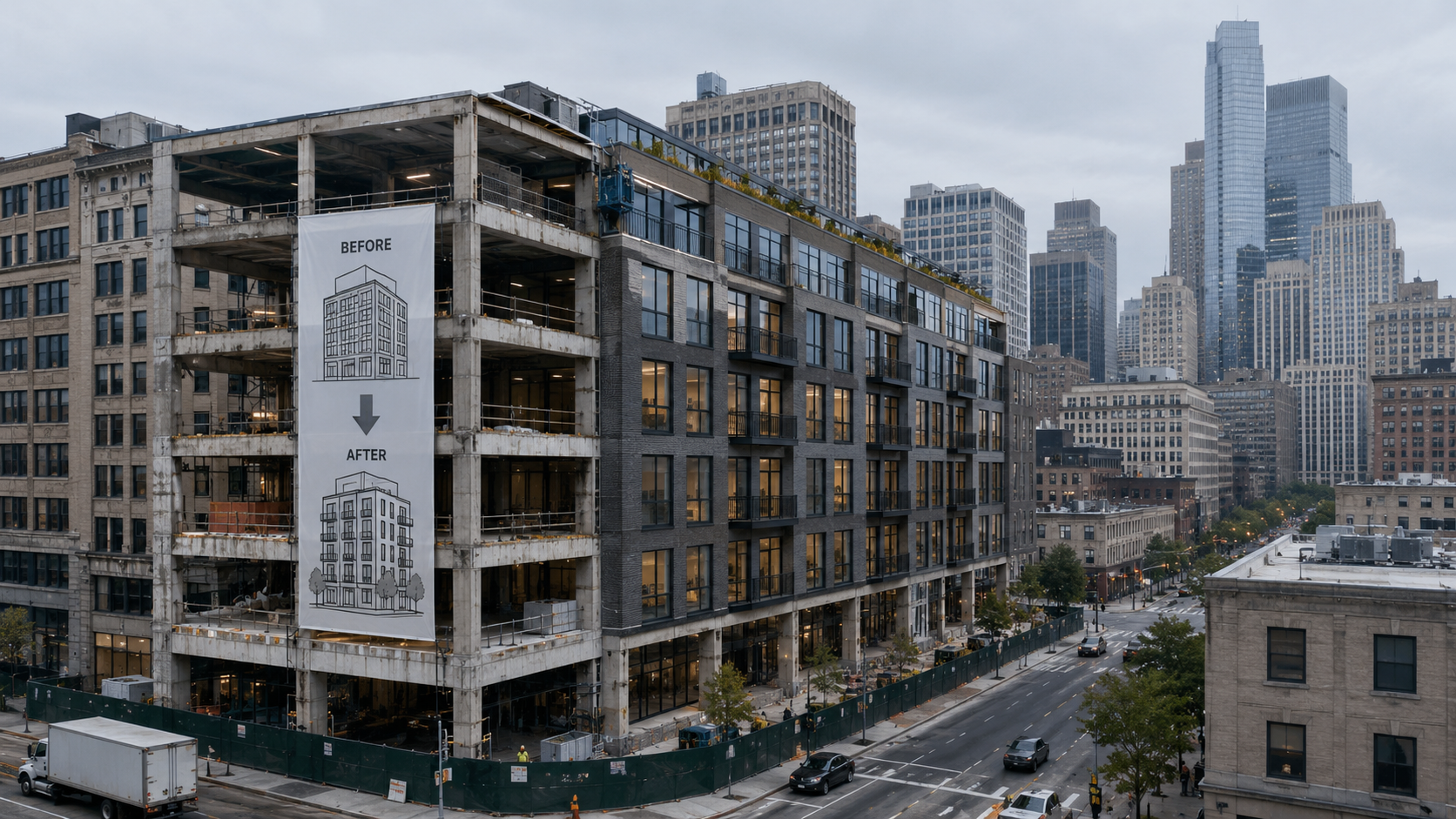
Three things had to line up: ground-up construction costs stayed high enough to make conversion competitive, obsolete Class B/C office basis reset low enough to pencil, and conversion incentives matured in the lead cities. They have. What was a one-off press release in 2023 is a repeatable supply channel in 2026.
The constraint is no longer zoning — it's geometry and basis. Only floor plates with the right depth, light, and core placement convert economically, which is why roughly 10–15% of office stock is realistically in scope, not the whole vacant tower count.
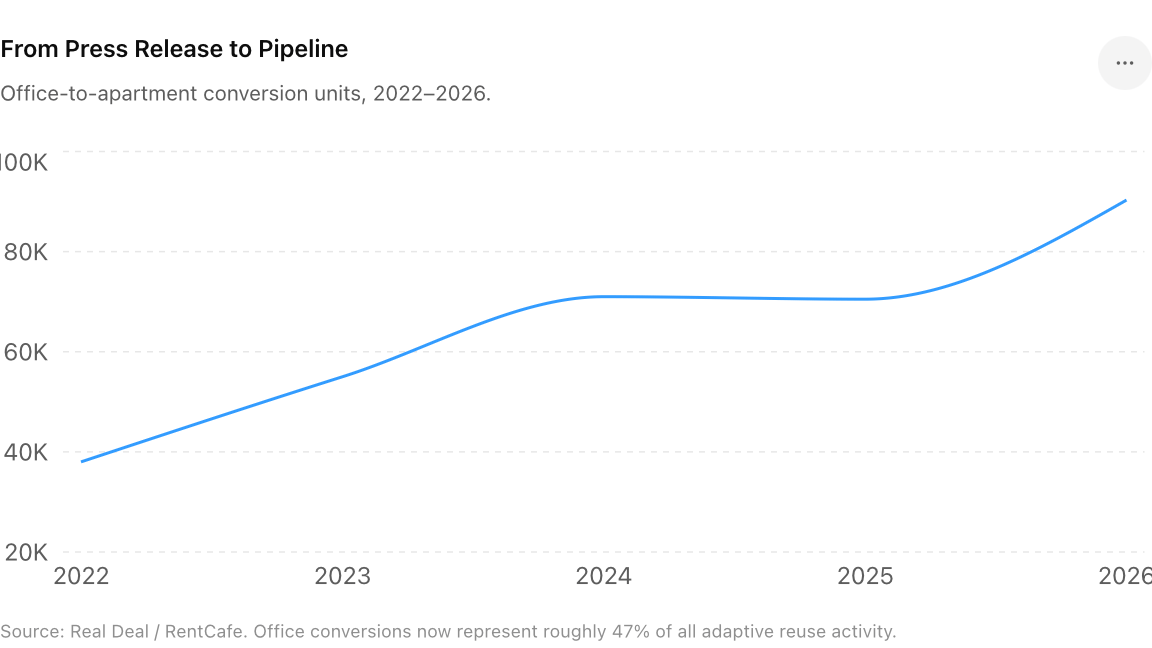
Implications This is a rare two-sided win: it removes obsolete office from supply (helping office vacancy at the margin) while adding housing. But it's selective — underwrite the floor plate and the basis, not the headline vacancy.
Related coverage
Key Takeaways
- Conversion is no longer a narrative — it's a supply channel with a unit count.
The Real Deal / CRE Daily / NAIOP — 2026 · Office · Multifamily · Adaptive Reuse
Never miss a Signal
Get the daily brief that busy CRE professionals rely on.