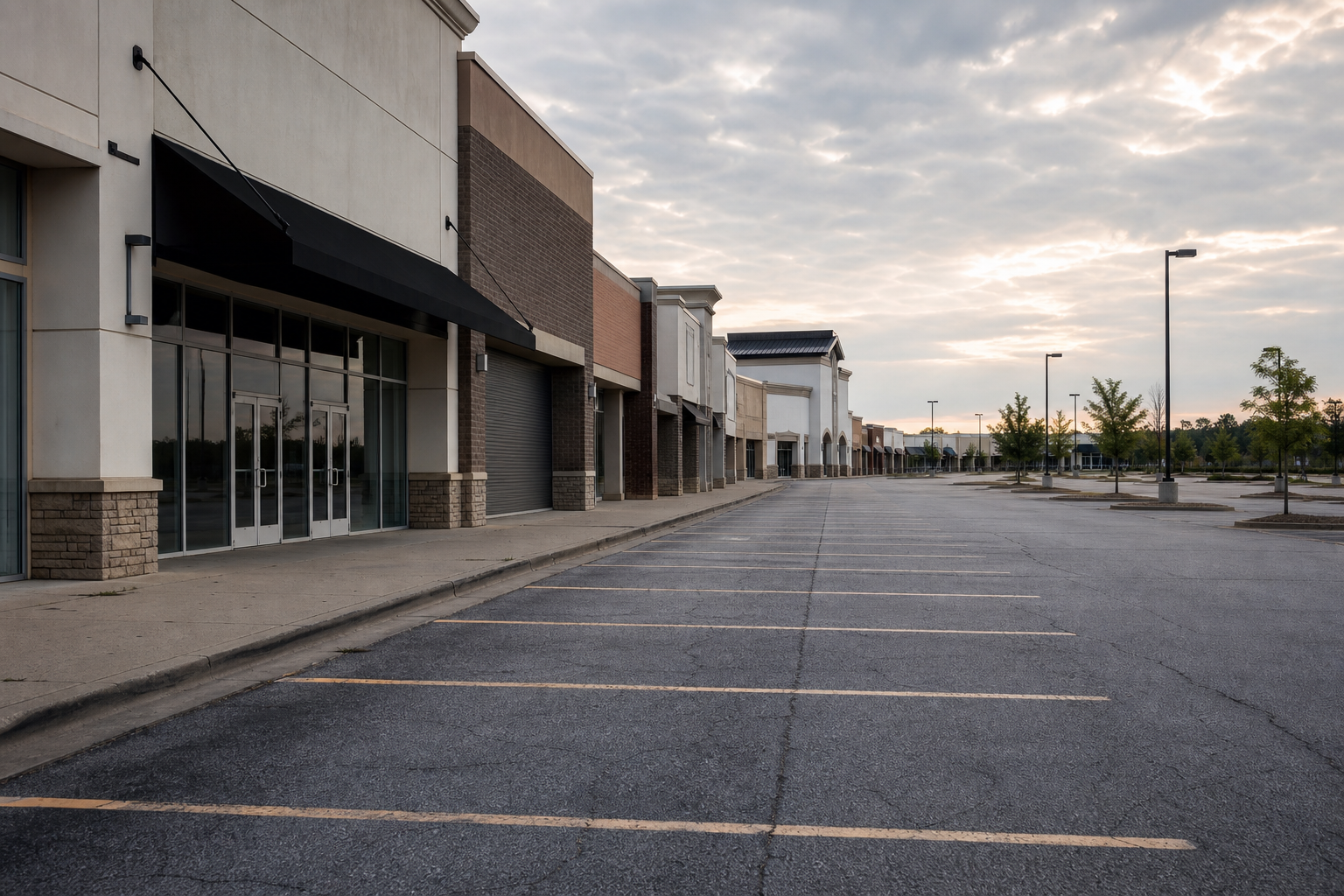
Through July 2026, U.S. retailers announced 3,255 store openings totaling roughly 63 million square feet against 3,399 closures totaling 36.9 million square feet, according to Coresight Research. Net store count: minus 144. Net space: plus 26.1 million square feet.
The average opening spans 19,350 square feet against an average closure of 10,860 — new stores are roughly 78% larger than the ones going dark. The store-count gap has narrowed sharply from a net loss of 1,778 locations over the same period in 2025.
Apparel, footwear and accessories drove 1,103 closures, 32.4% of the total. Large-format growth was led by IKEA, Publix, Bass Pro Shops, Meijer and Rural King; the year's biggest contractions came from American Signature, Walgreens and Saks Fifth Avenue.
A net loss of 144 locations reads like contraction and is reported that way. But a 63-million-square-foot opening pipeline against a 36.9-million-square-foot closing pipeline is a market absorbing space. Two retailers can produce that spread by trading a thousand 10,000-square-foot inline suites for five hundred 20,000-square-foot boxes.
That mix shift is the leasing problem, not the count. Inline suites of 8,000 to 12,000 square feet in apparel-heavy centers are what is coming back. Grocers, off-price, outdoor recreation and warehouse-club formats are what is expanding. Those tenants do not backfill each other's boxes without capital, demising work and frequently a pylon and parking-ratio conversation.
Implications. Underwrite a center by tenant category and unit size, not by occupancy percentage. A 95%-leased apparel-weighted center and a 95%-leased grocery-anchored center are not the same asset. The move from minus 1,778 stores to minus 144 in twelve months also argues the 2024–2025 rationalization wave has largely run.
Related coverage
Key Takeaways
- Retail isn't shrinking. It's changing shape — and the wrong-shaped suite is the vacancy nobody has priced.
- Store count is the wrong denominator for a landlord. GLA is the right one.
- The tenants closing and the tenants opening want different buildings, and the conversion isn't free.
Coresight Research — US Store Tracker Extra, July 2026 · Institutional Real Estate Inc. — U.S. retail market adds 26.1 million square feet through July · CRE Daily — Retail store closures outpace openings, bigger boxes win
Never miss a Signal
Get the daily brief that busy CRE professionals rely on.