The Signal:
- Student housing's edge is pedigree and pedestrian proximity, not breadth.
- Walk-to-campus land near flagship publics is nearly impossible to replicate.
- Enrollment durability underwrites demand independent of the rate cycle.
Student housing rarely makes the tape, but its best product is one of CRE's cleaner supply-demand setups. Beds you can walk to class from, adjacent to a large public flagship, sit on land that is effectively un-buildable to compete with — zoning, grade, and scarcity all work for the incumbent.
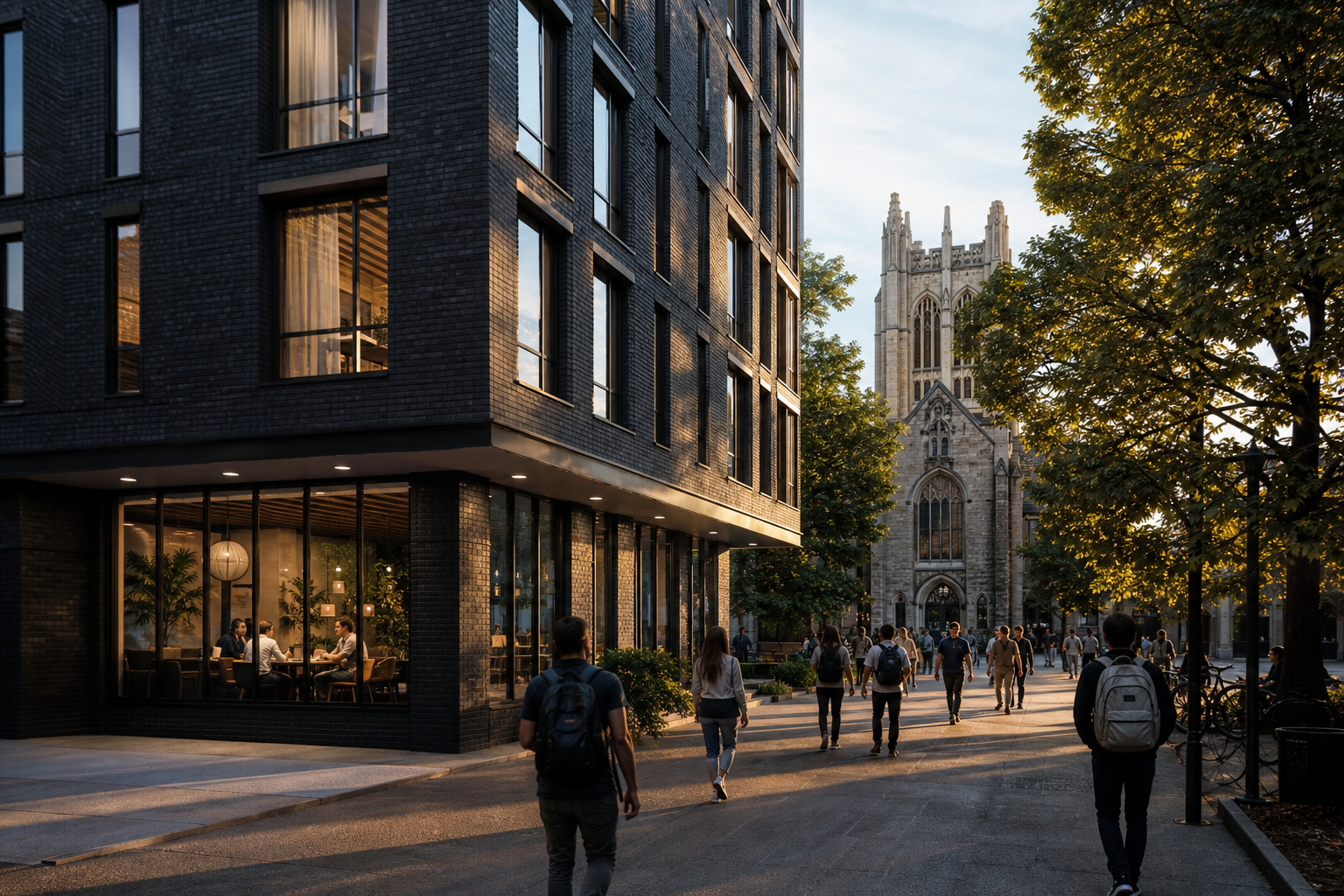
The demand curve is set by enrollment, not employment. Flagship publics keep filling classes through cycles, and the pedestrian zone around them cannot expand — so a 713-bed, walk-to-campus asset is a bet on durable, location-locked demand.
The structural read is niche scarcity. The value is not the sector; it is the specific parcel — pedigreed, proximate, and hard to replicate.
Implications: Owners of walk-to-campus beds at flagship publics hold a defensible, demand-durable niche. Developers who can entitle pedestrian-zone land have a narrow but valuable window. For investors, the diligence is university trajectory and proximity — the moat is the address, not the market.
Related coverage
Key Takeaways
- The value in student housing is the parcel, not the sector — walk-to-campus land at a flagship public is the moat.
- Student housing's edge is pedigree and pedestrian proximity, not breadth
- Walk-to-campus land near flagship publics is nearly impossible to replicate
- Enrollment durability underwrites demand independent of the rate cycle
Connect CRE — Raleigh student-housing development coverage, week of July 16, 2026 · Local Raleigh planning documents — Crest Road 713-bed project, July 2026
Never miss a Signal
Get the daily brief that busy CRE professionals rely on.