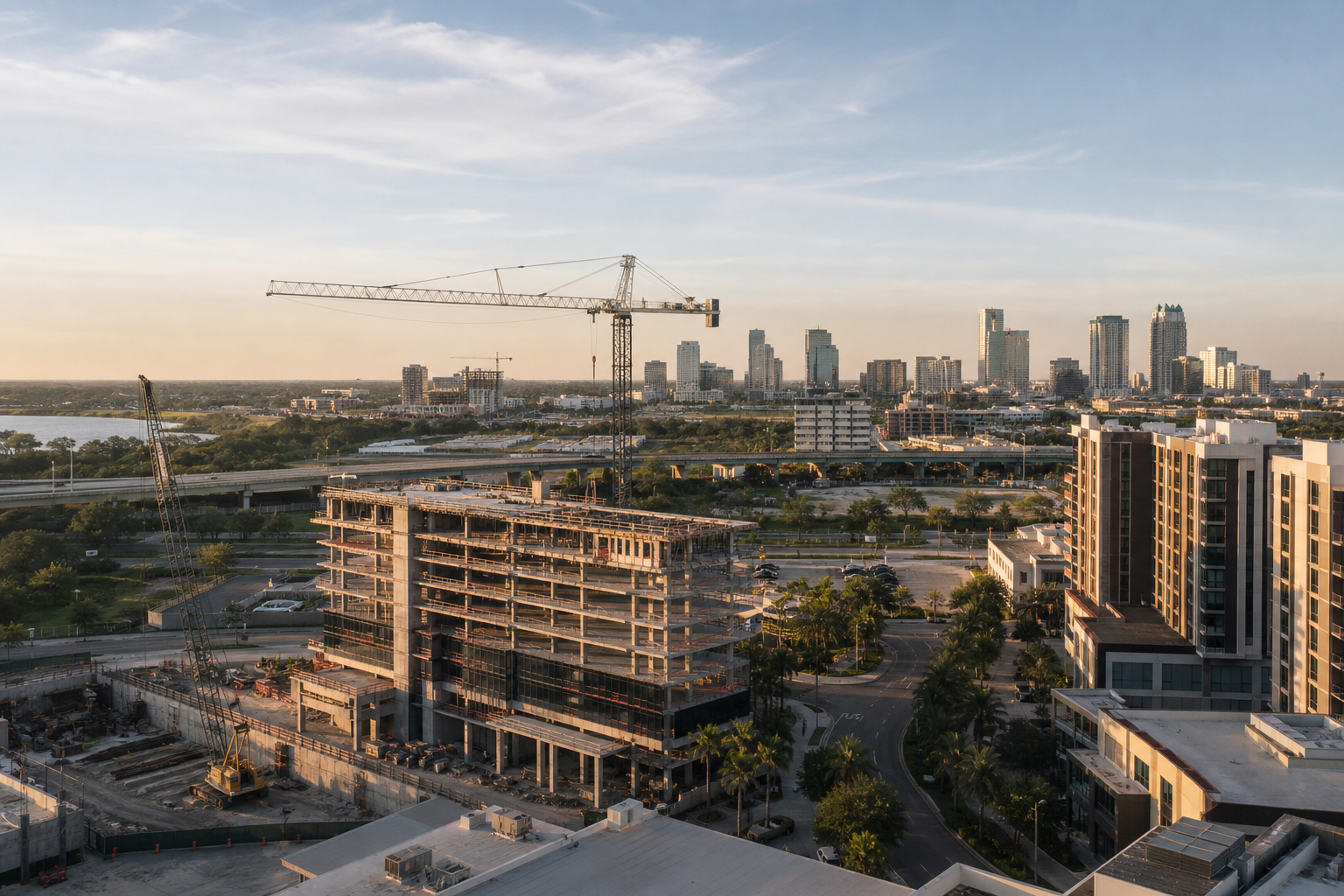
The Signal:
- Developers are underwriting Sun Belt migration through the rate cycle.
- District-scale mixed-use is the format capturing in-migration demand.
- Grocery-anchored retail is being built again as the daily-needs core.
Even with capital expensive, the Sun Belt's largest master plans are putting shovels in the ground. Fort Worth and Jacksonville are the tell: developers are treating in-migration and household formation as durable enough to underwrite billion-dollar, multi-year districts through a high-rate window.
The format is deliberate. District-scale mixed-use — residential density plus grocery-anchored retail and commercial — captures the daily-needs spending that follows population, and grocery anchors are back as the retail core after years of thin new supply.
The structural read is a migration bet with a long fuse. These projects deliver into 2027–2029, wagering that Sun Belt population growth outlasts the current cost of capital.
Implications: Owners of well-located Sun Belt land have a development bid where migration supports absorption. Developers get cover to underwrite district-scale product — but only where population growth is real and entitlements clear. For lenders, the risk sits in the delivery timeline and the cost-of-capital assumption, not in end-demand where migration is strong.
Related coverage
Key Takeaways
- Sun Belt master plans are breaking ground through a high-rate cycle — a long-fuse bet that migration outlasts the cost of capital.
- Developers are underwriting Sun Belt migration through the rate cycle
- District-scale mixed-use is the format capturing in-migration demand
- Grocery-anchored retail is being built again as the daily-needs core
NAIOP — New and Noteworthy Projects, Summer 2026 · Moss Construction — Westside Village groundbreaking, Fort Worth, 2026 · Regency Centers — The Village at Seven Pines groundbreaking, Jacksonville, 2026
Never miss a Signal
Get the daily brief that busy CRE professionals rely on.