

🚨U.S. construction costs are being reshaped by 2025 tariff hikes. Steel, aluminum, and copper now carry duties of 50%, driving materials up ~9% year-over-year. Developers face project budgets +4.6% higher than 2024, squeezing yields at a time of elevated financing costs. Nonresidential starts plunged –30.1% in July, showing the strain. Lenders and sponsors must reprice risk: higher contingencies, tighter cost locks, and delayed starts are now standard in underwriting.

Steel prices: +8.8% YoY (mid-2025) — [Source: Trepp].
Aluminum prices: +13.7% YoY (mid-2025) — [Source: Trepp].
Total development costs: +4.6% vs. 2024 — [Source: Cushman & Wakefield].
Nonresidential construction starts: –30.1% YoY (July 2025) — [Source: Dodge Construction Network].

Loan Performance. Higher hard costs erode DSCR cushions; many pro formas now underwritten with 5–10% extra contingency. Caps/floors on cost escalation are critical.
Demand Dynamics. Reduced pipeline tightens future supply; existing stabilized assets gain leverage as fewer competitive deliveries arrive.
Asset Strategies. Value-engineering shifts designs to wood/composites; phased construction mitigates capital shocks; TIs and CapEx budgets re-stripped upward.
Capital Markets. Loan-to-cost ratios are pressured; lenders demanding more equity and inserting escalation clauses. CMBS tone cautious, spreads holding wider.

Tariffs act as a structural cost floor for CRE development.
Stabilized assets benefit from thinner supply pipelines.
Development feasibility requires stronger equity and higher rents.
Pricing discipline and cost-sharing structures dominate new term sheets.
🛠 Operator’s Lens
Refi. Stabilized assets insulated; maintain reserves for tariff-linked TI/CapEx upgrades.
Value-Add. Budget 5–10% contingency for renovations; bulk-buy materials where possible.
Development. Stress-test yields with +10% cost inflation; delay if margins compress.
Lender POV. Construction loans now require tighter cost tracking, more equity, and interest reserve cushions.

Absent a tariff rollback, costs will stay elevated into 2026. Trade negotiations or the election cycle could alter policy, but near-term relief is unlikely. Expect continued slowdowns in speculative starts, thinner pipelines, and potential upside for existing CRE assets benefiting from constrained supply. Watch Dodge/Trepp construction indices for confirmation of pipeline tightening.

Cushman & Wakefield; Trepp; Dodge Construction Network; BLS.
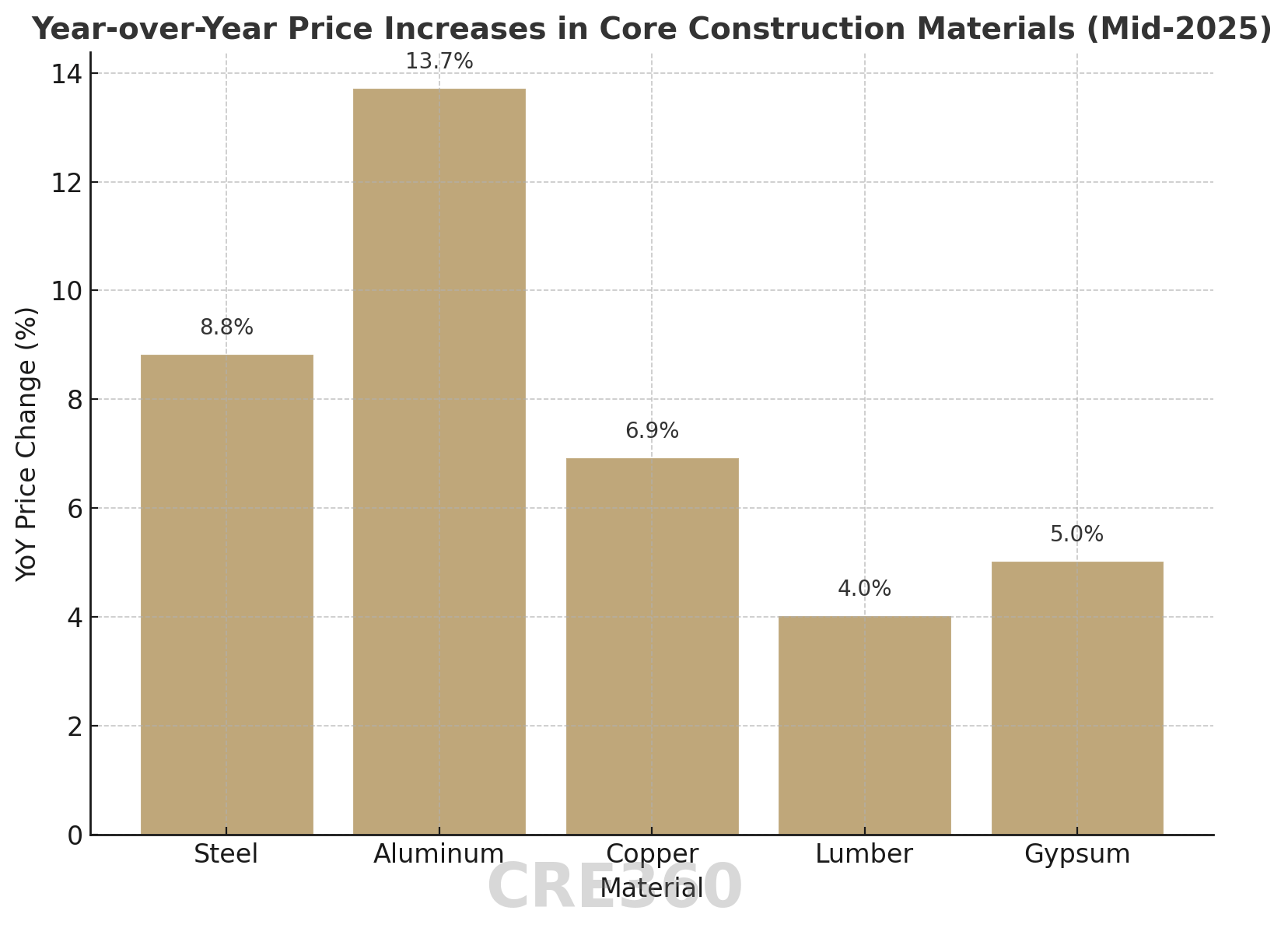
chart showing year-over-year price increases for key construction materials,

Never miss a Signal
Get the daily brief that busy CRE professionals rely on.