📢Good morning, today’s Signals are brought to you by CRE 360 Signal™.
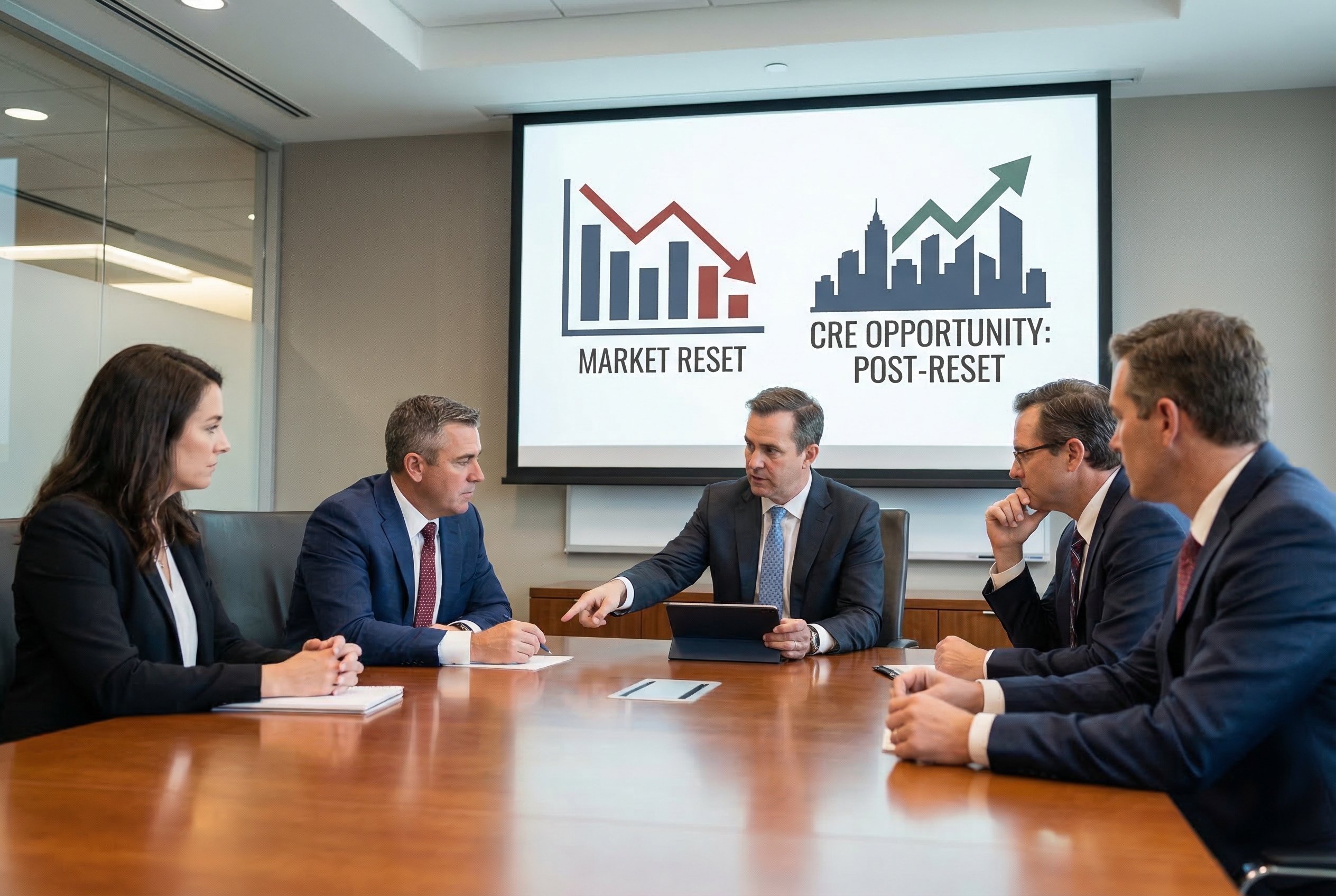
Institutional investors are beginning to revisit commercial real estate after several years of weak performance, according to reporting from GlobeSt and allocation data from Hodes Weill & Associates. Many institutions remain about 90 basis points underallocated to CRE, while property values are still 16% below their 2022 peak, according to Green Street. The shift suggests capital may gradually return to the sector, though the recovery is likely to be slow and heavily influenced by refinancing pressures and debt market conditions.
🎧 Busy to read? Catch the Daily Podcast (Subscribe on YouTube, Apple, Spotify)➤ SIGNAL
Institutional investors are beginning to re-engage with commercial real estate after a period dominated by rising interest rates and falling asset values.
According to the Hodes Weill & Associates Real Estate Allocations Monitor, many institutions are now sitting roughly 90 basis points below their target allocations to real estate. That underweight position is starting to draw attention as market conditions stabilize.
The decline in CRE values over the past several years has been significant. Data from Green Street show overall commercial property values remain about 16% below their April 2022 peak, with the office sector down roughly 35%. Importantly, several investors now view those declines as primarily the result of capital market conditions rather than widespread deterioration in property fundamentals.
That distinction matters. If the correction was driven mainly by higher interest rates and financing costs, then valuations may already reflect much of the adjustment needed for the current rate environment.
Industry forecasts remain cautious. The Pension Real Estate Association projects roughly 1% property value appreciation in 2026, indicating that the recovery will likely be gradual rather than immediate.
Transaction activity also remains constrained by the refinancing cycle. Since 2023, more than 60% of commercial mortgage originations have been refinancing, rather than acquisitions or new development loans. Many owners are focused on extending or restructuring existing debt rather than selling assets at discounted prices.
This dynamic explains why transaction volumes have stayed relatively muted even as investors show renewed interest. A large portion of the market remains in a “wait-for-repricing” phase, where sellers are reluctant to dispose of assets until values stabilize further.
According to LaSalle Investment Management, improving debt market conditions could gradually bring more equity back into the sector. Lower interest rates would help accelerate that process, but they are not strictly required. If financing markets stabilize and refinancing pressures ease, institutional investors who remain underallocated may begin increasing exposure to real estate over the next several years.
Key Takeaway
Institutional capital is not flooding back into commercial real estate yet—but the positioning is shifting. With many investors underallocated and property values still below their peak, the conditions for capital to return are forming. The constraint is less about investor interest and more about market mechanics: refinancing pressure, limited asset sales, and cautious pricing expectations are slowing the recovery in transactions.
CRE 360 Signal™ — Commercial Real Estate Intelligence
▼ EDITORIAL DESK TOP PICKS
C-PACE financing becomes mainstream in commercial property deals — Developers and lenders increasingly use C-PACE funding for energy upgrades as the financing tool moves from niche to common practice in CRE.
Big warehouses are back in demand across U.S. logistics markets— Leasing for warehouses larger than 500,000 SF jumped 31% in 2025, signaling renewed demand from logistics and manufacturing tenants.
Office-to-apartment conversion planned for former Indeed headquarters — Developers propose turning a vacant Stamford office tower into 231 apartments, reflecting the accelerating office-to-residential trend.“Texas retail demand keeps growing as shopping center traffic rises” — San Antonio’s Rim shopping center drew more visitors than any other retail property in Texas last year.
Asia-Pacific property investment expected to strengthen in 2026— Institutional capital flows into the region are rising as financing conditions stabilize and investor confidence improves.
Maine commercial property transactions continue steady pace in 2026 — Weekly sales reports show ongoing activity across retail, office, and industrial assets in the state.
Commercial property owners upgrading buildings to stay competitive — Developers are investing in smart systems, sustainability upgrades, and amenity packages to attract tenants.
Secondary cities gaining attention as housing and investment hubs — High-income suburban cities outside major metros are drawing new development and investment interest.
Multifamily manager Sparrow expands portfolio to nearly 2,000 units — The New Jersey firm added nine properties in 2025 and expects further growth this year.
Climate risk and insurance costs reshaping commercial real estate underwriting — Rising insurance premiums are becoming a major factor in property deals and financing decisions.
Private lenders gathering in Miami as CRE financing market shifts — Industry conferences highlight growing demand for alternative financing sources.
Office towers still struggling with refinancing pressure — Buildings like One Worldwide Plaza illustrate how declining valuations affect large loans.
CRE consultants preparing for wave of corporate mergers and portfolio deals — Bankers expect M&A activity to drive advisory work across commercial property portfolios.
Industry leaders debating capital deployment strategies in uncertain markets — Executives say 2026 decisions will hinge on balancing risk and opportunity in volatile conditions.
Commercial real estate conferences ramp up globally in 2026 — Major gatherings aim to connect investors and developers amid a changing market cycle.
Asia-Pacific infrastructure investment demand driving new real estate events — Expo Real Asia Pacific launches in Singapore to attract global capital and development partnerships.
CRE outlook highlights cautious optimism for the year ahead — Analysts say the market is stabilizing but recovery will vary widely across asset classes.
Phoenix Multifamily Market Hits the Supply Crest. Record deliveries push vacancy higher as Phoenix apartments absorb demand but struggle to keep pace with new supply.
Construction Market Reality Check – Early 2026. Rising input costs, softer backlogs, and selective demand reshape the 2026 construction outlook.
Transaction Volume Is Back — But Don’t Confuse Activity with Recovery
Capital is re-entering the market, but pricing discipline—not momentum—is driving today’s transactions.Private Equity Continues Buying Public REITs — Take-private deals are accelerating as investors target undervalued listed real estate companies.
AI Is Reshaping Real Estate Decision-Making — Predictive analytics tools are rapidly transforming investment strategy and building operations.

Get Underallocated Investors Begin Reconsidering Commercial Real Estate After Capital Markets Reset in your inbox
Institutions remain below target allocations as CRE values stay well below 2022 peak.