
➤ SIGNAL
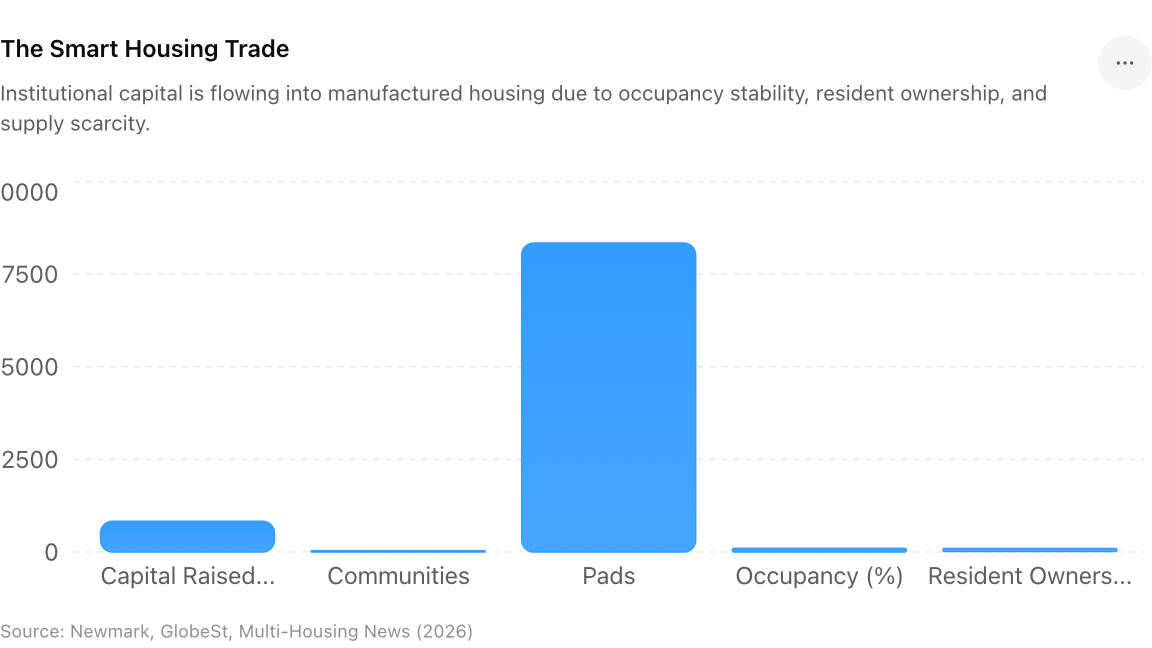
A lender wrote a nine-figure check against pads, not Class-A towers.
The underwriting case is occupancy stability and high resident ownership, not rent spikes.
It rhymes with Signal 1: institutions are paying up for needs-based, supply-constrained residential.
Manufactured housing is the least glamorous corner of residential and one of the most defensive. Residents typically own the home and rent the pad, which makes turnover low and collections sticky. New community development is effectively frozen in most jurisdictions by zoning resistance — so existing supply enjoys a durable moat.
That combination — non-discretionary demand, ownership-driven retention, and a near-zero new-supply pipeline — is exactly what an $830M lender wants behind its basis. The flag on this one is timing: the financing closed in April, so treat it as a recent structural data point rather than a same-day event.
Implications The capital migrating into manufactured housing and student housing is the same capital. Both are bets that operational durability and supply scarcity beat headline rent growth in a slow-clearing market.
Related coverage
Key Takeaways
- When lenders fund pads at 99% occupancy before they fund spec towers, the cycle is telling you where the floor is.
Newmark / GlobeSt / Multi-Housing News — April 2026 (recent; included for beat balance) — Tag: Manufactured Housing / Capital Markets
Never miss a Signal
Get the daily brief that busy CRE professionals rely on.