➤ SIGNAL
Vertically integrated developers are breaking ground into a soft-rent market by controlling the cost side.
Construction method (ICF) is a deliberate bet on durability, insurance, and long-hold operating economics.
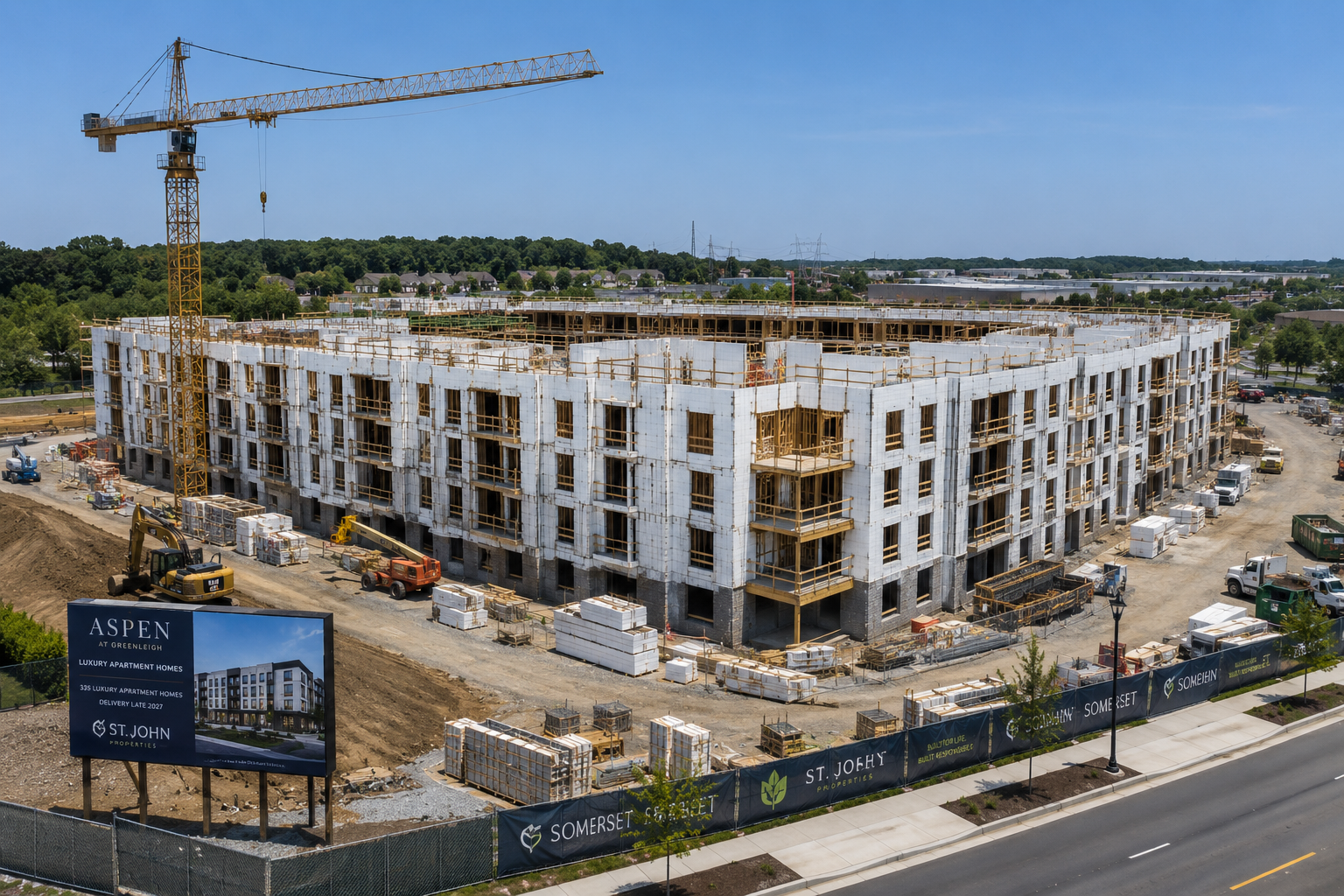
Most groundbreakings in a 0.5%-rent-growth year look reckless. This one is a cost-side play. By using its own in-house general contractor and an ICF structural system, the developer is underwriting margin through build cost and long-run operating expense — not through optimistic rent escalators.
ICF is the tell. It's more expensive to pour but delivers lower energy load, better insurance posture, and a longer physical life — the economics of an owner-operator planning to hold, not flip. Pairing it with LEED Gold reinforces a long-duration thesis.
The Northeast geography is the other quiet signal. While Sun Belt multifamily digests oversupply (see Signal 4), a supply-constrained Mid-Atlantic submarket inside an established 1,000-acre master plan is a very different underwriting environment.
Implications Development isn't dead in 2026 — it's migrating to players who control construction and to markets that never overbuilt. Watch basis and build cost, not the national starts number.
Related coverage
Key Takeaways
- In a flat-rent year, the developers who break ground are the ones who own the cost side.
St. John Properties / Somerset Companies via Connect CRE — May 29, 2026 · Tag: Development / Construction
Never miss a Signal
Get the daily brief that busy CRE professionals rely on.