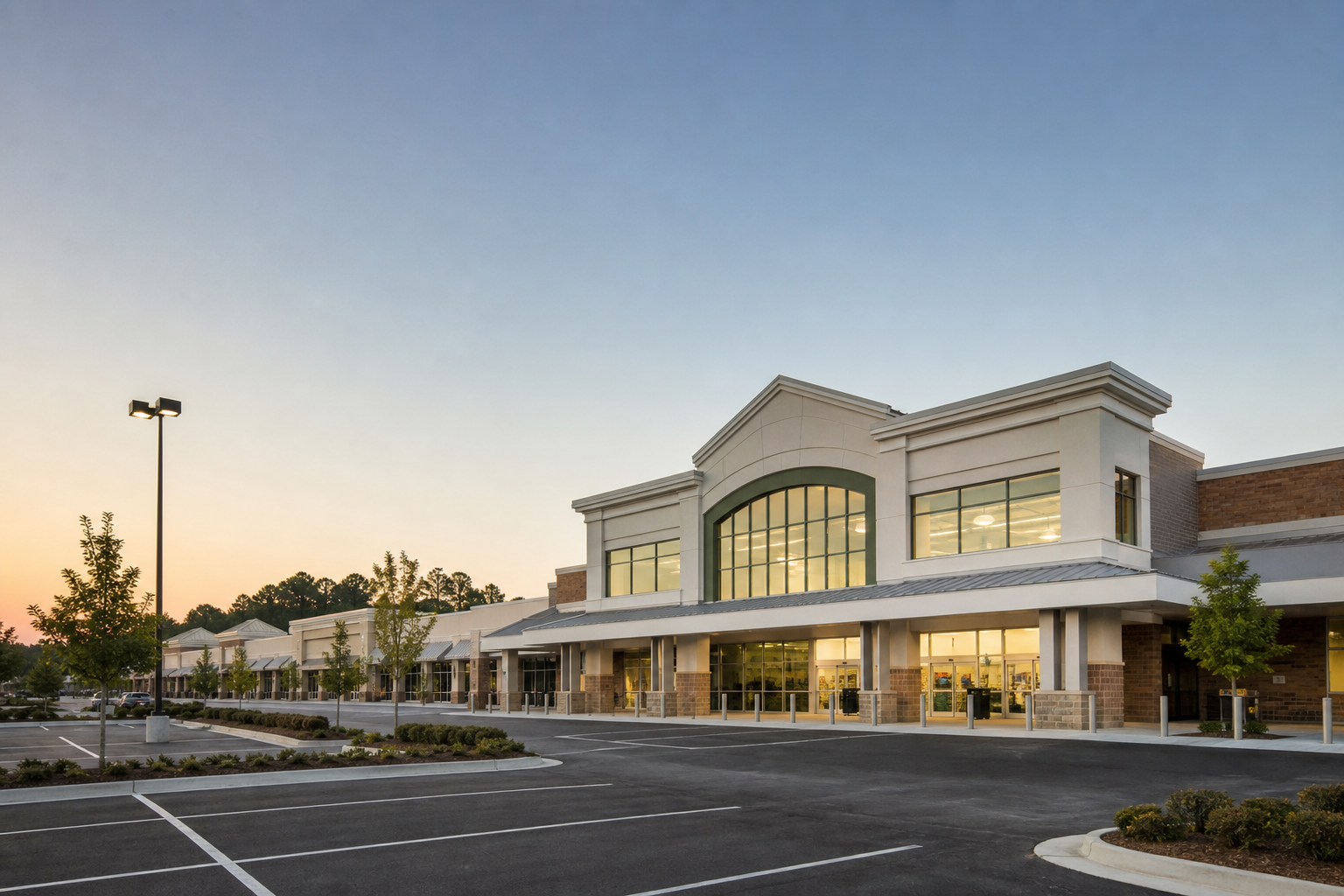
+$5.6M / +13.1% over about 4.5 years — a 2.8% compound annual mark. Occupancy improved from about 90% to 95%; occupied space now 289,498 sf across 39 tenants, averaging 7,423 sf each. Roughly 15,237 sf vacant.
Four and a half years of ownership, a five-point occupancy gain, and a 2.8% annual return on the purchase price. That is the number to sit with.
It is not a bad outcome. It is a flat one — and flat is informative. Hackney bought a Publix box in a secondary Georgia market, leased it up, and exited into a buyer that had to cross a border to find the trade. The improvement in occupancy did not translate into a meaningful re-rating of the asset.
The tenancy explains why. Publix, T.J. Maxx, Burlington and Ross-tier boxes sign long, cheap leases. They stabilize an asset and they cap it. The credit is excellent and the rent growth is not.
For a first-time U.S. buyer, that is arguably the point. Brasswater bought durability, not torque.
Implications. Necessity-anchored retail in secondary metros is now trading like a bond with a roof. The anchor credit that makes the asset financeable is the same credit that caps its rent growth — and a 2.8% annual mark across a full hold is what that trade-off actually pays.
Uncertainty: two square-foot counts exist for the same asset (314,000 sf in 2022 reporting; 304,735 sf now), so the per-foot comparison is approximate. Connect CRE Canada reports "about US$50M" against Shopping Center Business's $48.2M — unreconciled. Coro Realty's 2013 basis is not established.
Related coverage
Key Takeaways
- Anchor credit buys occupancy, not appreciation — and 2.8% a year is what the difference costs
- A five-point occupancy gain produced +13.1% of value over four and a half years
- Long, cheap anchor leases stabilize an asset and cap it at the same time
Shopping Center Business, September 4, 2026 · 2022 basis via Coro Realty and Transwestern, March 16, 2022 · CAGR and per-foot figures derived by CRE360
Never miss a Signal
Get the daily brief that busy CRE professionals rely on.