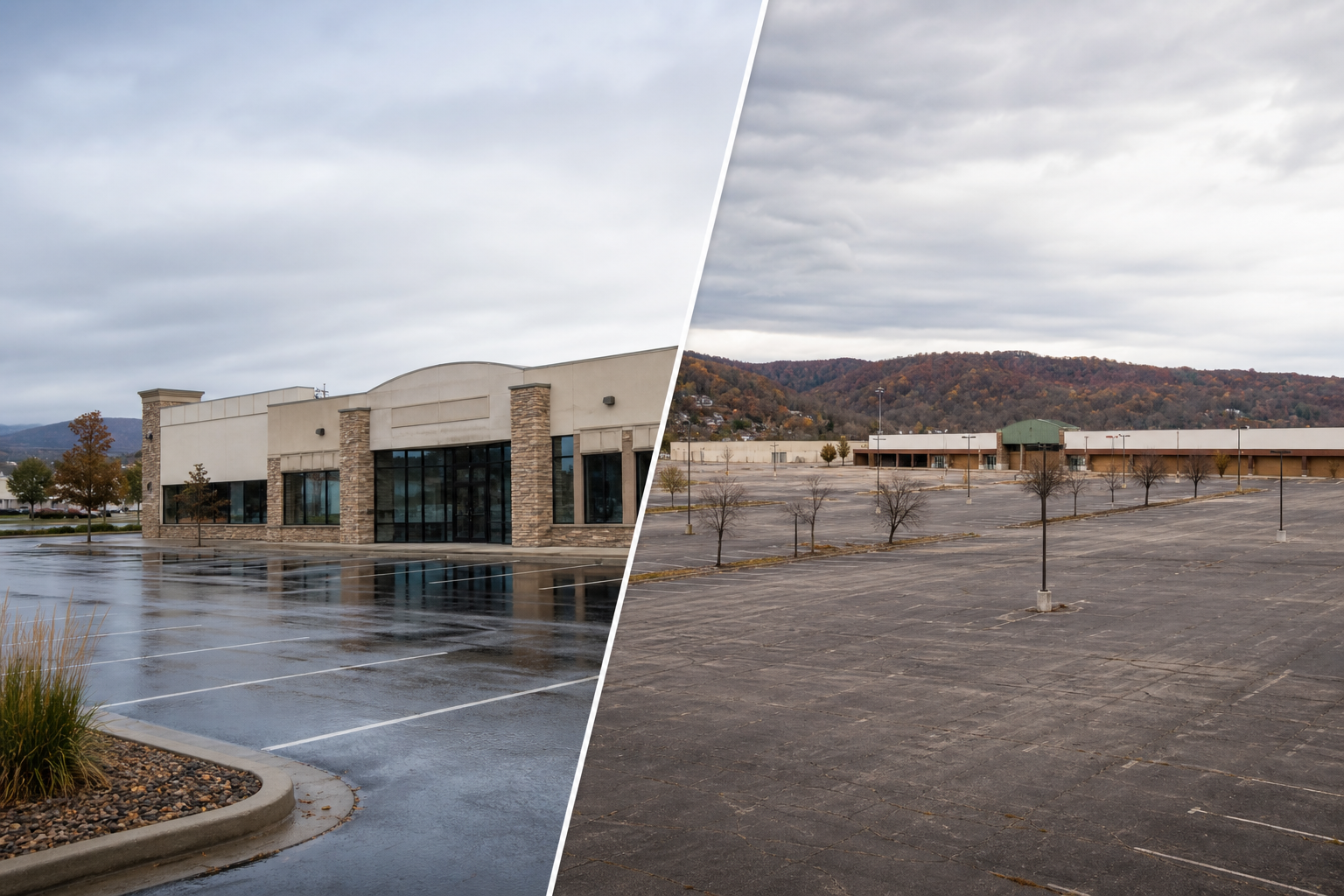
TRC Retail paid $26 million for Ralston Square, a 158,000-square-foot shopping center in Arvada, Colorado. That works out to $164.56 per square foot. The seller was an affiliate of Regency Centers, a public shopping-center REIT. TRC — formerly Terramar Retail Centers, based in Costa Mesa — is a private operator focused on the Western United States.
Compare it with Miracle Mile in Monroeville, Pennsylvania the same week: $250.00 per square foot against $164.56 — an $85.44 spread, or a 51.9% premium. Two open-air centers, days apart, priced half again differently.
Regency Centers is one of the most disciplined grocery-anchored owners in the country. When it sells, it is usually pruning — an asset that no longer fits a portfolio built around specific demographics and anchor performance. TRC is buying the opposite way: a private Western operator with a concentrated footprint can underwrite a center Regency finds non-core, because its cost of capital, hold period and management overhead are all different.
The gap to Monroeville has to be explained by occupancy, anchor credit, lease term or land — and none of it was disclosed. Miracle Mile's release led with 100% occupancy and a national tenant list. Ralston Square's did not.
Implications. Public-to-private is where open-air retail is moving. REITs are concentrating around grocery anchors and specific demographic screens while private operators absorb everything adjacent at a discount to the institutional bid. For buyers, that means the best open-air pricing is coming out of REIT pruning programs rather than broad marketing. For sellers, a non-core disposition list is now a genuine capital source. And the per-foot spread argues against leaning on any single retail comp.
Uncertainty flagged: occupancy and tenancy at Ralston Square were not disclosed. The comparison is a price-per-foot observation, not a like-for-like value judgment.
Related coverage
Key Takeaways
- Retail's real price discovery is happening on REIT disposition lists, not in open marketing
- Two open-air centers days apart priced 51.9% apart per square foot — no single retail comp is safe
- Public REITs are concentrating on grocery anchors while private operators absorb the adjacent product
- Neither trade disclosed a cap rate, occupancy or NOI — the absence is part of the story
Commercial Real Estate Direct, Sept 4 2026 · Shopping Center Business, Sept 3–4 2026 (Miracle Mile comparison) · Per-foot figures and the spread calculation are CRE360 calculations from disclosed inputs
Never miss a Signal
Get the daily brief that busy CRE professionals rely on.