The Signal:
- The hotel is not the investment thesis. The event calendar is.
- Venue-anchored district economics have migrated from pro sports to campus land.
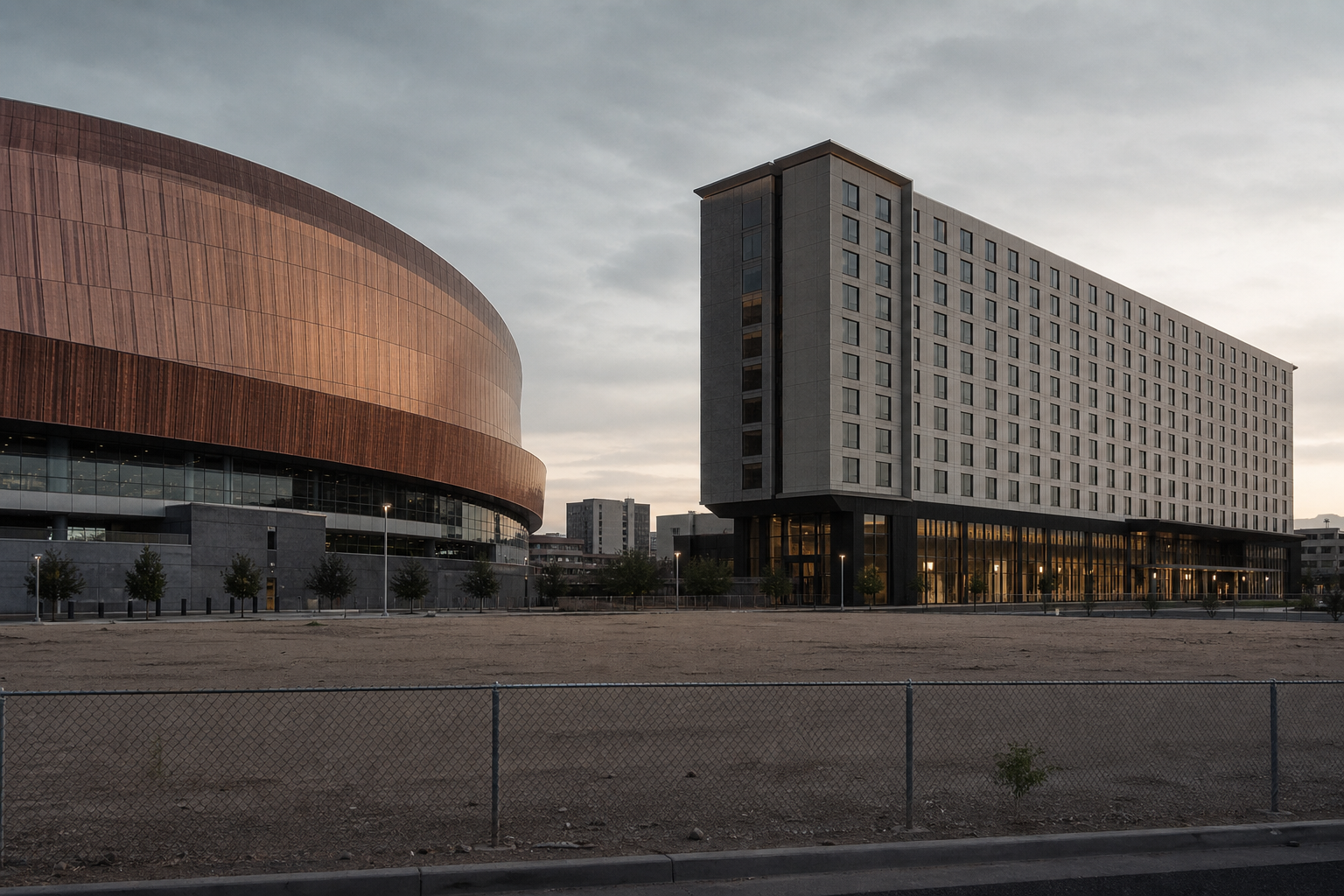
A seven-story, 116,855-square-foot, 168-key upscale hotel is planned at Arizona State University's Novus Innovation Corridor Main Street entertainment district in Tempe, joining Marriott Bonvoy's Tribute Portfolio. The property will feature a rooftop pool and bar and a 2,700-square-foot meeting space, with Okland Construction overseeing planning, design and construction management.
The context is the capital behind the demand. ASU is investing more than 150 million dollars in Novus sports venues, including 55 million dollars for an indoor football practice facility and 100 million dollars to modernize the 51-year-old Desert Financial Arena. That follows a 300 million dollar renovation of Mountain America Stadium and the 140 million dollar, 5,000-seat Mullett Arena.
New hotel construction has been effectively frozen for three years. Construction costs are up, debt is expensive and short, and the market will not underwrite a stabilized revenue per available room that justifies the basis. Almost nothing pencils.
What changes the math here is that the demand generator is already funded by someone who is not the hotel sponsor. Roughly 595 million dollars across the four disclosed venue investments creates a year-round calendar of athletics, concerts and events on the doorstep. That is compressed room-night demand a private developer would otherwise have to create and pay for.
The land structure matters too. University innovation districts typically deliver ground-lease sites in walkable, entitled, infrastructure-complete locations, removing the two costs that most often kill hotel deals: land basis and entitlement risk.
Implications: For developers, the hotel question in 2026 is who funds the demand generator, not what the flag is. For universities, athletic capital spending is now a land-monetization strategy, not only an athletics expense. For lenders, event-calendar concentration is the real risk to test, since the demand base is durable only as long as the programming holds.
Related coverage
Key Takeaways
- Hotels only pencil in 2026 where someone else already paid for the demand, and ASU's roughly 595 million dollars in venues is what makes 168 keys financeable.
- The hotel is underwritten to an event calendar funded by the university, not by the sponsor
- Venue-anchored mixed-use has moved from pro sports to collegiate ground-lease land
- Ground-lease sites in entitled innovation districts remove land basis and entitlement risk, the two costs that kill hotel deals
Connect CRE - ASU Adding Hotel to its Main Street Entertainment District, August 14 2026
Never miss a Signal
Get the daily brief that busy CRE professionals rely on.