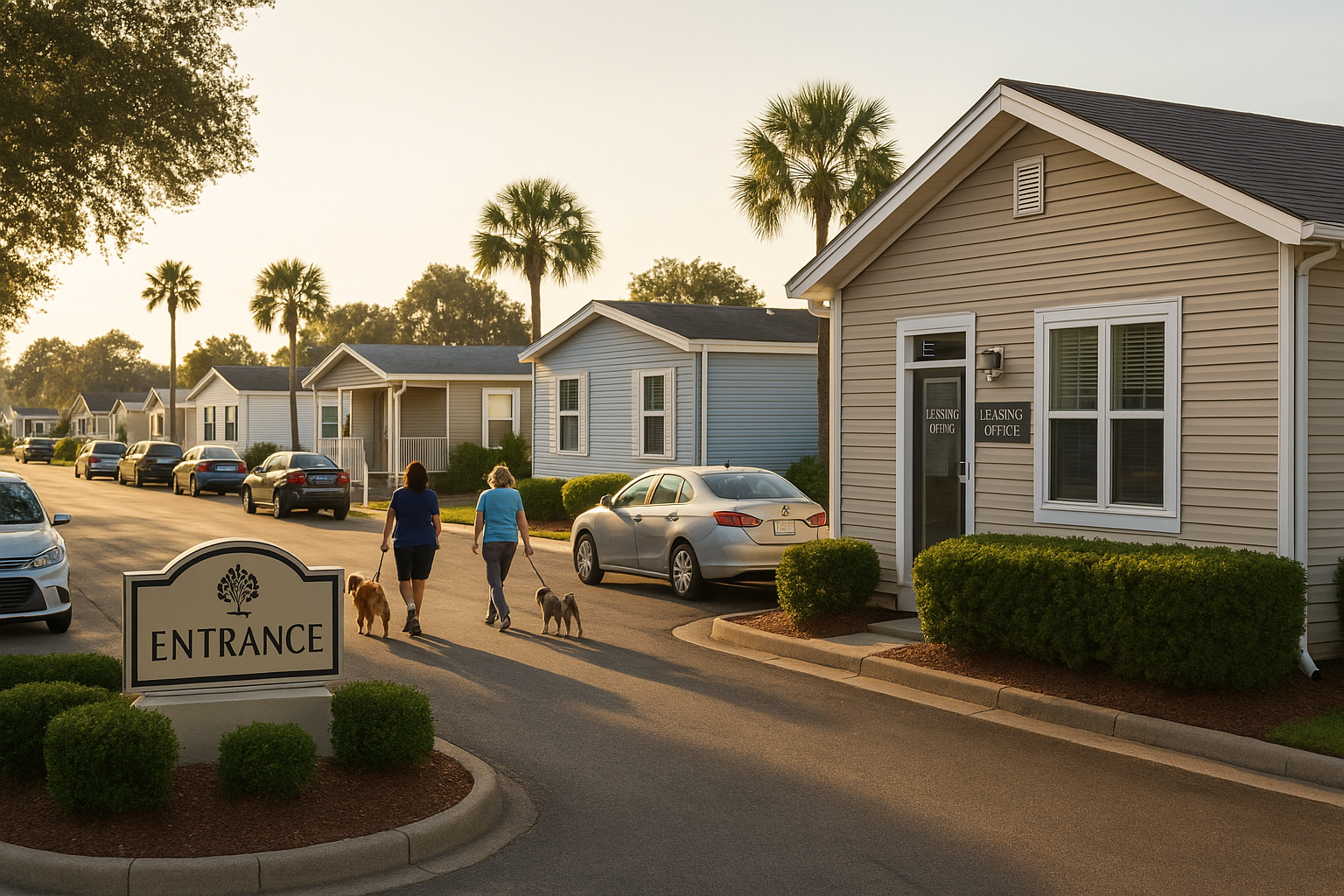


🚨Brookfield is in talks to acquire Yes! Communities for >$10 billion from GIC, signaling renewed institutional conviction in manufactured housing’s defensive cash flows. The platform play leverages sticky tenancy, stable lot-rent growth, and structurally lower capex versus conventional multifamily—at scale. For CRE financing, this points to strong lender appetite for MH communities relative to B/C multifamily in oversupplied metros, with execution supported by predictable operations and pass-through structures.

Implied deal value: >$10 billion (Sept 2025) — [Source: Financial Times].
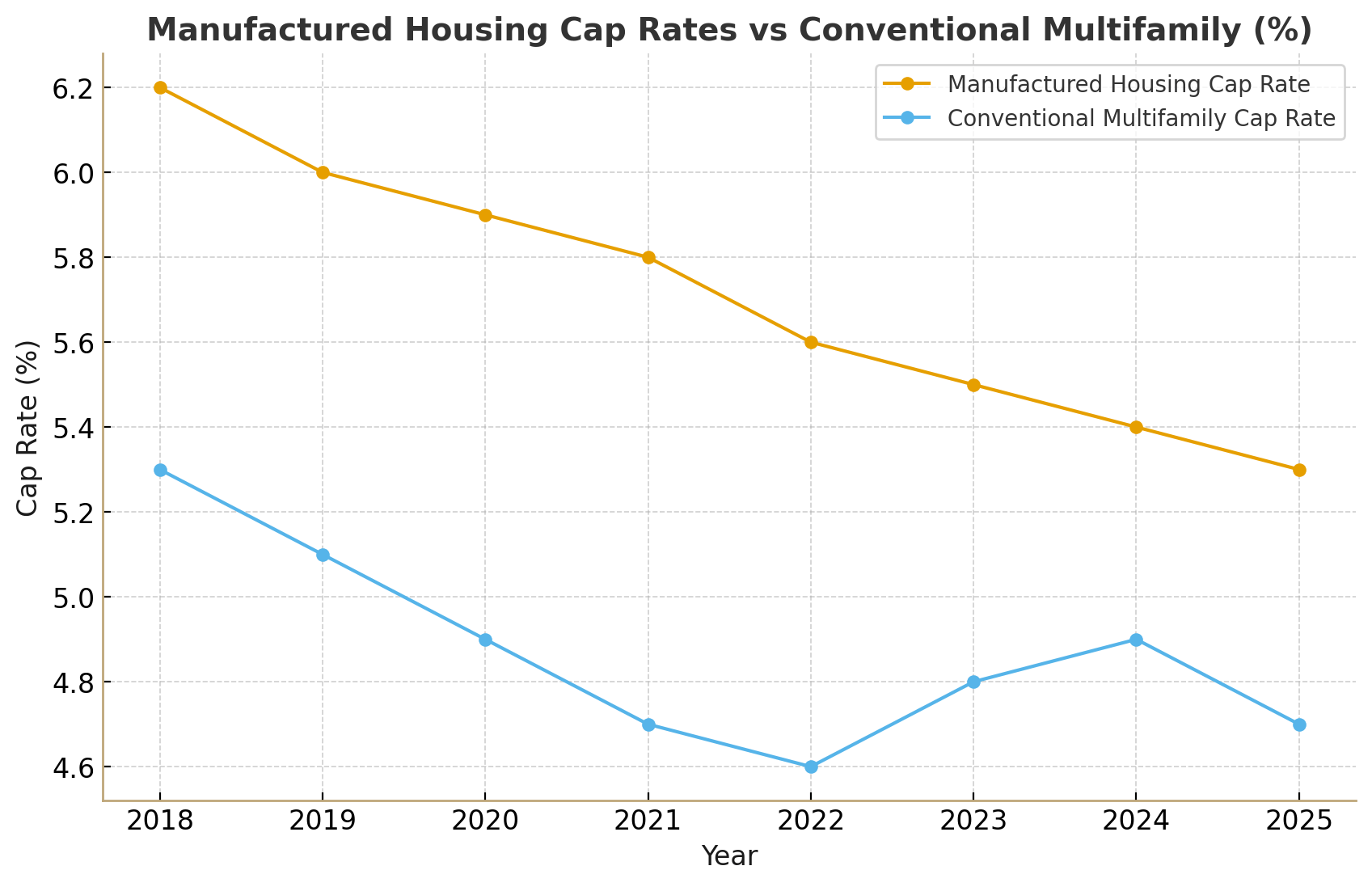
Entry cap rate (prime MH): 5.25%–5.75% (current underwriting) — [Source: CRE360 Underwriting Guardrails].
Lot-rent growth: 3%–4% YoY (base case) — [Source: CRE360 Underwriting Guardrails].
Operating expense ratio: 30%–35% of revenue (annual) — [Source: CRE360 Underwriting Guardrails].

Loan Performance. MH’s stable collections and lower capex intensity support steadier DSCR through cycles; pad-rent pass-throughs and utility/tax structures mitigate margin compression. Caps/floors less critical than in bridge-heavy MF; maturities more financeable given NOI visibility.
Demand Dynamics. Attainable housing need underpins occupancy; turnover is structurally low versus apartments. Limited new MH community supply helps rent-beta without heavy concessions.
Asset Strategies. Focus on pad upgrades, utility sub-metering, amenity light-touch improvements, and in-community infill to drive occupancy and NOI. Avoid outsized home-inventory exposure unless sales velocity is proven.
Capital Markets. Term sheets favor stabilized MH with measurable pass-throughs; spreads vs 10Y remain tighter than for B/C MF. CMBS/CLO desks more constructive on MH pools; banks/life cos steady.

Rates aside, MH cash flows remain resilient and financeable.
Favor communities with clear pass-throughs and proven collections.
Maintain conservative home-sales assumptions; prioritize pad revenue.
Structure for scale synergies; watch local rent policy risk.
🛠 Operator’s Lens
Refi. Target agency/life-co executions; emphasize occupancy durability and pass-through covenants.
Value-Add. Tie amenity spend to rent-ready pad absorption; reserve $150–$250/lot/year.
Development. Entitlement risk and NIMBY constraints argue for brownfield/infill expansions over greenfield.
Lender POV. Preference for stabilized MH, predictable opex, and clear tax/utility pass-throughs; moderate leverage, strong interest reserves.

Watch final pricing/leverage on the Brookfield/Yes! transaction for cap-rate signaling.
Monitor rent-policy scrutiny in MH and any knock-on to underwriting assumptions.
Track MH cap-rate prints into Q1 for confirmation of spread resilience.

PMJ, Allegheny Front/WESA

Never miss a Signal
Get the daily brief that busy CRE professionals rely on.