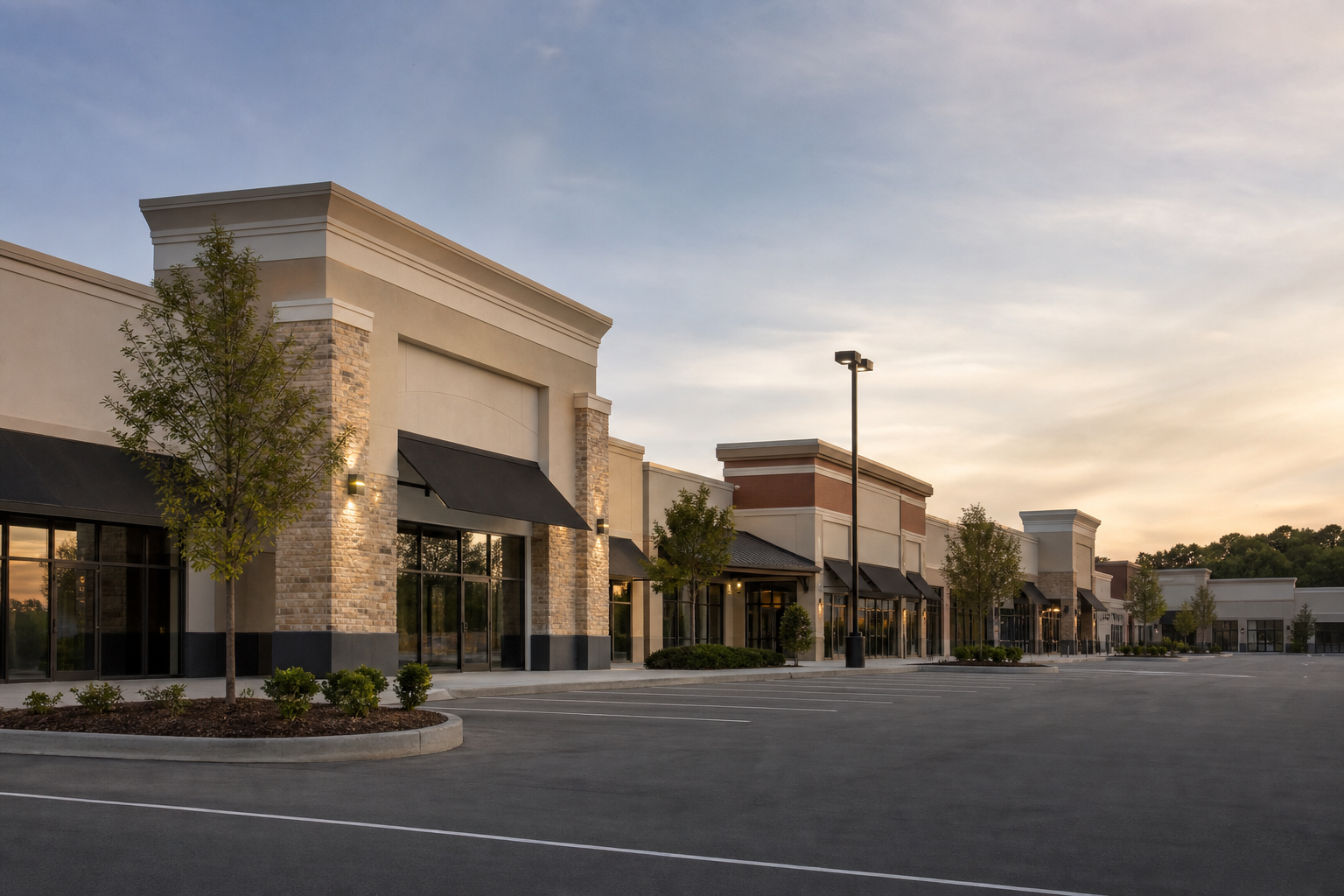
The Signal:
- Public REITs are recycling out of select open-air centers; private aggregators are buying.
- Compressing cap rates reflect a genuine shortage of quality open-air product.
- Almost no new open-air retail is being built, which locks in the scarcity.
The most contrarian trade in retail is buying more of it. DLC is concentrating into open-air centers while a public REIT prunes — a rotation between buyer types rather than a bet on physical retail's demise. The demand backdrop is a supply story: nobody is building open-air retail at scale.
That scarcity is doing the underwriting work. With minimal new supply, high-occupancy centers with grocery or necessity anchors are being re-rated, and cap rates have tightened roughly 75 basis points in a year even as capital stays cautious elsewhere.
The structural read: retail's stigma has decoupled from its fundamentals. The lack of new construction — not a demand surge — is what makes existing centers scarce and bid.
Implications: For owners of stabilized open-air centers, the exit is liquid and pricing has improved. For public REITs, selective disposition funds buybacks and higher-conviction assets. For investors, the moat in retail is replacement cost and entitlement difficulty, not tenant growth.
Related coverage
Key Takeaways
- No one is building open-air retail — which is exactly why aggregators are paying up for what already exists.
- Public REITs prune open-air retail while private aggregators concentrate into it
- ~75 bps of cap-rate compression in a year reflects a supply shortage, not a demand surge
- The retail moat is replacement cost and entitlement difficulty, not tenant growth
Connect CRE — DLC Pays $36.6M for Charlotte Retail Center, July 2026 · CRE Daily — Retail REITs Ride A Scarcity Boom At ICSC 2026, July 2026
Never miss a Signal
Get the daily brief that busy CRE professionals rely on.