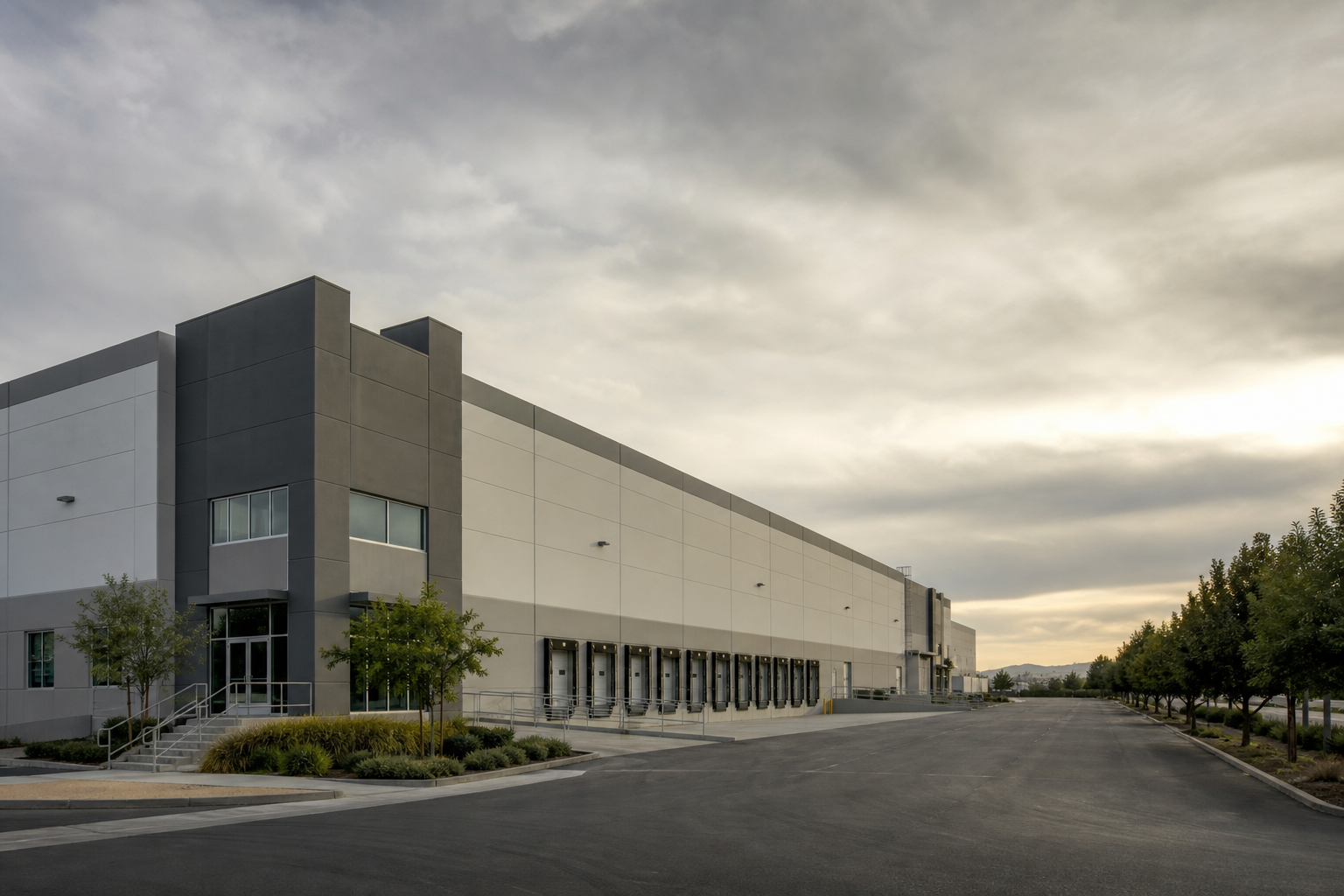
NorthPoint Development paid $87.5 million for a nine-building, 534,550-square-foot industrial portfolio in Benicia Industrial Park, Solano County — $163.69 per square foot, or roughly $9.7 million per building. The portfolio is 100% leased to 19 tenants averaging about 28,134 square feet each, with a weighted average lease term of 3.43 years and in-place rents marketed as below market. Link Logistics was the seller. CBRE arranged the sale across two infill sites at 6200–6850 Goodyear Rd and 5301–5341 Industrial Way.
A fully-leased Bay Area infill portfolio changed hands at a price that only works if rents move. The 3.43-year weighted average lease term is not a defect in this trade — it is the product.
Benicia sits at the north end of the Bay Area industrial supply chain: an older, land-locked park in Solano County that cannot be replicated at anything close to $163.69 per foot. Replacement economics in Northern California start well north of that number before land.
The 19-tenant roster and the sub-four-year term mean the buyer is not underwriting the current rent roll. It is underwriting the next one. Roughly a third of the income is exposed to renewal every year, which in a falling market is the fastest way to lose a deal and in a tight market is the fastest way to make one.
Link Logistics selling is the part worth sitting with. A platform of that scale does not exit infill Bay Area logistics because it has run out of conviction in the sector. It exits because a price cleared, and because capital recycling has become a more reliable source of returns than holding.
Staggered expirations across nine buildings also mean the mark-to-market arrives in slices rather than all at once, which smooths the income curve but delays the payoff.
Implications. This is a mark-to-market bet dressed as a stabilized acquisition. Every dollar of return above going-in yield depends on 19 separate lease negotiations over the next four years. If Bay Area industrial rent growth flattens, the buyer owns a portfolio at $163.69 a foot with no lease-up story and no rent story. If it holds, the term that looks like risk on paper is the entire thesis. For owners in constrained coastal markets the read is straightforward: short lease terms are no longer being discounted — they are being paid for.
Related coverage
Key Takeaways
- In supply-constrained industrial markets, a short lease term has stopped being a discount and started being the asset.
- Roughly a third of this portfolio's income re-prices every year — that exposure is the business plan, not a flaw in it.
- Link Logistics selling stabilized Bay Area infill says more about capital recycling than about conviction in the sector.
The Registry Northern California, September 1, 2026 · Commercial Property Executive, September 2026
Never miss a Signal
Get the daily brief that busy CRE professionals rely on.