📢 CRE 360 Signal™.
A May 21 Federal Reserve working paper concludes there is no clear evidence banks have been extending CRE loans to hide stress. Bloomberg confirms the same week that lenders are actively writing down troubled loans — by as much as 85% of payoff value. The thesis that anchored three years of distressed strategy needs re-reading.
🎧 Catch the Wekkly Podcast (Subscribe on YouTube, Apple, Spotify)➤ SIGNALS
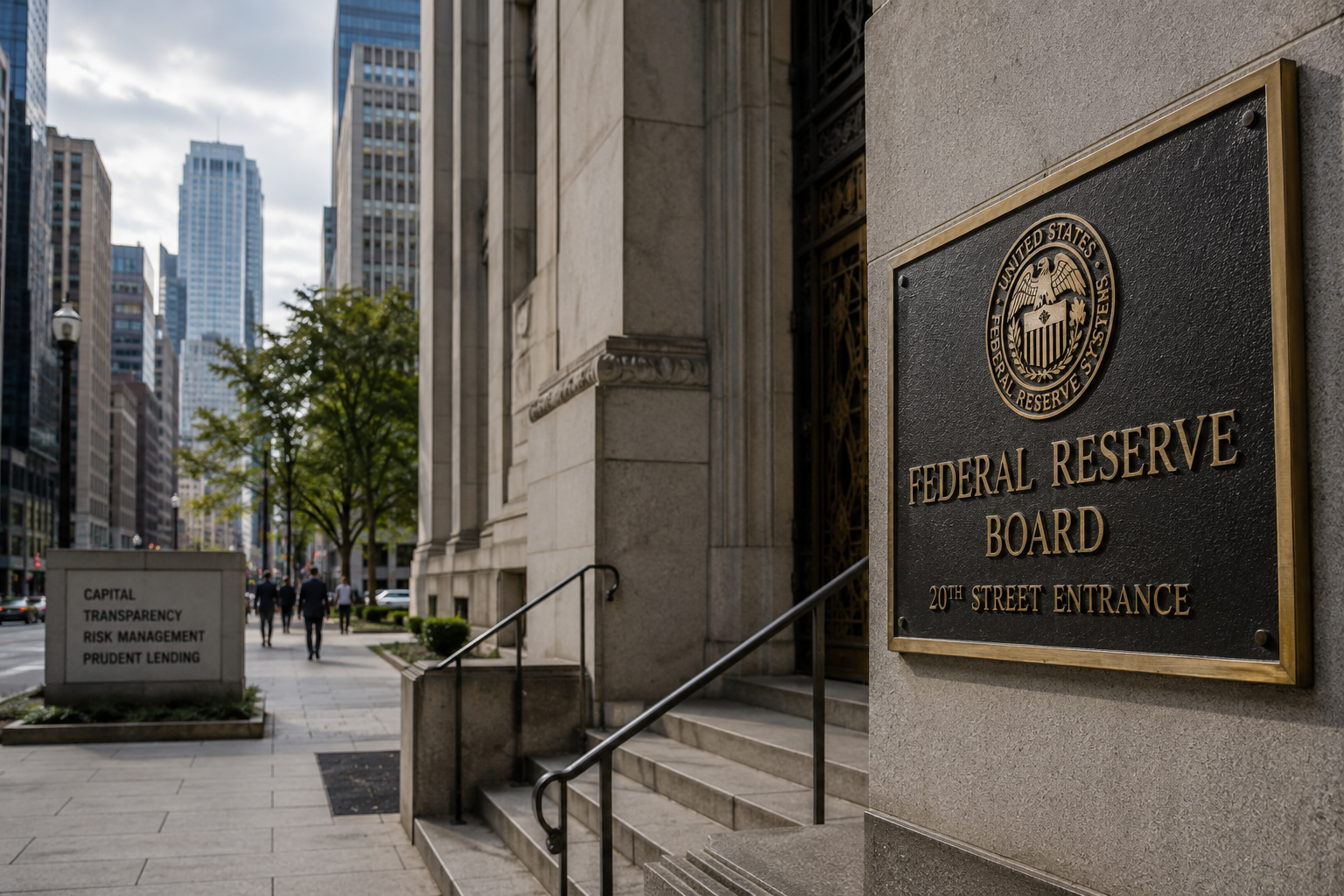
David Glancy, a Federal Reserve Board economist, published a working paper this week titled Pretend or Amend? On Evergreening in CRE. The headline finding cuts directly at the dominant CRE narrative of the last three years: there is no clear sign banks have systematically extended troubled loans to hide stress.
The supporting data is more uncomfortable for the standard story than the headline alone. Since 2022, low-yielding loans were about 7 percentage points less likely to receive extensions, and non-recourse loans were 5 percentage points less likely. Roughly half of maturing loans received extensions post-2023 — modestly above the pre-pandemic mid-40s rate but well below the pandemic-era ~60% peak. And the loans that were extended outperformed: 58% of stress-era bank-extended loans paid off within six quarters, against 52% of non-extended maturing loans. That is not a hiding pattern. That is a screening one.
The behavior side confirms it. Bloomberg reported earlier in May that Goldman Sachs, Deutsche Bank, and smaller lenders are actively offloading non-performing CRE loans, sometimes writing down as much as 85% of the payoff amount, against more than $130 billion in distressed commercial-property debt. MBA's Q1 2026 originations data — depository CRE lending up 80% year over year — shows banks redeploying capital, not freezing it in place.
The intellectual foundation under "banks are sitting on a trillion-dollar hidden loss" has cracked. Banks aren't hiding the losses. They're taking them, and they're already lending again.
IMPLICATIONS
Distressed-fund managers whose 2024–2026 strategy was anchored to mass bank-side fire sales need a new entry. The supply of "hidden" assets is smaller than the thesis assumed, and the channel for the assets that are clearing is now writedowns and secondary trades, not foreclosure waves. The trade left isn't waiting for capitulation — it's underwriting the loans banks have already chosen to keep.
Allocators sourcing CRE credit exposure should look hard at the modified-loan book from 2023–2025. The Fed data implies banks were selecting for recoverable loans when they extended — meaning the modified pool may carry better credit features (paydowns, partial recourse, spread step-ups) than the secondary market is pricing. There is a modification premium hiding in plain sight.
Sponsors with 2021-vintage maturing debt should stop expecting the "bank willing to roll one more time" outcome as the base case. Banks have demonstrated capacity to take a writedown and move on. If your refi math doesn't pencil, the workout conversation is now a real one, not a deferred one.
Key Takeaways
The story that explained CRE for three years was that banks were hiding the bodies. The story for the next eighteen months is that the bodies were never there — and the banks have already started cleaning up the ones that were.
CRE 360 Signal™ — Commercial Real Estate Intelligence
▼ EDITORIAL DESK TOP PICKS
Capital Markets / Debt / Refinancing
Korea Post expands into AI data centers and overseas real estate — Korea Post plans to raise alternative investments to 20% of assets, targeting AI infrastructure and global CRE.
UK CRE lending hits highest level in a decade — New commercial real estate lending volume in the UK surged, intensifying refinancing competition among lenders.
AvalonBay–Equity deal signals changing multifamily credit conditions — GlobeSt says large public apartment REIT consolidation reflects shifting financing dynamics and investor expectations.
Commercial mortgage lending reaches five-year high — CBRE’s Lending Momentum Index climbed to its strongest level since 2021 as multifamily and non-agency lending accelerated.
Kayne Anderson closes $5.12B opportunistic real estate fund — The oversubscribed raise suggests institutional capital is preparing for aggressive CRE deployment.
Office / Leasing / Conversions
AI-driven workforce shifts are reshaping office demand — New office demand is increasingly concentrated in premium assets and AI-linked tenant clusters.
Milwaukee office-to-apartment conversion lands $114M financing — A former office tower secured HUD-backed financing for one of Wisconsin’s largest conversion projects.
San Jose office conversion secures $74.1M financing package — The former Bank of Italy office redevelopment highlights growing lender support for adaptive reuse.
Metro Boston healthcare property trades for $32.1M — Investors continue targeting medical office and healthcare assets as defensive CRE plays.
Los Angeles value-add apartment asset sells for $10M — South Park multifamily demand continues attracting private investors despite broader market volatility.
Retail / Mixed-Use / Consumer Demand
San Antonio lifestyle center acquired by Rio Capital and Triangle Capital — The Legacy retail and mixed-use center sale reflects renewed liquidity for open-air retail assets.
JLL brokers sale of premier San Antonio shopping center — Institutional buyers continue favoring stabilized lifestyle retail properties in high-growth Sun Belt markets.
ICSC 2026 shows retail rebound driven by experiential and lifestyle formats — Retail recovery is increasingly tied to entertainment, dining, and mixed-use experiences.
San Diego retail building refinanced with $24M loan — Life-company lenders remain active in urban retail refinancing for stabilized assets.
Open-air retail continues attracting institutional capital — ICSC reports grocery-anchored and open-air retail assets remain among the strongest-performing property types.
Industrial / Logistics / Data Centers
EdgeConneX announces €3B Italy data-center expansion — The company plans multiple Lombardy campuses totaling more than 300 MW of future AI infrastructure capacity.
Data-center backlash intensifies across U.S. municipalities — Moratoriums, power concerns, and ratepayer pushback are increasingly slowing hyperscale approvals.
AI could add 330M square feet of CRE demand over the next decade — Cushman & Wakefield says AI adoption will reshape demand across office, industrial, and infrastructure assets.
Apartment construction surge offsets decline in single-family starts — Multifamily starts remain resilient as rental housing demand continues supporting development pipelines.
Tejon Ranch reports positive commercial real estate EBITDA in Q1 — The California land and mixed-use developer reported ongoing momentum across its CRE portfolio.

Related coverage
Get Extend-and-Pretend Wasn't What It Looked Like. in your inbox
A Fed economist published the data. Lenders backed it up with writedowns.