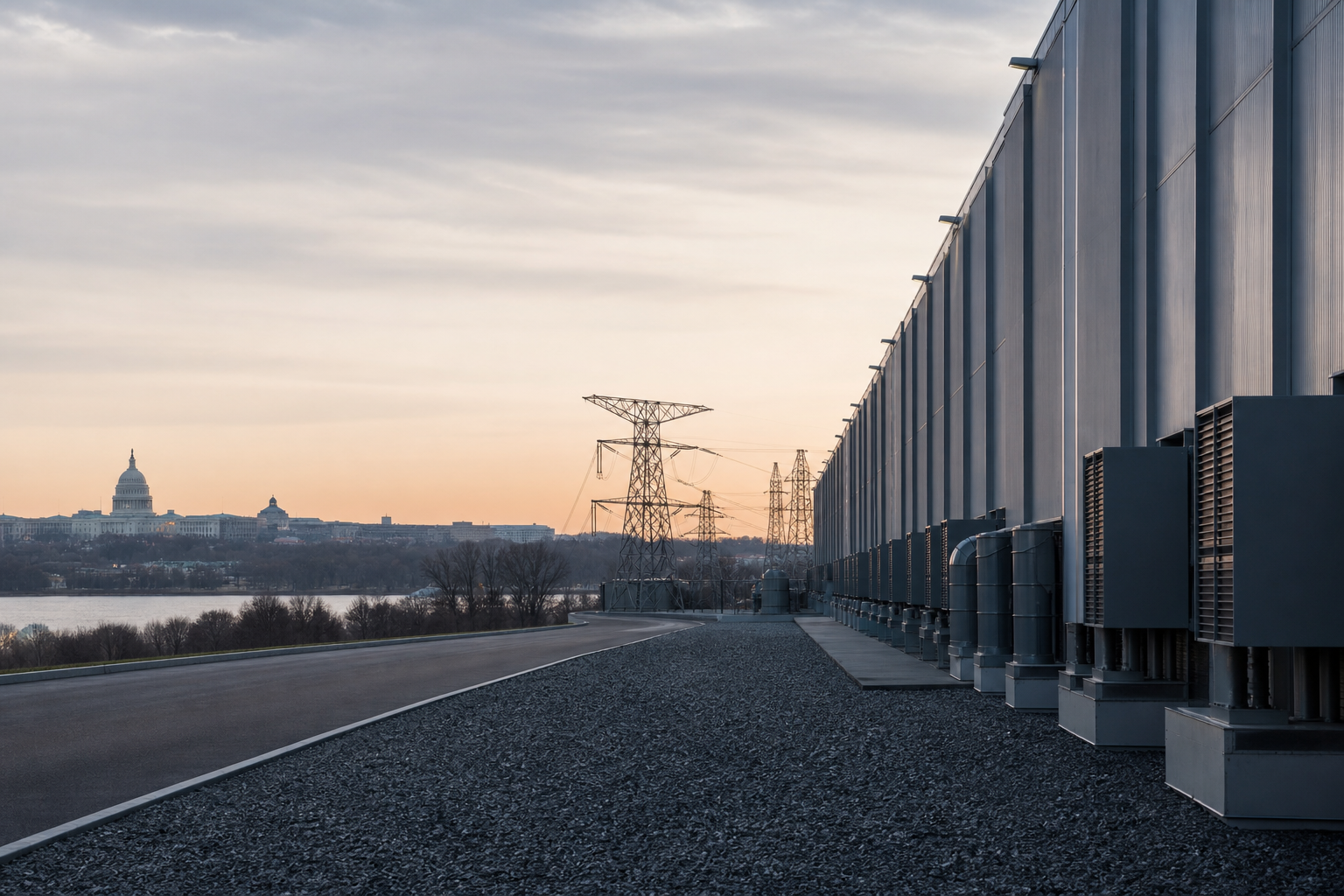
The Signal:
- Interconnection rules, not zoning, now decide where power-hungry CRE can land.
- Federal action is trying to unclog a queue measured in years.
- Ratepayer protection could slow or reprice new large-load connections.
The July 20 filings turned an abstract bottleneck into a live regulatory process. For two years the binding constraint on data-center and advanced-manufacturing development has been interconnection timelines, not capital or tenant demand. FERC is now forcing every organized market to show its work on serving gigawatt-scale loads.
The read for CRE is directional. Faster, clearer interconnection rules favor markets and sites that can prove power availability; ratepayer-protection provisions may add cost or conditions that steer new loads toward specific grids. Either way, the value of grid-connected, entitled land rises relative to raw acreage.
Implications: Site selection for power-intensive assets is becoming a utility-and-tariff question first, a real-estate question second. Developers who track RTO reform will identify buildable markets before pricing catches up. Expect capital to concentrate where interconnection certainty is highest.
Related coverage
Key Takeaways
- The scarce input in AI-era real estate is electrons — and Washington just made the rules for delivering them the industry's most important site-selection variable. Interconnection rules — not zoning — now decide where power-hungry real estate can land. Grid-connected, entitled land rises in value relative to raw acreage. Site selection for power-intensive assets is a utility-and-tariff question first.
FERC — FERC Launches Aggressive Targeted Action to Speed Large Load Integration, 2026. Utility Dive — 6 Takeaways From FERC's Data Center Interconnection Decision, 2026. McGuireWoods — FERC Issues Section 206 Show Cause Orders Directing All Six RTOs/ISOs, June 2026.
Never miss a Signal
Get the daily brief that busy CRE professionals rely on.