The Signal:
- Tier-1, pedestrian-to-campus beds are the scarce, defensible slice of student housing.
- Consolidators are compounding platforms market by market, not chasing one-off yield.
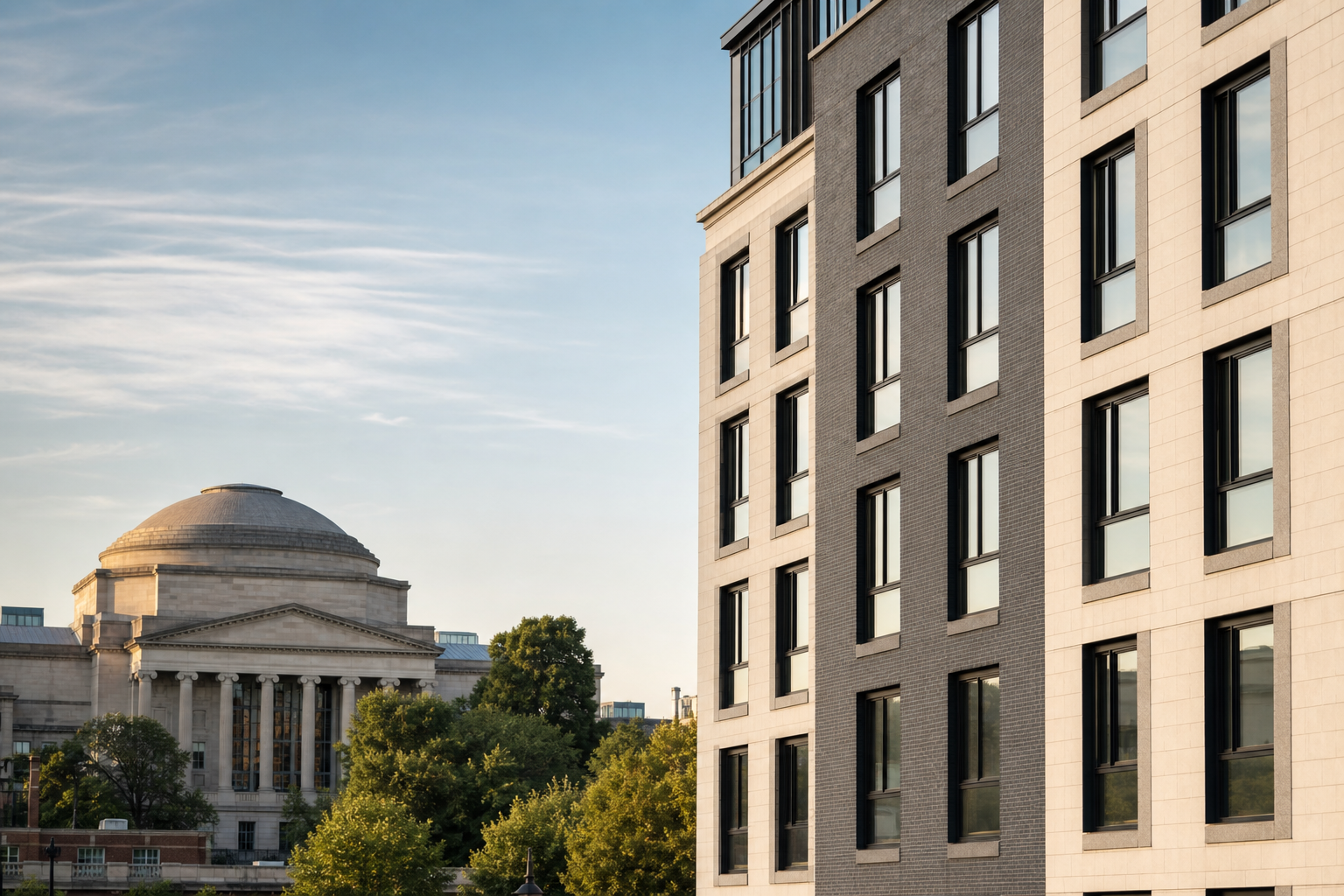
Student housing durability lives in the pin-drop: beds a student can walk to class from at a flagship or top-tier private university. Varsity on K, adjacent to George Washington University in the Washington D.C. West End, is exactly that, a supply-constrained urban site where new pedestrian product is nearly impossible to add.
HH Group acquired the 197-unit, 212-bed community and will rebrand it Haven on K. Buying a third asset in one metro is a platform move. Operating density lowers management cost, sharpens leasing, and builds the local brand that drives pre-lease velocity, the metrics that actually underwrite student housing.
The read for CRE is that education demand is inelastic at the top of the market, and the real-estate expression of that is proximity. Own the walkable beds at a Tier-1 school and you own pricing power that shrugs off the broader cycle.
Implications: For owners, pedestrian-to-campus beds at flagship schools carry the deepest, most defensible bid. For investors, platform density beats scattered yield in student housing. For developers, urban campus-adjacent sites are effectively un-buildable new, which is the moat.
Related coverage
Key Takeaways
- HH Group 212-bed GWU-adjacent buy shows institutional capital paying for the scarcest thing in student housing, beds a student can walk to class from.
- Tier-1 pedestrian-to-campus beds are the scarce, defensible slice of the sector
- Platform density beats scattered yield for consolidators
- Education demand is inelastic at the top, and proximity is how you own it
GlobeNewswire - HH Group Acquires Strategic Washington D.C. Student Housing Investment Near George Washington University, August 14 2026
Never miss a Signal
Get the daily brief that busy CRE professionals rely on.