📢 CRE 360 Signal™.
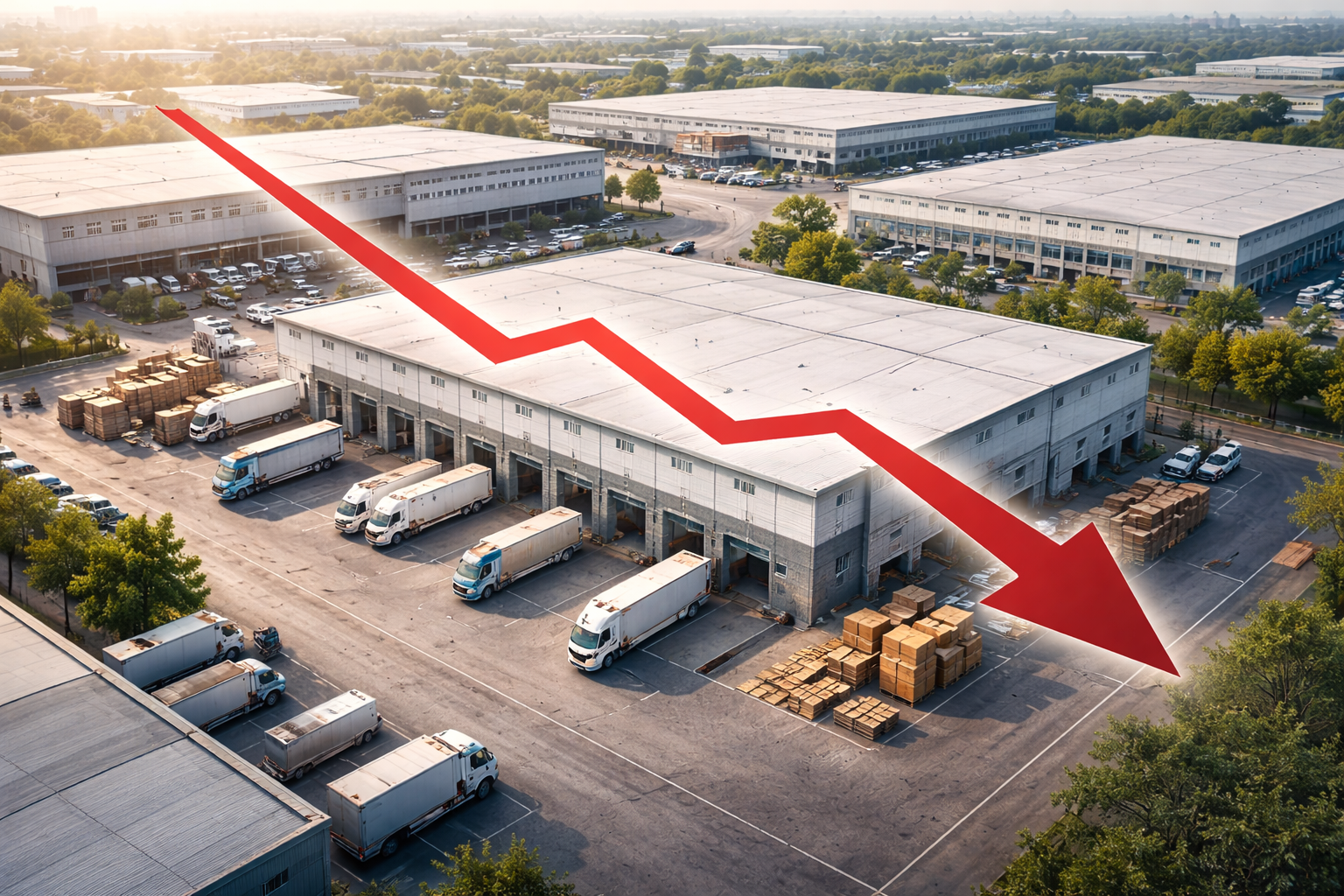
Industrial rent growth has reversed across all size categories, with large warehouse rents now declining and smaller formats seeing sharp deceleration. The shift reflects a transition from demand-driven expansion to a more balanced market, as new supply and slowing tenant activity begin to reshape pricing dynamics.
🎧 Busy to read? Catch the Daily Podcast (Subscribe on YouTube, Apple, Spotify)➤ SIGNALS
U.S. industrial real estate is entering a new phase, as rent growth across warehouse properties has slowed sharply and, in some cases, turned negative. According to recent data from CoStar Group, asking rents are now declining or flattening across all major size categories, marking a clear break from the sector’s multi-year expansion cycle.
The most pronounced shift is occurring in large-format logistics facilities. Properties exceeding 50,000 square feet have seen rent growth fall from a compound annual rate of 8.8% in 2019 to a current annual decline of approximately 2.7%. This reversal reflects reduced activity from large-scale occupiers and a growing supply of bulk distribution space.
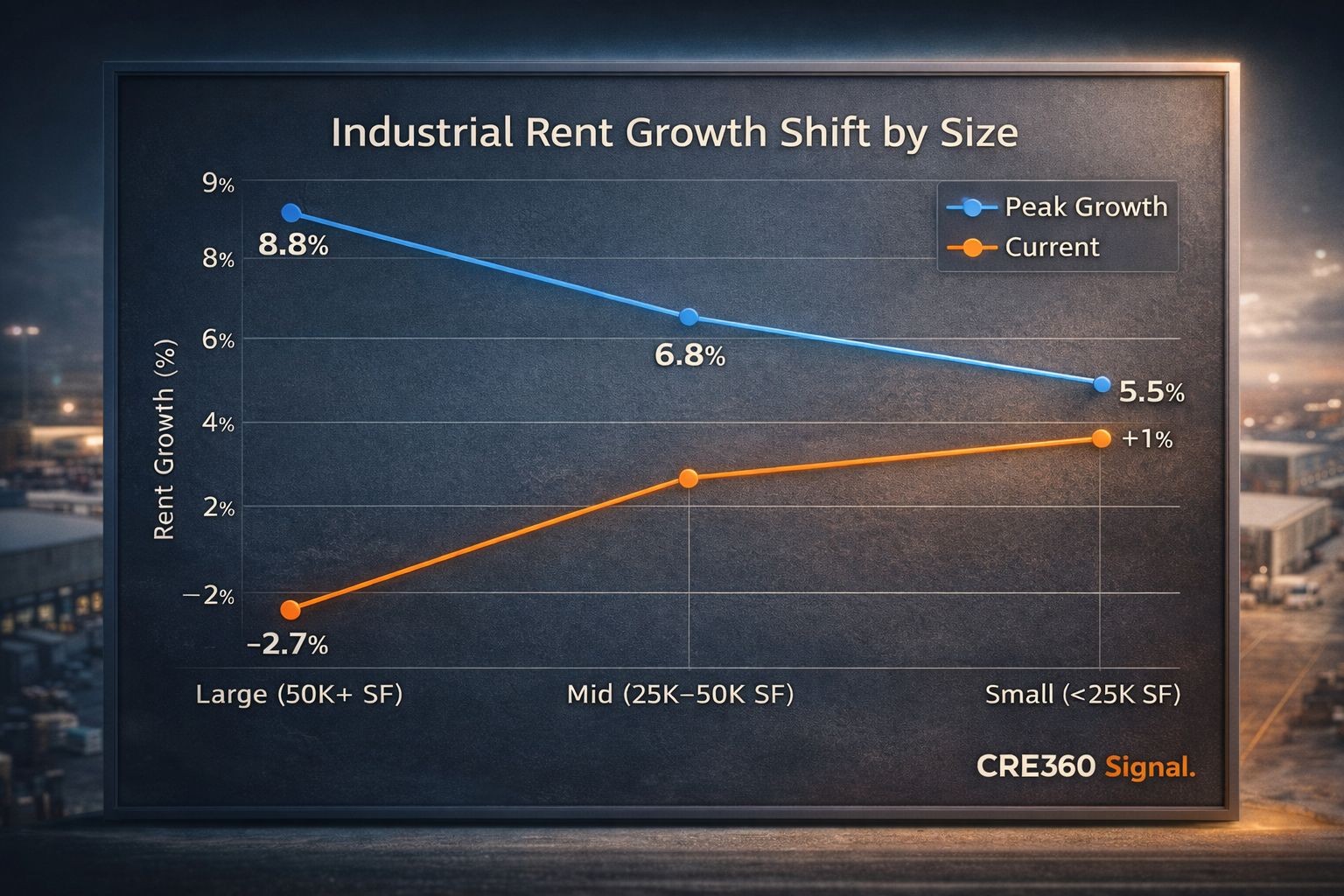
Mid-sized industrial properties—ranging from 25,000 to 50,000 square feet—have also experienced a significant slowdown. Previously posting growth rates above 6%, rents in this segment are now largely flat, as increased supply has introduced more competition for tenants across multiple markets.
Smaller industrial assets, particularly those under 25,000 square feet, have shown more resilience but are no longer immune to the broader trend. Rent growth in this category has declined from over 5.5% to below 1%, indicating a meaningful deceleration even in segments that previously benefited from limited supply.
Regional variation remains a factor. Larger leases continue to perform more favorably in certain markets—particularly in mountain and northeastern regions—where supply growth has been more constrained. However, across most regions, the increase in available space has shifted leverage toward tenants.
Demand patterns are also evolving. Large occupiers have pulled back from major leasing decisions, with fewer large-scale transactions taking place. According to market participants, leases exceeding one million square feet are expected to remain limited until broader economic conditions improve.
At the same time, smaller-format industrial properties—often referred to as shallow-bay warehouses—continue to see relatively stronger demand. These properties, typically under 50,000 square feet and serving local distribution and light industrial users, have experienced sustained rent growth over the past decade, with current rent levels significantly higher than historical benchmarks.
However, even this segment is beginning to moderate, as smaller businesses face increased economic uncertainty and more supply gradually enters the market.
Key Takeaway
Industrial rent growth has turned negative or flat across all size categories
Large warehouse rents have declined from strong growth to contraction
Mid-sized assets are experiencing broad stabilization due to increased supply
Small-bay properties remain relatively stronger but are slowing
Tenant demand is shifting, with large occupiers pulling back
Supply growth is now the dominant force shaping pricing
CRE 360 Signal™ — Commercial Real Estate Intelligence
▼ EDITORIAL DESK TOP PICKS
Capital Markets / Debt / Macro
CRE capital markets are “functioning again,” but unevenly — Analysts say liquidity is improving after a long freeze, though capital is still highly selective.
Real estate fundraising is finally recovering after years of decline — Capital is returning but largely targeting debt, alternatives, and top-tier sponsors.
Major CRE deal volume hit $24.1B in January 2026 — Early-year activity shows a modest rebound led by multifamily, retail, and industrial.
Tariffs and trade policy are raising development costs — Policy uncertainty is delaying projects and impacting underwriting decisions.
Affordable housing policy changes in Florida are easing lending — Legislative updates are expanding development feasibility and financing access.
Transactions / Deals
$465M CMBS loan closes on San Diego life science campus — JPMorgan and pahttps://www.commercialsea…rtners financed a 520K SF project, signaling continued demand for life science assets.
Alexander & Baldwin taken private in $2.3B deal — Blackstone and partners are buying out the Hawaii-focused REIT, continuing the privatization trend.
Brooklyn penthouse trades for $16M in NYC deal roundup — High-end residential-adjacent CRE transactions remain active in prime locations.
Retail expansion underway at Kentucky mixed-use center — A $14.1M project is adding 30,000+ SF of retail space to a major lifestyle center.
Industrial / Development
New Jersey enters top 10 for industrial construction pipeline — The state now has 7.5M SF under construction, reflecting strong logistics demand.
🔗 https://njbiz.com/nj-top-10-industrial-space-under-construction-2026/Amazon drives major share of large industrial builds — The company accounts for multiple top projects delivering in 2026.
Data center and power-constrained assets leading investment focus — Power availability is becoming a primary driver of industrial and tech real estate value.
Office / Market Signals
Miami office rents are pushing growth into suburban markets — Brickell pricing is driving tenant migration to nearby submarkets nearing $100 PSF.
NYC office and development activity continues across boroughs — Leasing and development projects remain active despite broader office uncertainty.
Policy / Regulation
U.S. Senate passes major housing reform legislation — The bill aims to boost supply but does not override local zoning constraints.
Market Trends / Strategy
CRE increasingly viewed as a capital preservation asset during global instability — Investors continue using real estate as a hedge, though not a true safe haven.
Global M&A activity surging, supporting real estate deal flow — February deal value doubled month-over-month, indicating broader capital market momentum.
REITs emerging as defensive plays in uncertain markets — Investors are shifting toward income-producing real estate vehicles.
2026 outlook shows recovery driven by income, not cap rate compression — Future returns are expected to come from NOI growth rather than valuation expansion.

Related coverage
Get Industrial Rent Growth Turns Negative as Supply Catches Up in your inbox
Industrial rent growth turns negative as rising supply and weaker tenant demand reshape warehouse pricing across all size segments.