The Signal:
- Conversions are now a repeatable housing-supply strategy, not a one-off.
- The economics work where land basis is repriced and municipal programs offset cost.
- Gateway downtowns are recycling obsolete office into scarce urban rental.
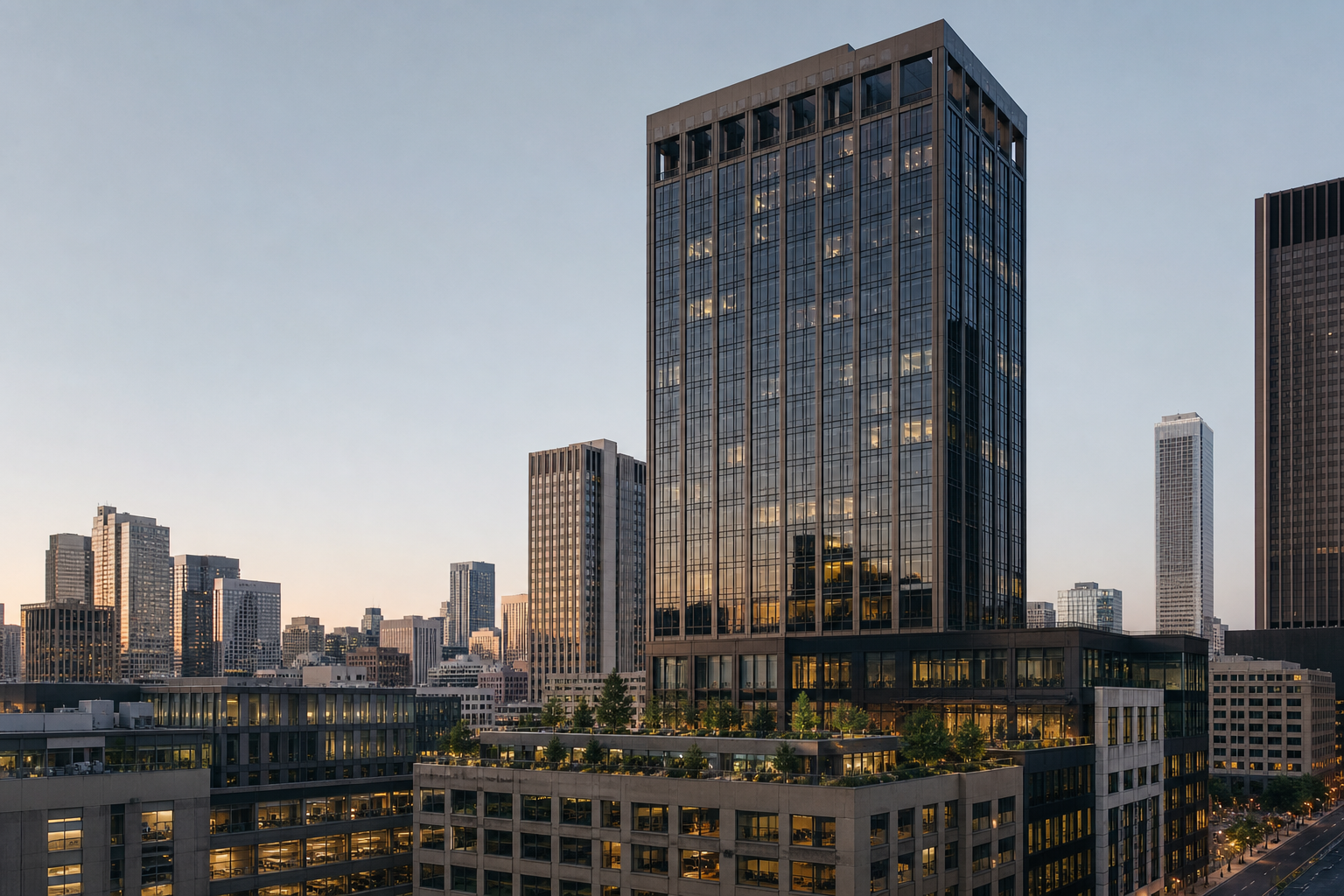
Office-to-residential has crossed from experiment to pipeline. The unit count nationwide jumped roughly 28% in a single year toward 90,300, led by New York and Washington. Named projects anchor the trend: GFP Real Estate is leasing Wrey, its 788-unit conversion of 222 Broadway, and DC broke ground on The Geneva, its largest-ever conversion at 532 homes.
What changed is the math. Repriced office basis, targeted tax abatements, and by-right zoning tweaks have narrowed the gap between conversion cost and stabilized rent. Cities are underwriting the fiscal upside, and both DC and Boston extended programs after early wins.
The structural point: adaptive reuse now competes on a location the ground-up cannot buy, in exactly the walkable cores where new multifamily is hardest to entitle.
Implications: For office owners holding obsolete B and C stock, conversion is a real exit, not a fantasy. For multifamily developers, converted product competes on location. For investors, adaptive reuse underwrites on delivered basis and municipal subsidy, a different risk profile than either pure office or pure multifamily.
Related coverage
Key Takeaways
- When a single year adds roughly 20,000 converted apartments, office-to-residential has become supply infrastructure, not a headline.
- Conversions are a repeatable housing-supply strategy, not a one-off
- The math pencils where office basis is repriced and municipal programs close the gap
- Adaptive reuse underwrites on delivered basis and subsidy, not office comps
Smart Cities Dive — Office-to-housing conversions grew 28% last year, July 2026 · Office of the NYC Comptroller — Office-to-Residential Conversions in NYC: Economics and Fiscal Estimates, 2026 · New York YIMBY — Ongoing Office-to-Residential Conversions to Bring Nearly 3,000 New Units to Manhattan, June 2026 · DC Mayor's Office — Mayor Bowser Breaks Ground on The Geneva, 2026 · Boston.gov — Office to Residential Conversion Program Extended, 2026
Never miss a Signal
Get the daily brief that busy CRE professionals rely on.