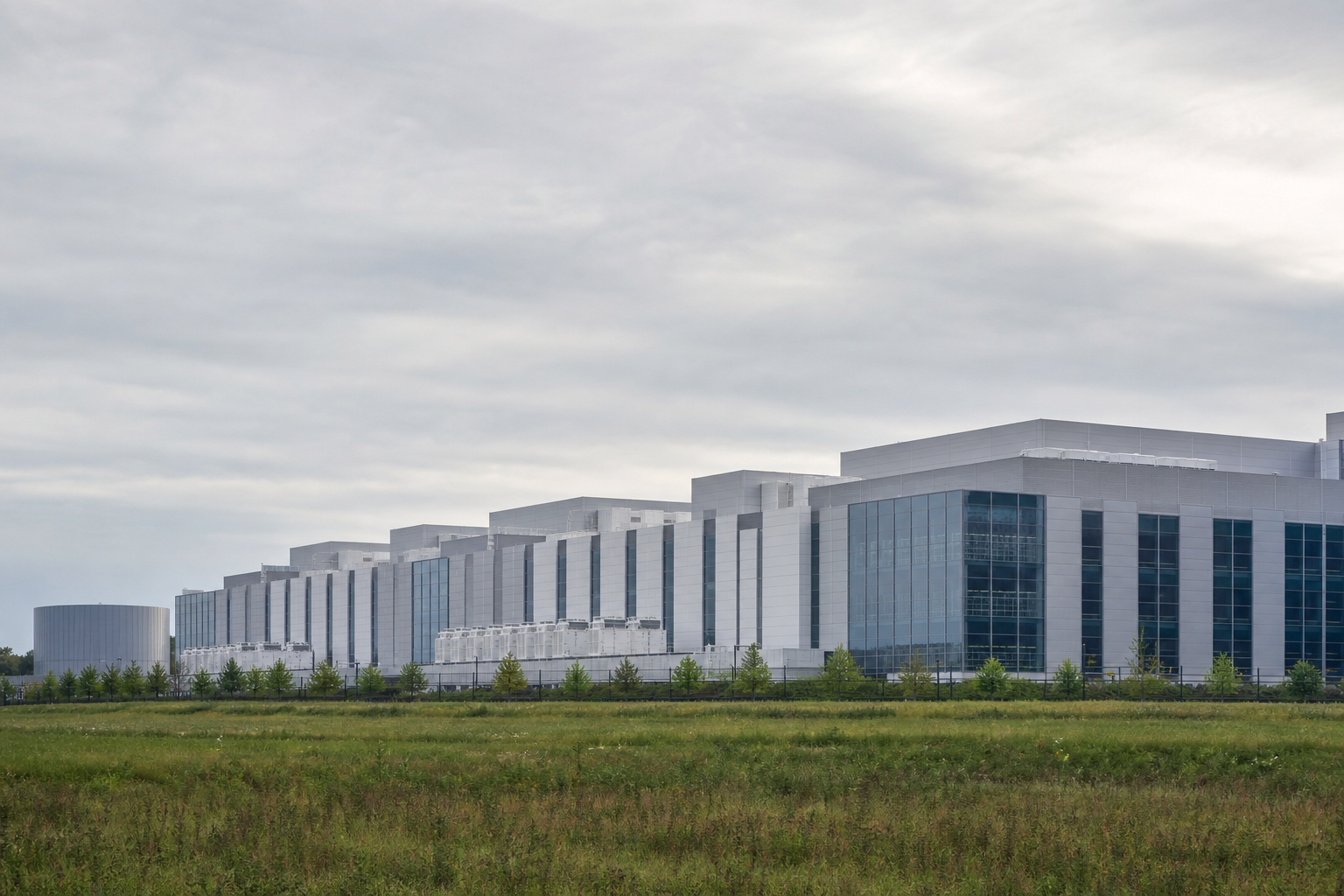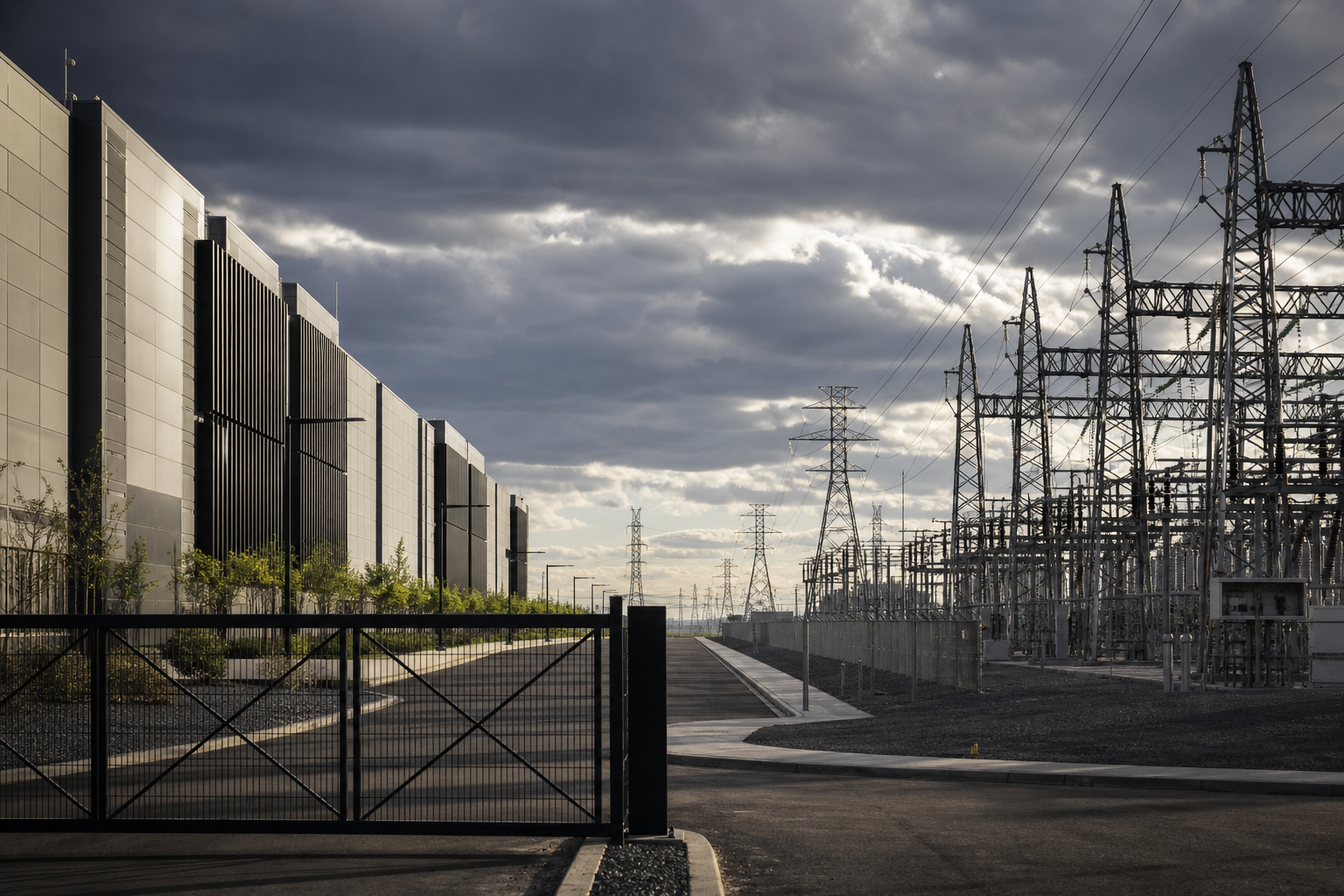
THE SIGNAL. On July 28 PJM Interconnection the operator of the largest power grid in the United States confirmed it will curtail data centers of 50 MW or larger during capacity shortfalls beginning June 2027. The move follows a first-in-history miss: PJMs December 2025 capacity auction came up 6625 MW short of its reliability target and reserve margins are projected short across June 2027 to May 2028. New large loads that have not secured their own generation by June 2027 can be curtailed before they are deployed.
The regulatory front opened the same week. Oracle asked a Wisconsin court to overturn a rule requiring hyperscale developers to post hundreds of millions of dollars in financial security an early legal test of who carries the risk of powering AI infrastructure. And on July 17 state ratepayer advocates told FERC its show-cause order to PJM and five other grid operators fails to resolve who pays for the transmission upgrades data centers require.
OUR READ. For a decade the data-center equation was land fiber and capital. Power was assumed. That assumption is dead. PJM has told the market that being interconnected is no longer the same as being guaranteed interconnected and that the queue itself is now the entitlement. A sponsor can control every other input and still watch its energization date slip past lease commencement.
The financial-security fight compounds it. When regulators force developers to post nine-figure collateral to hold power optionality the cost of carrying a speculative site climbs sharply. Only the best-capitalized sponsors can absorb it which thins the buyer pool for raw sites and widens the gap between shovel-ready-with-power and everything else.
The cost-allocation question at FERC decides whether ratepayers or data centers eat the network-upgrade bill. Push it onto the data centers and the all-in cost per megawatt rises killing marginal projects. Push it onto ratepayers and the political backlash already visible in eminent-domain fights across Georgia and Virginia accelerates the very restrictions the industry wants to avoid.
STAKEHOLDER LENS. Developers: land near firm contracted power is now the most valuable input. Hyperscalers: bring-your-own-generation moves from hedge to requirement. Lenders: curtailment risk belongs in the credit box a switchable load is not a base-load tenant. Investors: the winners are platforms with locked contracted power the losers are options on a queue that may never clear.
Key Takeaways
In digital infrastructure power is the new permitting. The deal no longer clears on whether you can lease it it clears on whether you can power it and whether the grid will let you keep it on.
In digital infrastructure power is the new permitting
Interconnection not land is the gating item and the queue is the entitlement
Underwrite the energization date and curtailment tier not just rent and absorption
Land near firm contracted power reprices up; stranded sites lose value
Whether PJMs tiered curtailment becomes the template other grid operators adopt or a one-grid response to a one-grid shortfall. FERCs cost-allocation answer is pending and the Oracle ruling in Wisconsin will signal how far states can shift power risk onto developers before capital routes to friendlier grids.
TechCrunch Jul 28 2026 Data centers may face temporary power cuts to prevent blackouts on largest US grid; E&E News POLITICO Jul 2026 PJM proposes data center registry with teeth; PJM Inside Lines 2026 PJM Board Directs Action on Resource Adequacy Affordability and Large Loads; Utility Dive Jul 17 2026 FERC fails to shield PJM consumers from data center transmission costs
Get Power Is the New Permitting in your inbox
The largest U.S. grid moved to ration data centers and rewrote the deal.