
➤ Key Highlights
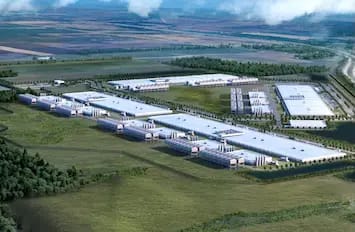
Vantage Data Centers has broken ground on the Lighthouse campus in Port Washington, a large-scale AI-oriented data center development.
The project is backed by Oracle and OpenAI as part of the broader Stargate buildout.
Total planned investment is approximately $15 billion, spanning hundreds of acres and multiple hyperscale buildings.
The campus is designed for AI training and inference workloads, implying extremely high power density and advanced cooling systems.
Construction is expected to run through 2028, with phased delivery and long-duration capital deployment.
The site positions Wisconsin as an emerging AI infrastructure node, outside traditional coastal tech corridors.
The grounding of the Lighthouse campus marks one of the largest single-site AI infrastructure investments announced in the Midwest to date. Developed by Vantage Data Centers in partnership with Oracle and OpenAI, the project reflects a structural shift in where next-generation computing capacity is being deployed.
Unlike first-wave data center markets that clustered around coastal metros, Lighthouse underscores a growing preference for inland locations with available land, scalable utility access, and supportive municipal frameworks. Port Washington offers proximity to regional transmission infrastructure while avoiding the land and entitlement constraints seen in legacy hyperscale markets.
From a design standpoint, the campus is optimized for AI-specific workloads, which demand significantly higher power loads per square foot than traditional enterprise or cloud data centers. This implies not only large-scale electrical infrastructure investment but also long-term commitments to grid upgrades, substation development, and thermal management systems.
The capital profile of the project is equally notable. A multi-year construction horizon extending to 2028 introduces durable construction employment, sustained material demand, and recurring professional services activity. For institutional investors, the project represents a long-duration, infrastructure-grade asset aligned with secular AI growth rather than cyclical data center demand.
Regional and Economic Potential
The Lighthouse campus has implications that extend well beyond its physical footprint:
Labor & Construction Economy: Multi-year construction creates sustained demand for skilled trades, engineering, and specialty contractors, stabilizing regional construction cycles.
Power & Utility Investment: AI-scale loads accelerate grid modernization, substations, and transmission upgrades, often catalyzing adjacent industrial development.
Tax Base Expansion: Data centers typically deliver high assessed values with relatively low public-service burdens, strengthening municipal balance sheets over time.
Industrial Clustering: Large AI campuses tend to attract adjacent users—edge computing, advanced manufacturing, and logistics—creating secondary development demand.
Geographic Rebalancing: The project reinforces a broader redistribution of tech infrastructure into Midwest markets, reducing overconcentration in coastal hubs.
Stop Reading Headlines
Subscribe to CRE 360 Signal™ Newsletter to Move Smarter in Today's CRE Market.Start Understanding the Market
➤ TAKEAWAY
While the upside is material, the project’s success is tightly coupled to power availability, interconnection timelines, and energy cost stability. Any slippage in utility coordination or regulatory approvals would directly impact delivery sequencing and capital efficiency. The economics work because the scale is massive—anything smaller would struggle to justify the same infrastructure spend.
Never miss a Signal
Get the daily brief that busy CRE professionals rely on.