The Signal:
- A fixed date now sits on the calendar for another materials-cost step-up.
- The new duty map is country-specific, so exposure varies by where a material is sourced.
- Escalation and tariff clauses are becoming standard in contracts crossing these dates.
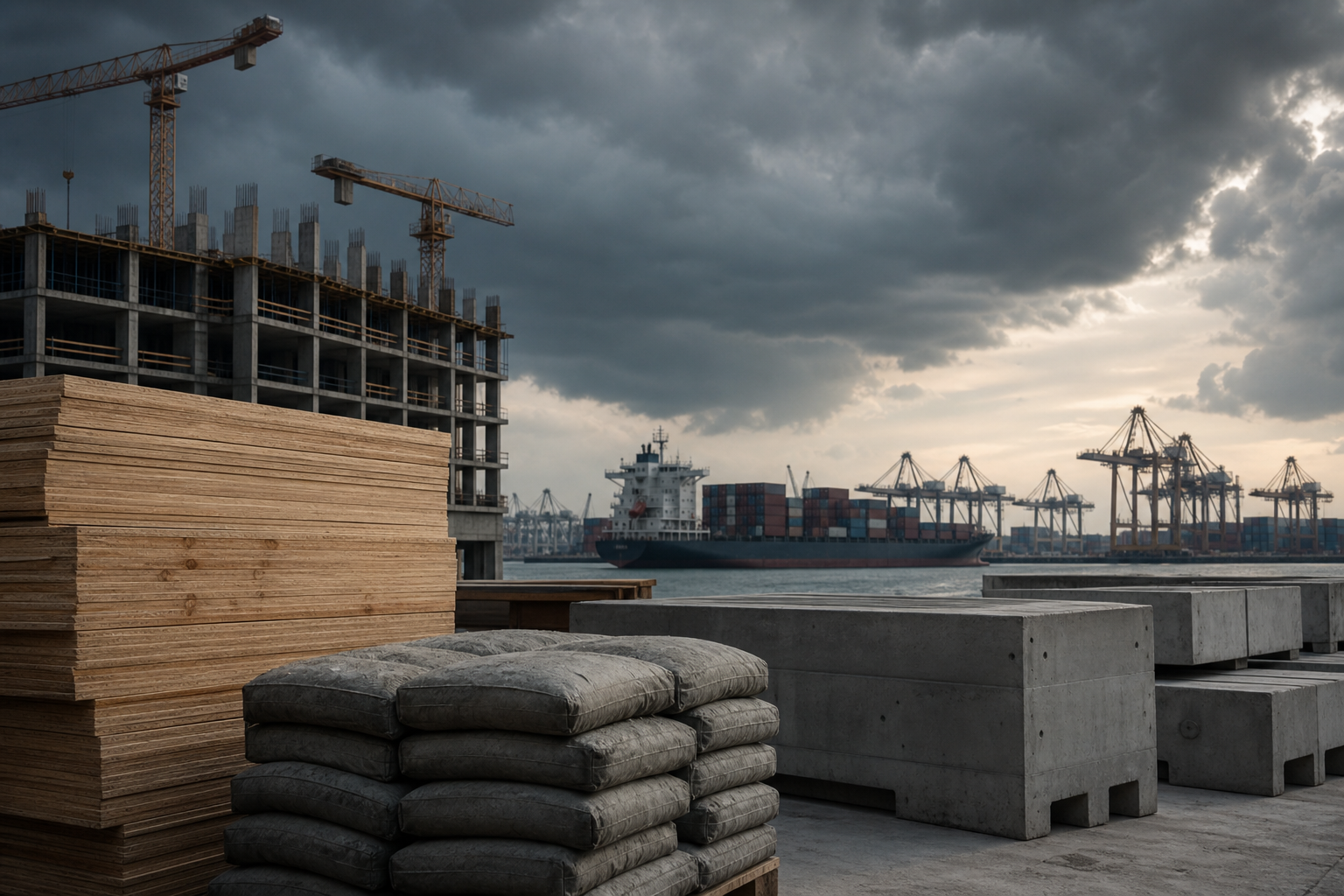
The expiration of the Section 122 framework replaced a broad tariff regime with a messier, country-by-country map, and August 19 puts a hard date on the next leg for Canadian-sourced cement, plywood and paint. For anyone with concrete pours or drywall scopes buying after that date, the estimate just changed.
The underwriting relevance is immediate. With building-cost inflation already running above 4% and input prices spiking at a double-digit annualized pace, a fresh 50% duty on core materials widens the gap between yesterday's budget and today's bid. Fixed-price contracts signed without escalation language absorb that gap directly.
The structural read is that tariff risk has migrated from a macro talking point to a line-item, date-specific exposure that has to be priced into every ground-up pro forma and GMP.
Implications: For developers, feasibility now hinges on when materials are bought relative to August 19, timing is a cost lever, not a detail. For contractors, escalation and tariff-adjustment clauses are the difference between margin and loss on work stretching into H2. For lenders, contingency sizing and buyout timing belong in construction-loan diligence.
Key Takeaways
- Tariff risk in construction now has a date on it, August 19, and every unbought cement and plywood scope is exposed until it's locked.
- A fixed date now sits on the calendar for another materials-cost step-up
- The new duty map is country-specific, so exposure varies by where a material is sourced
- Escalation and tariff clauses are becoming standard in contracts crossing these dates
Engineering News-Record — Construction Economics for July 27, 2026 and 1Q 2026 Cost Report, July 2026 · Associated Builders and Contractors — Construction input price data, 2026 · Cushman & Wakefield — The Impact of Tariffs on U.S. CRE Construction Costs, 2026 · AGC — Tariff Resource Center for Contractors, 2026
Never miss a Signal
Get the daily brief that busy CRE professionals rely on.