The Signal:
- The cost floor is policy-driven, so it will not fall on its own; it moves when the tariff schedule moves.
- Higher replacement cost quietly re-rates every existing, well-located building upward.
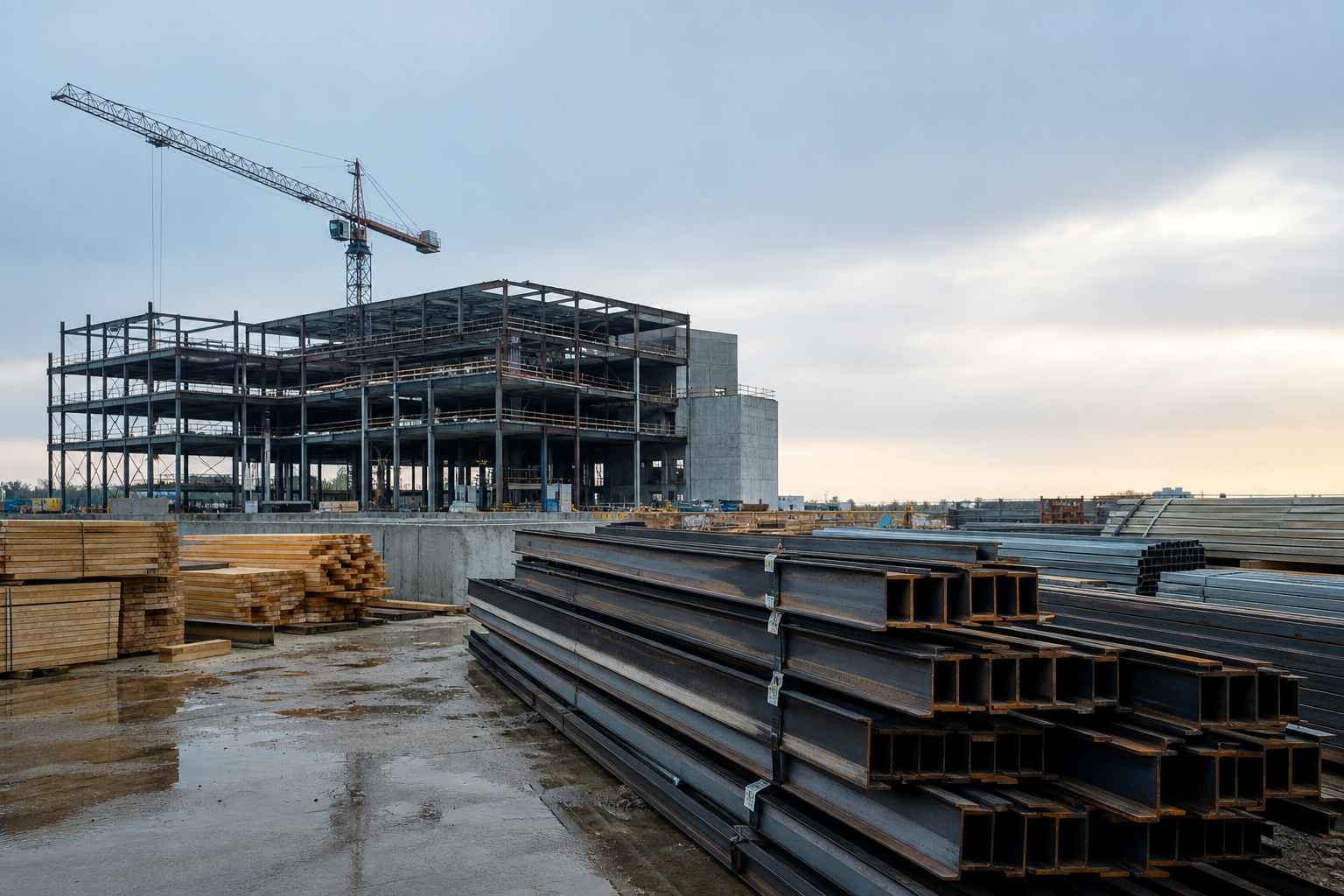
Construction costs are not drifting, they are being held up by a tariff schedule on the exact materials that dominate a nonresidential budget: structural steel, aluminum, copper wire and lumber. Nonresidential input prices surged at roughly a 12.6 percent annualized rate over the first two months of 2026, the fastest since the early-2022 supply-chain disruptions.
For anyone underwriting new development, the practical effect is fatter contingencies, more aggressive value engineering and thinner margins on fixed-rent deals. Ground-up pencils only where rents or basis have moved enough to cover a cost line that keeps ratcheting.
The subtler read matters for owners: every dollar added to replacement cost widens the moat around standing, well-located product. When it costs more to build the competitor, the existing asset income gets scarcer and more defensible, which is why so much 2026 capital is buying existing over new.
Implications: For developers, size contingency to the tariff schedule, not last cycle escalation. For owners, rising replacement cost is a tailwind under in-place value. For investors, the build-versus-buy math keeps tilting toward stabilized, hard-to-replace assets.
Related coverage
Key Takeaways
- Tariffs are holding a policy-set floor under construction costs, punishing new development and quietly re-rating existing, well-located buildings upward.
- The cost floor is policy-set, so it will not fall on its own
- Rising replacement cost re-rates existing, well-located buildings upward
- Build-versus-buy math keeps tilting toward stabilized, hard-to-replace assets
Associated Builders and Contractors - Nonresidential Construction Input Prices, 2026 · Construction Executive - Construction Costs Should Stabilize for 2026 Despite Persistent Global Pressures · Mortenson - Construction Cost Index First Quarter 2026
Never miss a Signal
Get the daily brief that busy CRE professionals rely on.