Washington backstopped 4.5 gigawatts of energy for an AI campus, before a single tenant signed.
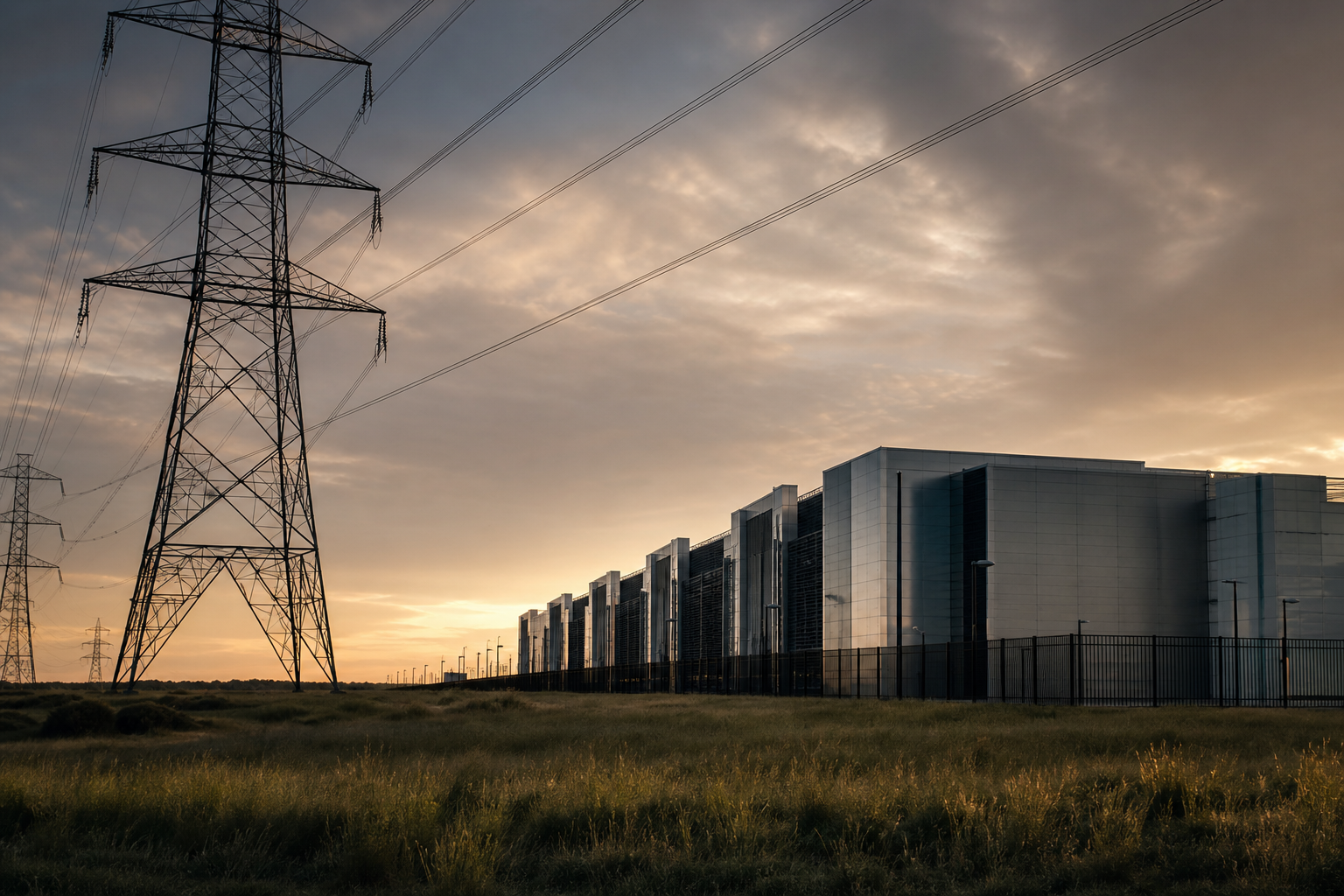
The Department of Energy has named Brookfield to build and operate a hyperscale data-center campus on its Paducah, Kentucky site, with NextEra Energy building and owning the power to run it: 2 gigawatts of new natural-gas generation and more than 2.5 gigawatts of battery storage. The investment tops $100 billion, targets completion in 2031, and carries no named tenant.
The Signal. DOE announced the partnership on July 29, siting it on a former 1950s uranium-enrichment complex in western Kentucky. Brookfield develops and operates the campus; NextEra builds and owns the dedicated energy infrastructure. Three utilities round out delivery, Big Rivers Electric on wholesale, Jackson Purchase Energy Cooperative on retail, and Paducah Power System as community partner. The power stack is deliberately oversized: combined generation and storage of roughly 4.5 gigawatts exceeds campus needs, so surplus is designed to flow back to the regional grid. The state frames it as one of the largest private investments in its history, about 8,000 construction jobs and 600 permanent roles. The most important line in the announcement is the one that is blank, there is no hyperscale tenant.
Our Read. For most of the cloud era, a data-center deal started with land and chased power. This one inverts the sequence. The 4.5-gigawatt power stack is the product; the data halls follow. When the scarce input is megawatts and interconnection, not dirt or capital, whoever controls the electrons controls the deal.
Building generation beyond the campus load is the move that makes it work. A project that only draws power invites local resistance over reliability and rates; a project that feeds surplus back reframes itself as an energy contributor. That is how a merchant-scale build clears the friction that kills most large sites.
The risk lives in the blank tenant line. Committing $100 billion, five years of construction to a 2031 finish, before signing a hyperscaler is a bet that powered, shovel-ready capacity has become scarcer than the companies that need it. If demand holds, the developer that pre-built the power owns pricing power. If demand slips or timelines stretch, someone is carrying a merchant power build against a load that has not arrived. The structure spreads that risk with intent: NextEra owns and rate-bases the energy infrastructure, Brookfield's balance sheet carries the campus, the utilities absorb delivery.
Stakeholder lens. For developers, the template is explicit: control interconnection and generation first, and tenants follow the megawatts. For lenders, the underwriting has migrated from real estate to energy, merchant-power exposure, PPA structure, and load-ramp timing now drive the credit. For institutional allocators, the deal marks the fusion of infrastructure and real-estate capital around a single scarce input: reliable power at scale. For anyone underwriting a data-center yield, the moat has moved upstream to the interconnection queue.
Key Takeaways
When the U.S. government backstops 4.5 gigawatts of generation and storage before a tenant signs a lease, powered land, not the building, has become the scarce asset in AI real estate. The deal now starts with electrons.
Power is now the first move in a hyperscale deal, the 4.5 GW stack is the asset and the data hall follows
Oversizing generation so surplus feeds the grid is how a merchant-scale build clears local and regulatory friction
Financing $100B before a tenant signs bets that powered, shovel-ready capacity is scarcer than the hyperscalers who need it
The risk and the underwriting have migrated from real estate to energy, PPA structure, merchant exposure, and load-ramp timing
Who the tenant is, and on what terms. The PPA structure, the rate-base treatment of NextEra's build, and how grid-cost allocation is handled all remain open, and each is a swing factor on returns. Also unsettled: whether a 2031 delivery lands into a compute market as hungry as today's, or into a supply wave other powered-land megaprojects are already racing to build.
U.S. Department of Energy, partnership announcement, July 29, 2026; Bloomberg, NextEra, Brookfield to Build $100 Billion Kentucky Data Campus, July 29, 2026; HPCwire, DOE Selects Brookfield and NextEra for $100B Kentucky AI Data Center Project, July 2026; NOTUS, Trump Administration Announces Another Data Center on Federal Land, July 2026; Tech Times, Paducah AI Hub Wins $100B Federal Deal: Power Built In, No Tenant Named, July 31, 2026
Get The Government Just Bet $100 Billion on Power in your inbox
Washington backstopped 4.5 gigawatts of energy for an AI campus, before a single tenant signed.