The Signal
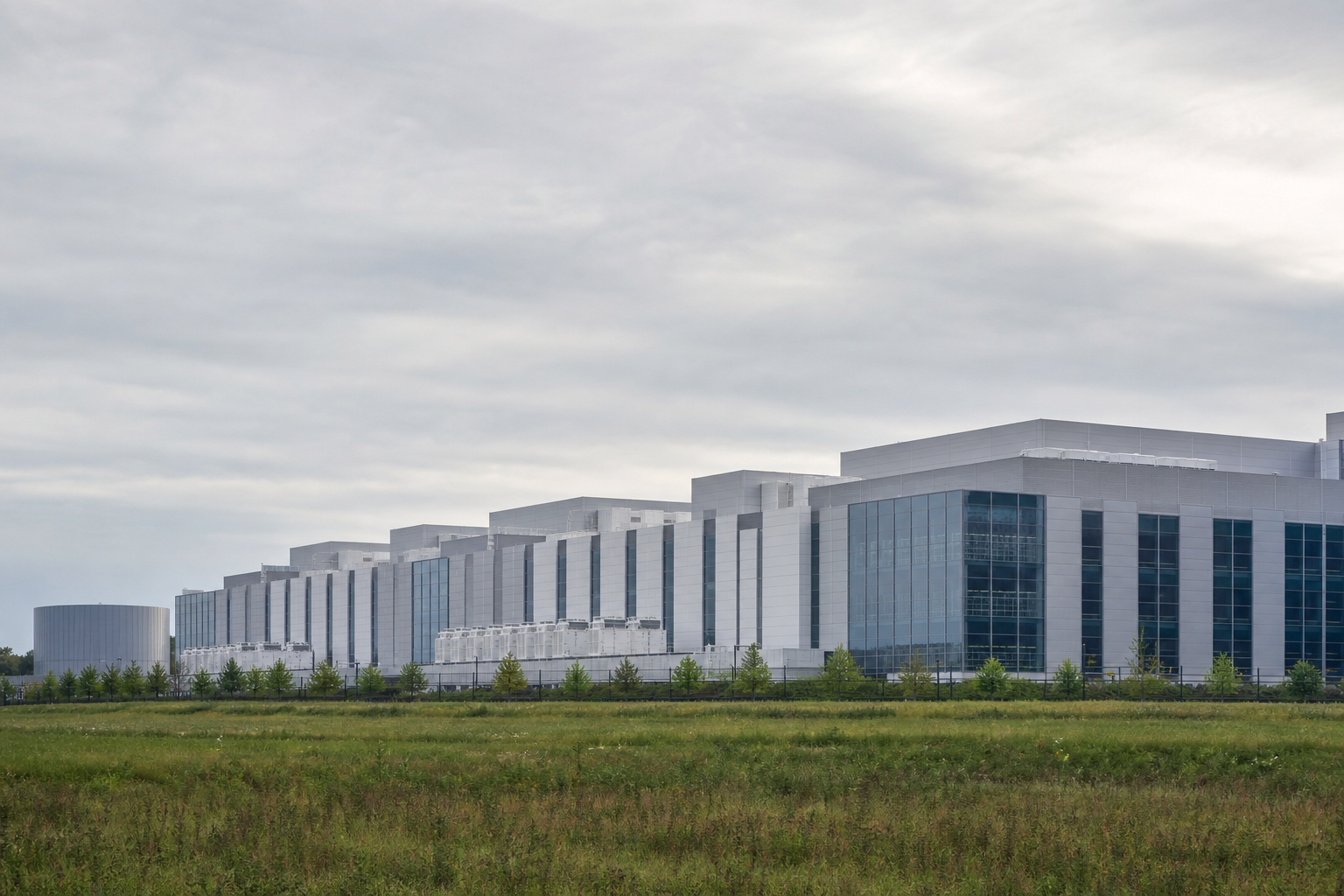
Microsoft's current global data-center capacity is approximately 12 GW. The target is more than 38 GW by 2032 — a 3.17x expansion covering owned and leased facilities, and explicitly excluding capacity rented from neocloud providers such as CoreWeave. Roughly 2 GW of the current footprint is devoted to AI-specific compute; by 2032, AI is projected to account for nearly one-third of the 38 GW, implying something close to 12.7 GW and a 6.3x increase in AI capacity against a 3.17x increase overall.
The spending is already in guidance. Capital expenditure and finance leases run approximately $175 billion adjusted for calendar 2026, with roughly $50 billion guided for the first quarter of fiscal 2027. The resulting footprint has been characterized as consuming more power than New York State does at peak.
The stated driver is not opportunity. It is shortfall. Azure ran out of capacity and turned away AI and cloud business across 2025 and 2026 — demand that arrived, was quantified, and could not be served.
On the cost side, the August producer price index tells a complementary story. Switchgear, switchboard and industrial control equipment rose 12.3% over twelve months and 2.4% in August alone. Transformers and power regulators are up 7.6%. Electronic components and accessories are up 27.6%, with a 3.4% monthly gain. Against that, aluminum mill shapes fell 4.4% in the month and decelerated to +27.3% year over year from +40.5% in July — a 13.2-point retreat — while steel mill products rose 1.7% and copper and brass rose 3.5%.
Implications — Our Read
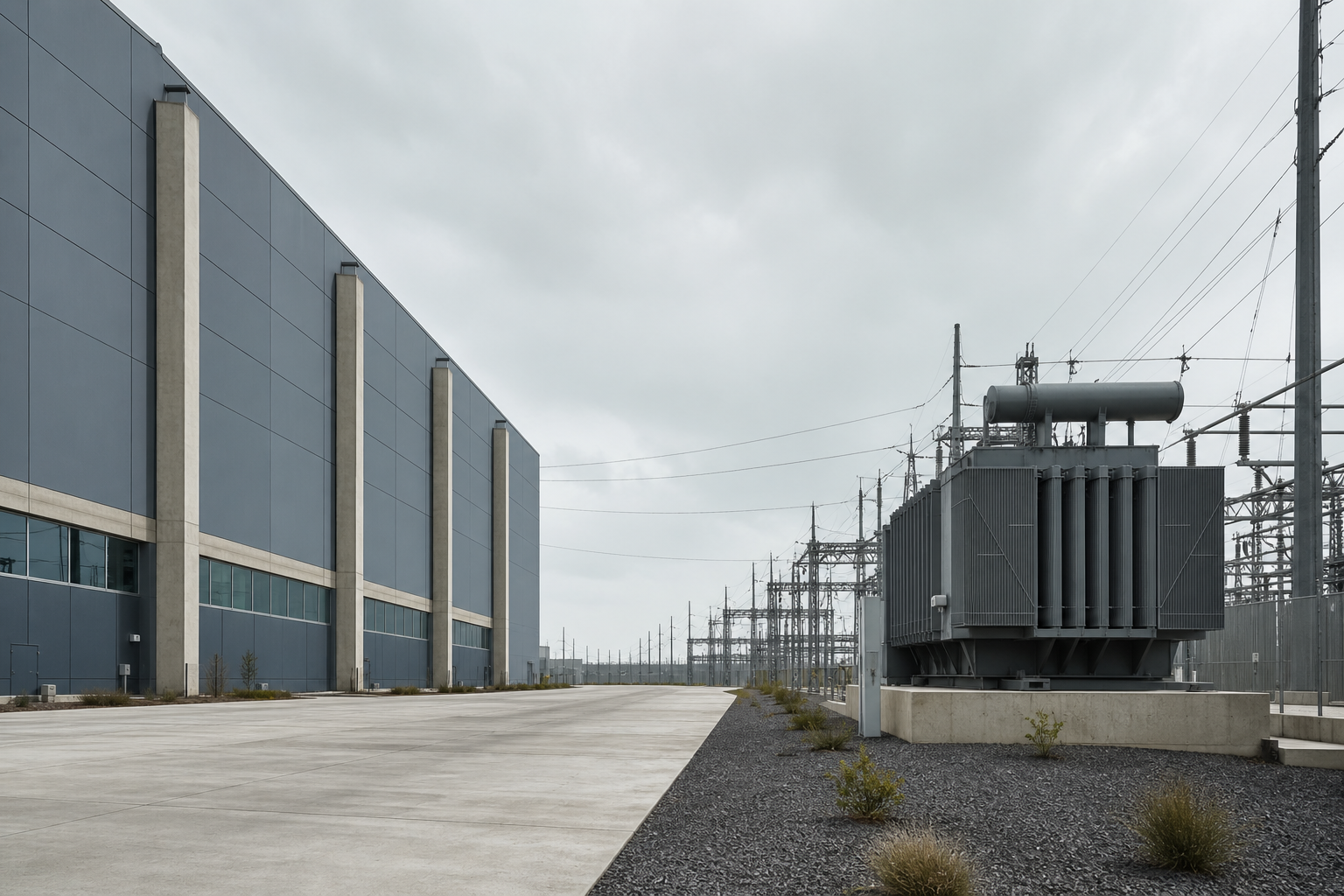
The scarce input is no longer land. A gigawatt target is a statement about interconnection queues, substation capacity, transformer lead times and generation siting long before it is a statement about acreage. At a conventional $9–12 million per megawatt all-in, 26,000 megawatts implies $234 billion to $312 billion of construction. But the constraint that decides which of those megawatts actually get built is the utility's queue, not the developer's site control. A sponsor holding both has an asset. A sponsor holding only entitled dirt holds an option — and options expire.
The price data is already confirming the demand data. It is not a coincidence that the fastest-rising lines in the August construction bill are the electrical package. Switchgear at +12.3%, transformers at +7.6% and electronic components at +27.6% are not general inflation; they are a specific supply chain absorbing a specific demand shock. Meanwhile the metal that historically set envelope cost is falling. The bill of materials that prices a building has rotated toward power distribution, and the rotation is measurable.
This changes what developers should be contracting for. Escalation clauses written against a composite construction index now misprice risk in both directions — understating exposure on projects heavy in electrical distribution, overstating it on projects heavy in aluminum envelope. The useful discipline is line-item exposure analysis and buyout sequencing timed to the divergence, with long-lead electrical equipment procured well ahead of the rest of the package.
And it changes the credit conversation. A tenant publicly committing to quadruple its AI capacity is signaling that lease duration will be available and re-tenanting flexibility will not. For landlords, that is favorable on term and unfavorable on optionality — a purpose-built shell tied to one hyperscaler's specification is a bond with a single obligor, priced accordingly.
Stakeholder Lens
Developers: secure interconnection and long-lead electrical equipment before securing tenants. The sequence has inverted.
Lenders: underwrite the queue position, not the entitlement. Site control without power is not collateral.
Contractors: unbundle escalation exposure by line item; the composite index no longer describes your risk.
Owners of conventional product: the electrical-equipment inflation reaching your project is a second-order effect of this demand, and it does not subside because your building is not a data center.
Still Unresolved
The figure comes from a Bloomberg report, not from a Microsoft press release — no primary issuer document has been published, and the desk has not seen one. It is a corporate capacity plan, not a commitment, and targets of this horizon are revised. The 38 GW excludes neocloud rentals, so total compute exposure is larger than the owned-and-leased number suggests. The August producer price figures are preliminary and subject to revision. And nothing in the announcement addresses the question that decides the outcome: whether utilities can deliver 4.33 gigawatts a year of new interconnection to one customer while serving everyone else in the queue.
Key Takeaways
When a tenant publishes its requirement in gigawatts, the site stops being the scarce input and the interconnection queue becomes the asset
Twenty-six gigawatts in six years is about 4.33 GW per year sustained — roughly $234 billion to $312 billion of construction at conventional cost per megawatt
The fastest-rising lines in the August construction bill are the electrical package, not the metals complex — switchgear +12.3%, electronic components +27.6%, while aluminum fell
Escalation clauses written against a composite index now misprice risk in both directions; unbundle exposure by line item
Underwrite the queue position, not the entitlement — site control without power is not collateral
Bloomberg News, September 10, 2026 — Microsoft global data-center capacity plan; TechTimes, September 11, 2026; Dataconomy, September 11, 2026; Technology.org, September 11, 2026; U.S. Bureau of Labor Statistics, Producer Price Index for August 2026, USDL 26-1495, released September 10, 2026 (preliminary); Associated Builders and Contractors construction input price analysis, September 10, 2026
Get The Grid Just Got A Number in your inbox
One tenant published a power requirement large enough to reprice construction.