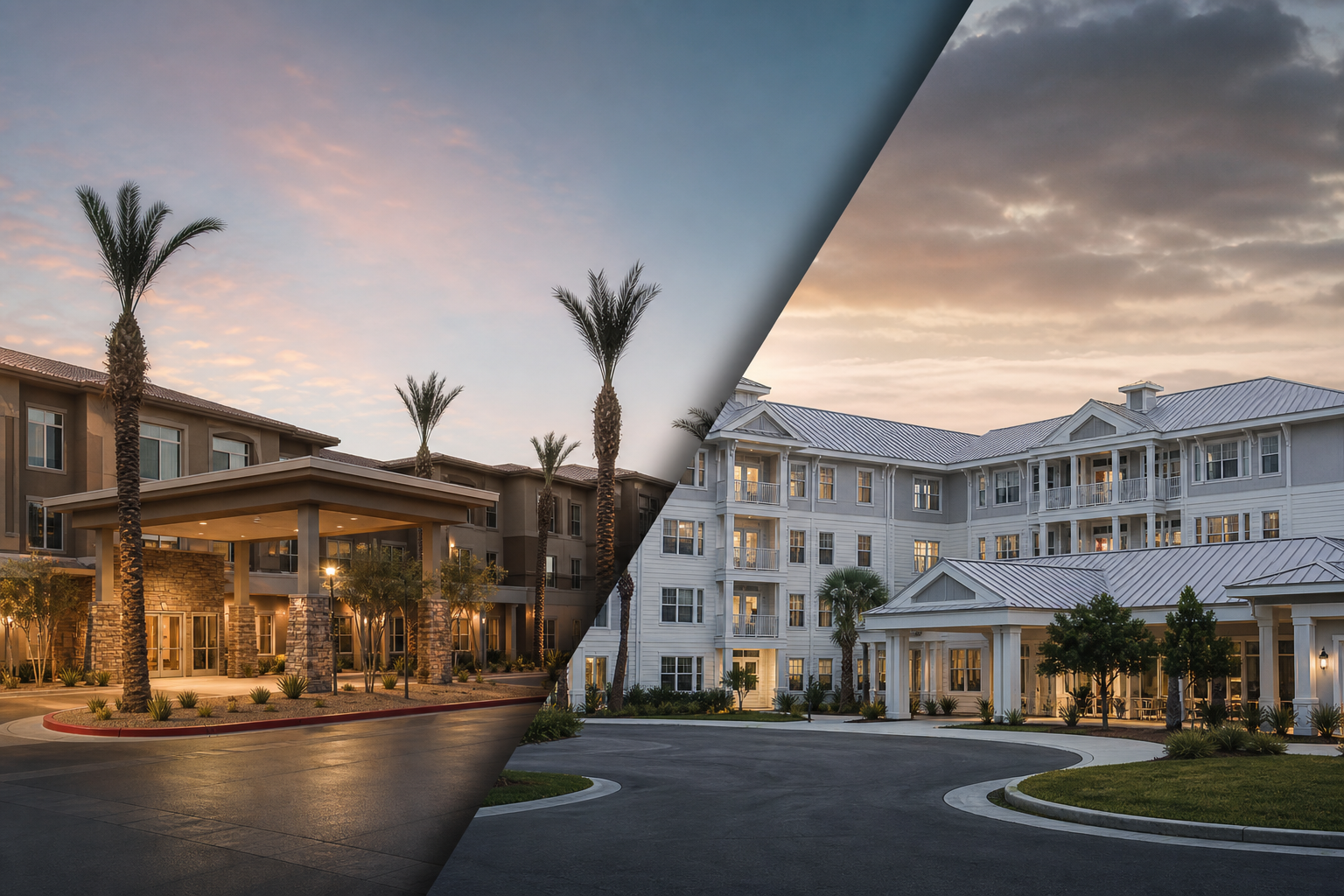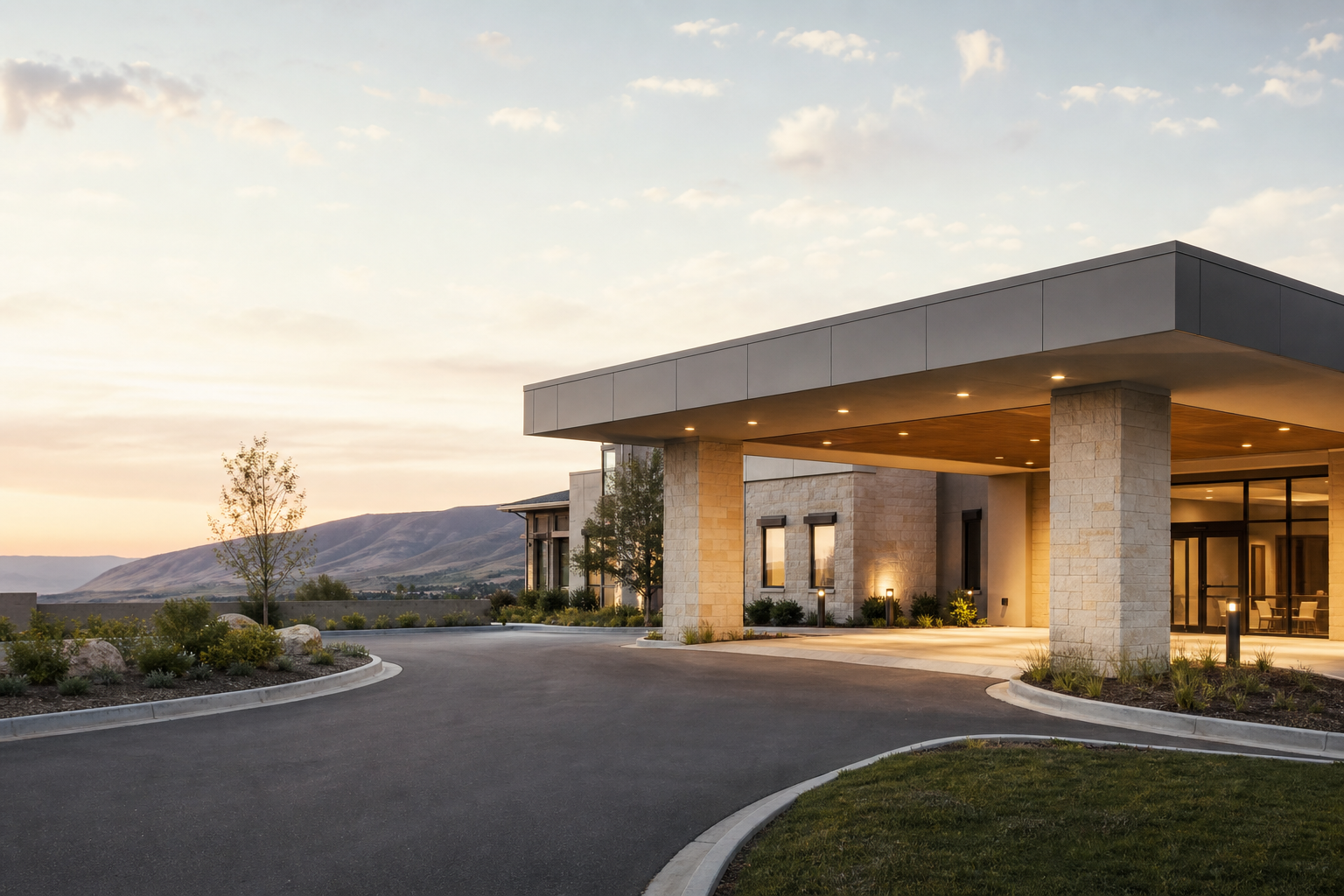
The Signal: Healthcare Realty acquired Greenwich Medical Center at Holly Hill, a 106,092-square-foot outpatient campus on Greenwich, Connecticut's Doctor's Row, for $65 million, or roughly $613 per square foot. The asset is 97% leased and anchored by Yale New Haven Health and Stamford Health. The prior owner paid $33.8 million in 2017; the basis nearly doubled in under a decade, a clean markup when most 2017-vintage buys are underwater.
That single deal is a data point in a much larger capital rotation. Welltower reported roughly $6.2 billion of acquisitions in the second quarter alone, most sourced off-market, extending a shift toward senior living it began with a roughly $14 billion, 700-plus-community push announced in late 2025. Its same-store senior-housing NOI rose 20.5% year over year, with RevPOR climbing to $6,059. Ventas is running the same play at smaller scale, around $1.7 billion closed this year against a $2.5 billion target. Above it all sits the Remedy-Kayne Anderson joint venture, which agreed to buy an 18-million-square-foot, 296-property outpatient portfolio from Welltower for $7.2 billion, the largest medical-office deal ever, closing in tranches through mid-2026.
Two ends of healthcare real estate, outpatient buildings and senior housing, are pulling institutional capital at the same time. National MOB occupancy sits near 93%, its strongest in a decade.
Our Read: Yesterday's thesis was a supply story: apartment and senior-housing pipelines are emptying, so scarcity accrues to whoever still owns units. Today's is the demand-side mirror of the same logic. Healthcare real estate is being bid up because its demand curve is essentially pre-written. The 80-plus population is accelerating, healthcare spending is rising structurally, and care keeps migrating from hospitals into lower-cost outpatient settings. None of that depends on a soft landing, a rate cut, or a return-to-office. It depends on the calendar.
That is why the pricing looks the way it does. A REIT will pay $613 a foot for a hospital-anchored campus, and the largest healthcare landlords will spend billions off-market, because the thing they are actually buying is forecastability. In a market where office is repricing and even industrial has repriced, a demand curve you can underwrite twenty years out is the scarce commodity.
The sourcing pattern tells you where the leverage sits. When Welltower originates the majority of its deals off-market, 37 of 41 transactions in one recent quarter, the best assets never reach a competitive process. Pricing power has already shifted to whoever controls the operator relationships and the standing inventory. Latecomers will underwrite the same demographics into thinner and thinner yields.
And the supply side quietly reinforces the trade. Senior-housing construction starts sit near cycle lows for the same reason apartment starts do: tariffs and financing costs have broken feasibility. So the demand wave is arriving into a market that isn't building enough to meet it.
Stakeholder lens: For owners of hospital-anchored MOB and stabilized senior housing, the demographic tailwind is now a pricing premium, not just a story. For developers, near-record-low starts hand early deliveries an open window, if a site can still pencil against 50% metal tariffs. For investors, the off-market dominance of the big REITs means access, not conviction, is the binding constraint. For lenders, occupancy at a decade high and RevPOR inflecting up support aggressive exit assumptions the rest of CRE cannot currently justify.
Key Takeaways
The rest of CRE is trading on rate cuts and recovery hopes. Healthcare is trading on the calendar. When capital pays $613 a foot for a medical campus and spends billions off-market on senior housing, it isn't buying buildings, it's buying the one demand curve demographics already guaranteed.
Healthcare real estate is being bid up because its demand curve is demographically pre-written
A REIT paid $613/SF for a hospital-anchored MOB while REITs spend billions off-market on senior housing
Constrained new supply plus a demographic demand wave concentrates pricing power in a few large buyers
Whether MOB cap rates compress further as the Remedy-Kayne tranches close through mid-2026, or whether this quarter marks the tight end of the range, is not settled. Nor is the ceiling on senior-housing RevPOR: 20%-plus same-store NOI growth cannot persist indefinitely, and affordability will eventually cap it. The demographic demand is certain; the price being paid for it is not.
Commercial Property Executive — Healthcare Realty acquires Greenwich Medical Center at Holly Hill, August 2026; Healthcare Realty Trust — Q2 2026 Results (Form 8-K), July 30 2026; Senior Housing News — Welltower Notches $6.2B in Acquisitions During 2Q, July 28 2026; McKnight's Senior Living — Ventas 2026 senior living acquisitions update, 2026; Commercial Observer — Remedy-Kayne Anderson JV to Pay $7.2B for Medical Outpatient Portfolio, October 2025
Get The Safest Bet in CRE Is Getting Older in your inbox
Capital is rotating into healthcare real estate because demographics already wrote the demand.