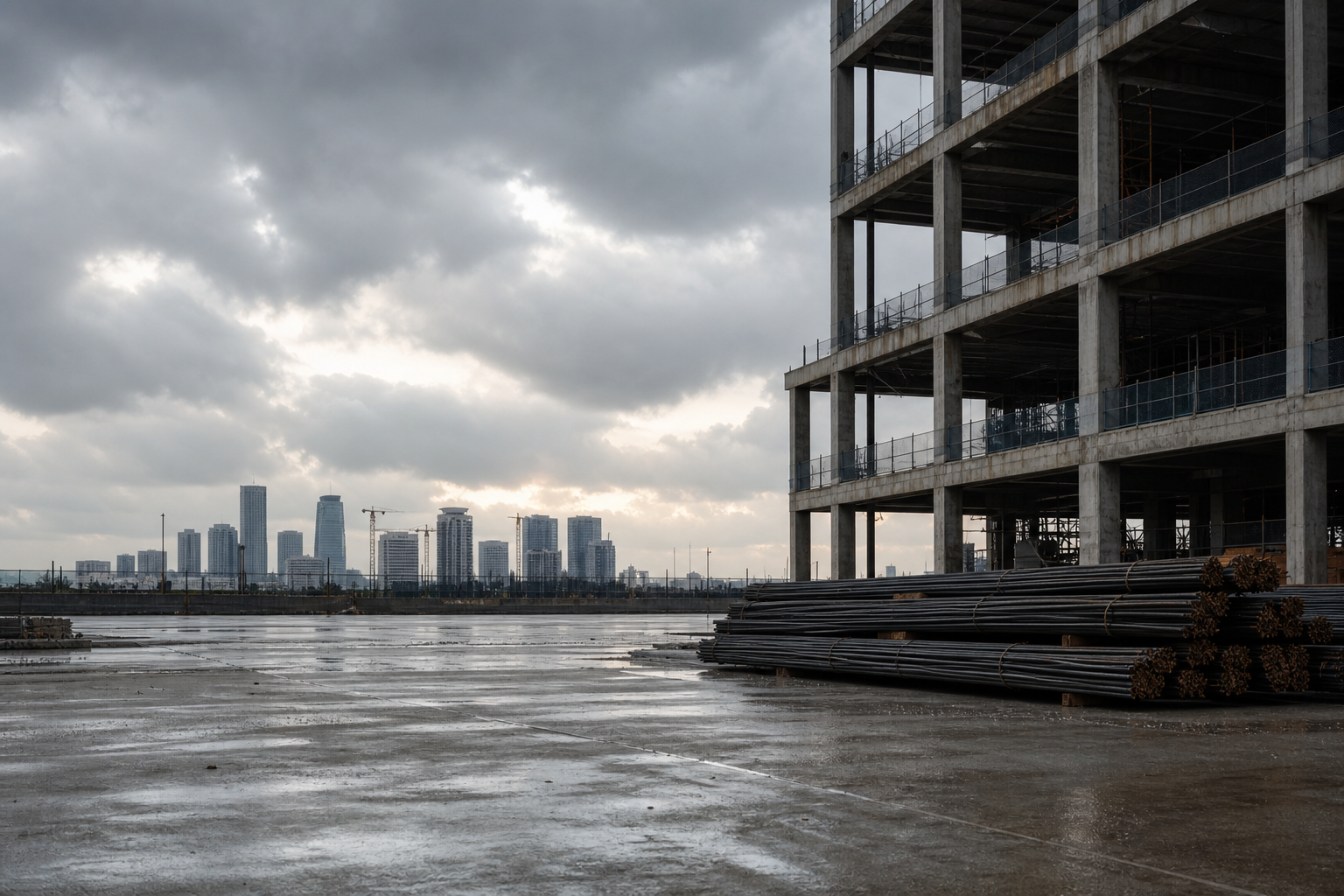
The Signal:
On July 24, 2026, the Section 122 temporary tariff framework expired, handing off to Section 301 replacement duties and a messier, country-by-country tariff map for imported construction materials. What it had partially buffered is now exposed. Underneath it, the Section 232 tariffs on steel, aluminum and copper sit at a permanent 50%, with no statutory ceiling and no expiration date, per Cushman and Wakefield and JLL analysis.
The cost indices already show it. Final-cost measures that include contractor margin are running above 5% year over year, and JLL 2026 midyear construction perspective puts a roughly 8% upper bound in play for the full year. Component moves are sharper: aluminum up around 40%, steel pipe and tube up 12.5% year over year, cement up 7.7%. Cushman estimates current tariffs add about 6% to materials versus a 2024 baseline and roughly 3% to total project cost.
Labor compounds it. JLL finds 61% of US metro markets are supply-constrained for construction labor today, rising to 72% by 2027, and the constraint is geographically locked. Where data-center construction concentrates, contractor backlogs stretch to 12.2 months versus 8.3 for other commercial work, pulling capacity and pricing away from every competing project.
Implications / Our Read:
The important word is floor, not spike. A spike reverses; a floor resets the math you underwrite against. The tariff that just expired was the reversible part. The Section 232 duties that remain, permanent and uncapped, plus a structurally short labor pool, are the parts that do not reverse on any near-term policy calendar.
For anything not yet in the ground, the discipline is unglamorous: re-run the hard-cost line at the higher floor, stress it to the roughly 8% case, and see whether the deal still clears its yield. Projects that only pencil at 2024 costs are not marginal, they are mispriced, and breaking ground on them locks in the error. The contingency that looked conservative eighteen months ago is now roughly the base case.
It also changes what a contractor is worth. In a market where materials pricing and crew availability are both moving, a builder who has locked steel and aluminum pricing and secured labor is a competitive input, not an interchangeable commodity. The value migrates from the lowest bid to the most certain one.
And it quietly sorts the pipeline. The projects that survive the back half of 2026 are the ones underwritten to the higher floor with contingency to match and a take-out that can absorb an overrun. The deals that stall assumed the shield would hold.
Stakeholder Lens: Developers should re-underwrite every un-started deal to the post-July-24 cost floor and the roughly 8% stress case. Lenders should treat cost re-basing as a draw-and-completion risk and size contingency to the harder floor. Contractors with locked pricing and secured crews now carry a margin-worthy advantage. Owners holding entitled land should re-run feasibility before committing capital to vertical.
Related coverage
Key Takeaways
The reversible tariff expired and the permanent ones stayed, so H2 2026 construction budgets inherit a higher, harder floor, and the projects that break ground will be the ones underwritten to it.
The tariff that expired was temporary; the Section 232 tariffs that remain are permanent at 50%
Final construction costs are running above 5% year over year with a roughly 8% upper bound in play
Pro formas built on 2024 hard costs are stale and should be re-run and stress-tested before breaking ground
A contractor with locked pricing and a secured crew is now a competitive edge, not a commodity
The projects that break ground in H2 2026 will be the ones underwritten to the higher floor
Whether the Section 301 replacement schedule lands lighter or heavier than the framework it replaced, with an August 19 checkpoint on country-by-country duties as the next read; whether the roughly 8% materials ceiling is reached in H2; and whether elevated borrowing costs stacked on rising materials finally soften the pipeline later in 2026.
JLL 2026 Midyear US Construction Perspective, 2026; Cushman and Wakefield - The Impact of Tariffs on US CRE Construction Costs, 2026; CRE Daily - Construction Material Costs Jump and Tariff Coverage, 2026; For Construction Pros - JLL Construction Costs Expected to Rise Through H2 2026, 2026
Get The Tariff Shield Expired. The Cost Floor Didn't. in your inbox
A temporary tariff cap lapsed on July 24, and every H2 2026 groundbreaking now clears a higher, harder number.