

🚨A new CoStar/Harvard survey shows over half of U.S. renters are cost-burdened, and nearly 12 M households spend more than 50% of income on rent. Construction costs remain 20% above 2019 levels, blocking new supply despite marginal financing relief from Fed cuts. The 1.5 M-unit housing shortfall underscores that affordability challenges are structural, not cyclical. For CRE, rent-regulated and affordable deals require higher reserves, tighter underwriting, and cautious growth assumptions.

Cost-burdened renters: 50%+ of households in 2025
Severely burdened renters: ~12 M households spend >50% income on rent
Construction costs: +20% since 2019

Loan Performance. DSCR pressure from capped rents (0–3% growth). Expense inflation (4–5%) erodes margins; stress tests show risk of negative cash flow in older assets.
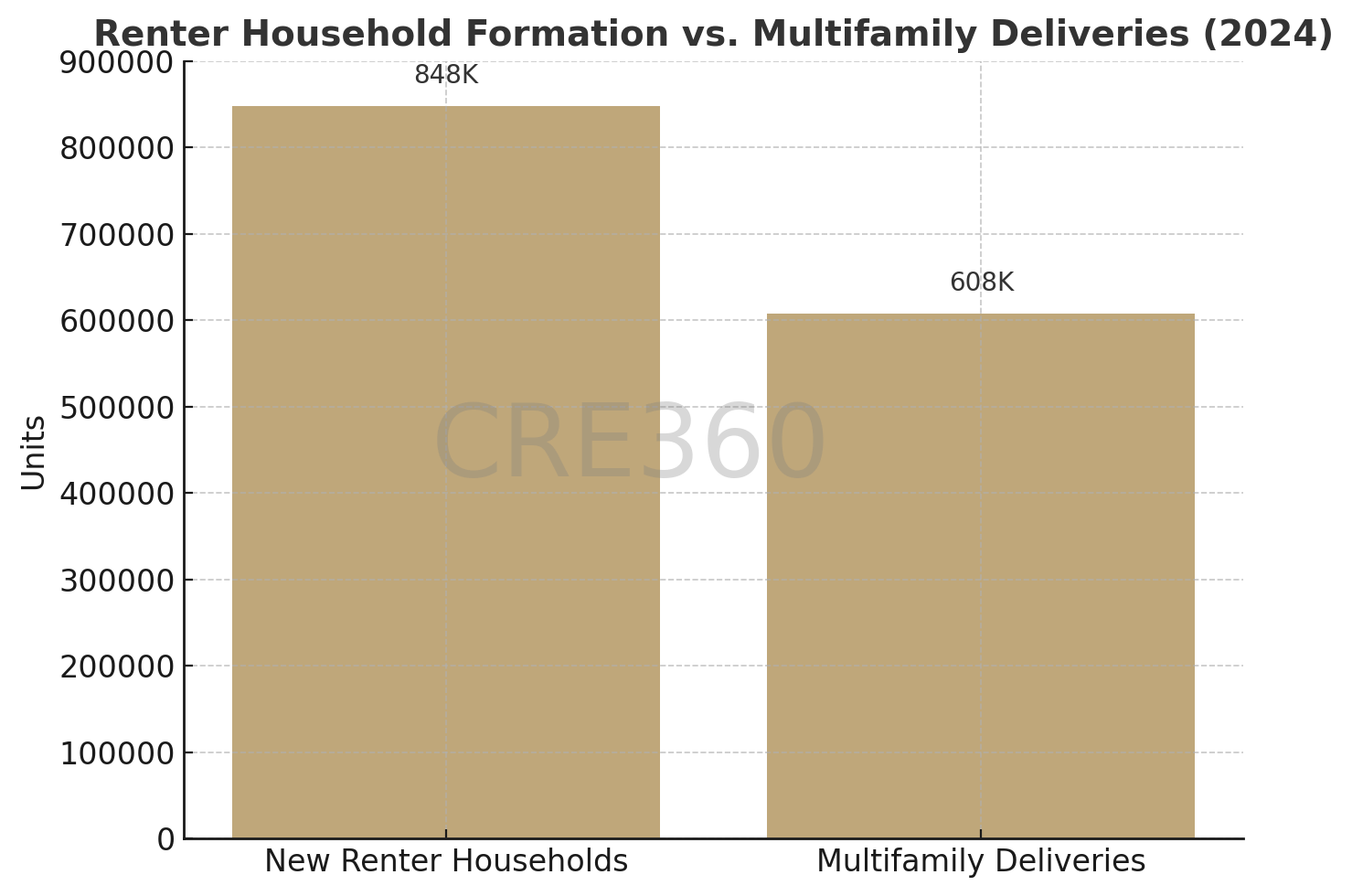
Demand Dynamics. High absorption keeps occupancy near 95%+, but delinquency risk is elevated in rent-burdened portfolios. Affordable demand outstrips new deliveries by ~240K units annually.
Asset Strategies. Operators should expand reserves ($450–500/unit/yr), minimize turnover through renewal incentives, and pursue grants/tax credits for capital work.
Capital Markets. Agency debt at 5.0–5.5% still constrains new supply. Exit caps for affordable assets trend 50–100 bps above market-rate multifamily, limiting valuations.

Rate cuts don’t resolve affordability gaps.
Affordable and workforce housing assets remain defensive.
Underwriting must budget high expenses and reserves.
Spreads wider for rent-restricted deals vs market-rate.
🛠 Operator’s Lens
Refi. Agencies active but coverage-driven; caps through maturity critical.
Value-Add. Tenant stability > max rent; manage collections, limit turnover.
Development. Reassess stalled deals as rates ease, but costs remain barrier.
Lender POV. Banks/CMBS price affordable 50–100 bps wider, cautious on leverage.

Potential policy inflection: LIHTC expansion, zoning reform, or voucher funding could shift supply.
Mortgage rates may fall further if Fed continues cutting, but affordability gap persists.
Rising homelessness pressures local governments toward stricter rent controls or inclusionary mandates.

Costar, PR News Wire, Pere

Never miss a Signal
Get the daily brief that busy CRE professionals rely on.