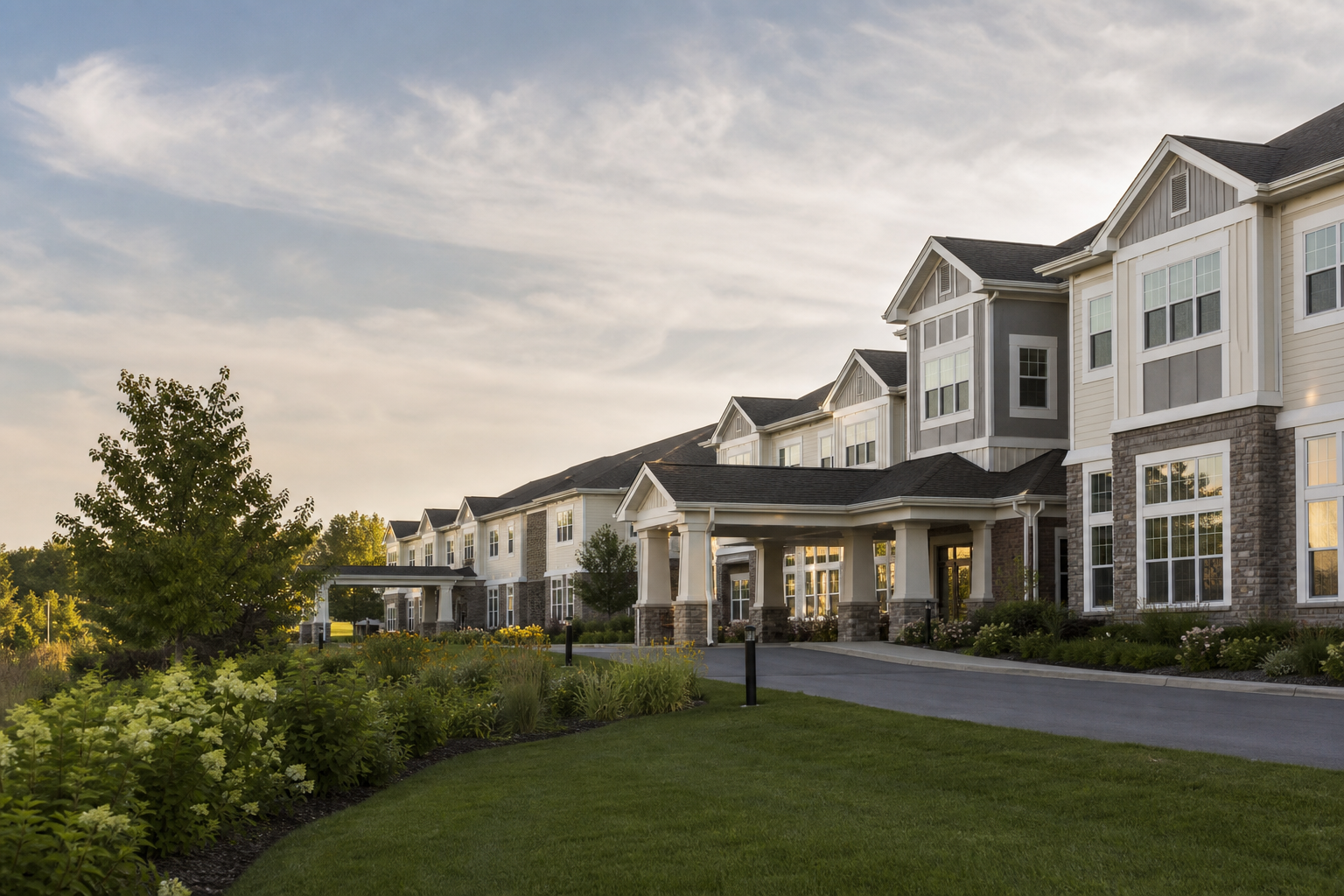
Mission Villas in Daly City, California sold for $10.65 million — 34 units at $313,235 per unit. The community is licensed for 60 beds (RCFE #415601046, licensed July 2019) and drew multiple competing offers. Marcus & Millichap's Nick Stahler marketed for the seller and procured the buyer; both parties are regional owner-operators.
Against the 60-bed license the price is $177,500 per licensed bed; against the stated floor of more than 50 beds it is $213,000. The effective figure sits between.
Three hundred thirteen thousand dollars a unit for a 34-unit community is not a yield print. It is a supply print.
National senior housing occupancy reached 89.9% in the second quarter of 2026 — the 20th consecutive quarterly increase. The San Francisco primary market stands at 92.7%, second-highest in the country, a 280-basis-point premium to the national rate. Inventory is growing 0.4% year over year, with fewer than 16,000 units under construction nationally against a projected shortfall of 576,000 units by 2030 and more than 1 million by 2035.
The competing-offer detail is the tell. Assets of this size normally trade quietly to a local operator. Multiple bidders on 34 units means the buyer pool has moved down-market because the up-market inventory does not exist.
Location compounds it. The community sits near Seton Medical Center — 256 licensed acute-care beds and a 24-bed geriatric psychiatry unit — which supplies both referral flow and clinical adjacency. In a licensed business, proximity to the referring institution is an operating input, not an amenity.
The constraint worth naming is that the license caps the upside. Sixty beds is sixty beds. A buyer paying $313,000 a unit cannot solve the price by adding density; the return has to come from rate and from operating margin on a fixed denominator.
Implications
With construction starts this low and occupancy this high, expect per-unit pricing in supply-constrained coastal markets to keep detaching from replacement-cost logic — because replacement is not actually available on any relevant timeline. The underwriting question shifts from what the asset yields to whether the license, the bed count and the referral relationship can be replicated at all. Increasingly they cannot.
Flags: the exact closing date was not disclosed; the transaction is described as recently closed and September 9 is the announcement. Buyer and seller are unnamed. The bed count is given imprecisely, so the per-bed figure is a range.
Key Takeaways
- When inventory grows four-tenths of a percent against a half-million-unit shortfall, a licensed bed stops being a unit of yield and becomes a unit of scarcity
- $177,500 per licensed bed, and the license caps the upside — return has to come from rate and margin on a fixed denominator
- Multiple bidders on 34 units means the buyer pool moved down-market because up-market inventory does not exist
Connect CRE, "Marcus & Millichap Closes Sale of Bay Area Assisted Living", September 9, 2026 · California Department of Social Services community care licensing record, RCFE #415601046 · NIC MAP, Q2 2026 occupancy data and August 2026 supply research
Never miss a Signal
Get the daily brief that busy CRE professionals rely on.