📢Good morning, today’s Signals are brought to you by CRE360 Signal™.
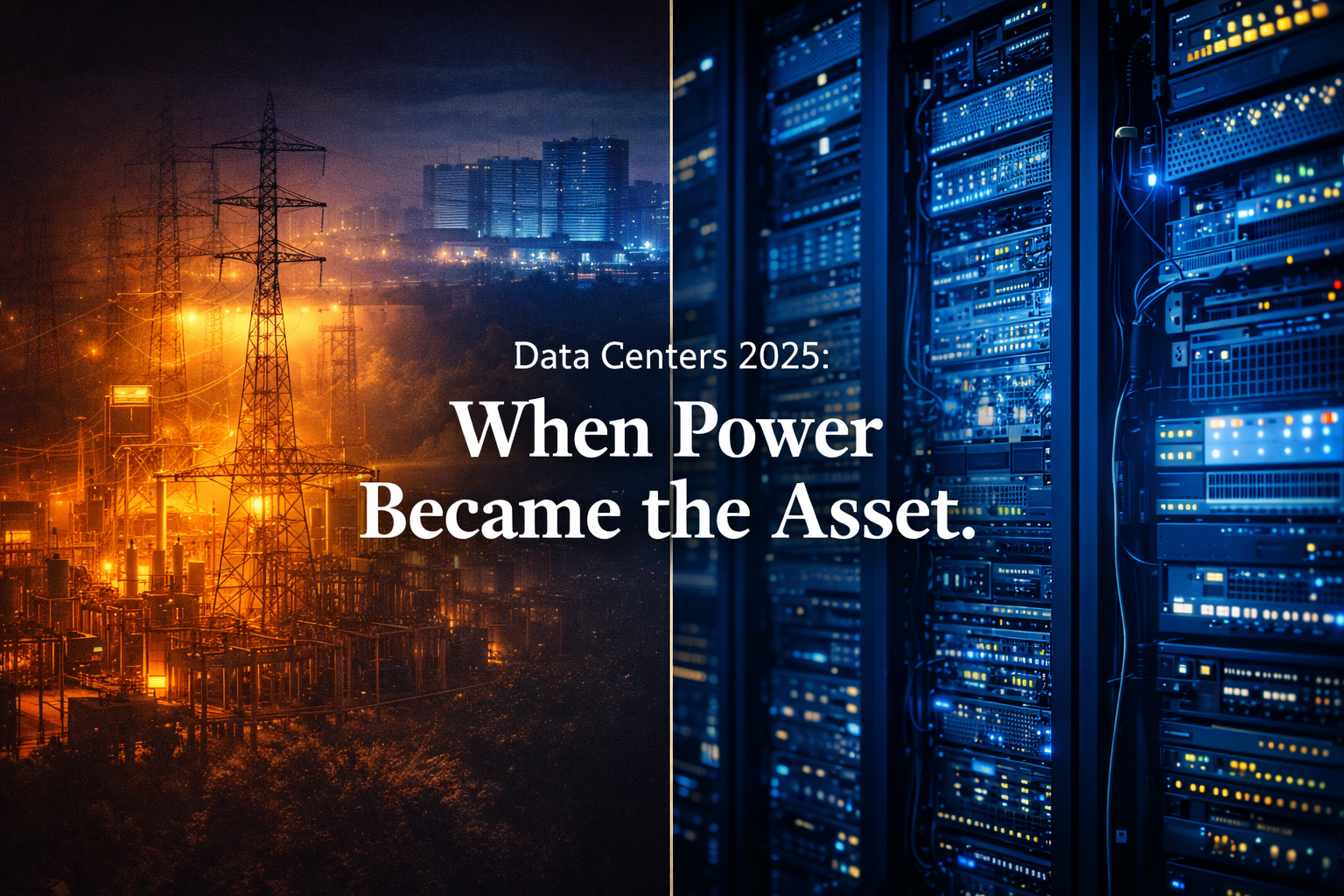
Data centers were the clear outlier in commercial real estate in 2025: massive capacity additions and record-low vacancy coexisted, powered by explosive AI and cloud demand. Even a record construction pipeline failed to loosen conditions, as most new supply was pre-leased. Rents jumped, particularly for high-density, power-hungry deployments. Power availability, not land, became the true constraint, reshaping site selection and pricing. Regulators responded with new zoning rules, environmental conditions, and incentive debates, but none of it slowed capital. The sector exits 2025 with effectively full occupancy, rising pricing power, and a development race that is limited mainly by grid capacity.
🎧 Busy to read? Catch the Daily Podcast (Subscribe on YouTube, Apple, Spotify)➤ SIGNAL
➤Key Highlights
Capacity and vacancy hit extremes simultaneously — North American inventory reached ~8,155 MW in H1 2025, while vacancy fell to a record ~1.6%, effectively zero from an operator’s perspective.
AI and cloud drove unprecedented demand — hyperscalers (AWS, Microsoft, Google) and large enterprises immediately absorbed new capacity, often pre-leasing projects years ahead of delivery.
Pricing surged, especially for high-power requirements — mid-size deals saw ~2.5% rent increases since late 2024, while 10 MW+ hyperscale requirements saw asking rents jump up to ~19%.
Construction hit record levels — roughly 5,242 MW was under construction in mid-2025 across primary North American markets, ~60% more than a year earlier, with ~74% pre-leased.
Power became the bottleneck, not land — grid constraints in hubs like Northern Virginia forced tenants to commit to capacity years in advance, making delivery timelines and power access the decisive variables.
Regulatory scrutiny intensified — leading markets tightened zoning and required special approvals, while states expanded or debated tax incentives and grid investments to attract multi-billion-dollar campuses.
2026 outlook remains extremely bullish, with vacancy expected to stay below 2%, rents rising another ~5–10% in power-constrained markets, and capital continuing to flood into the sector.
2025 Performance
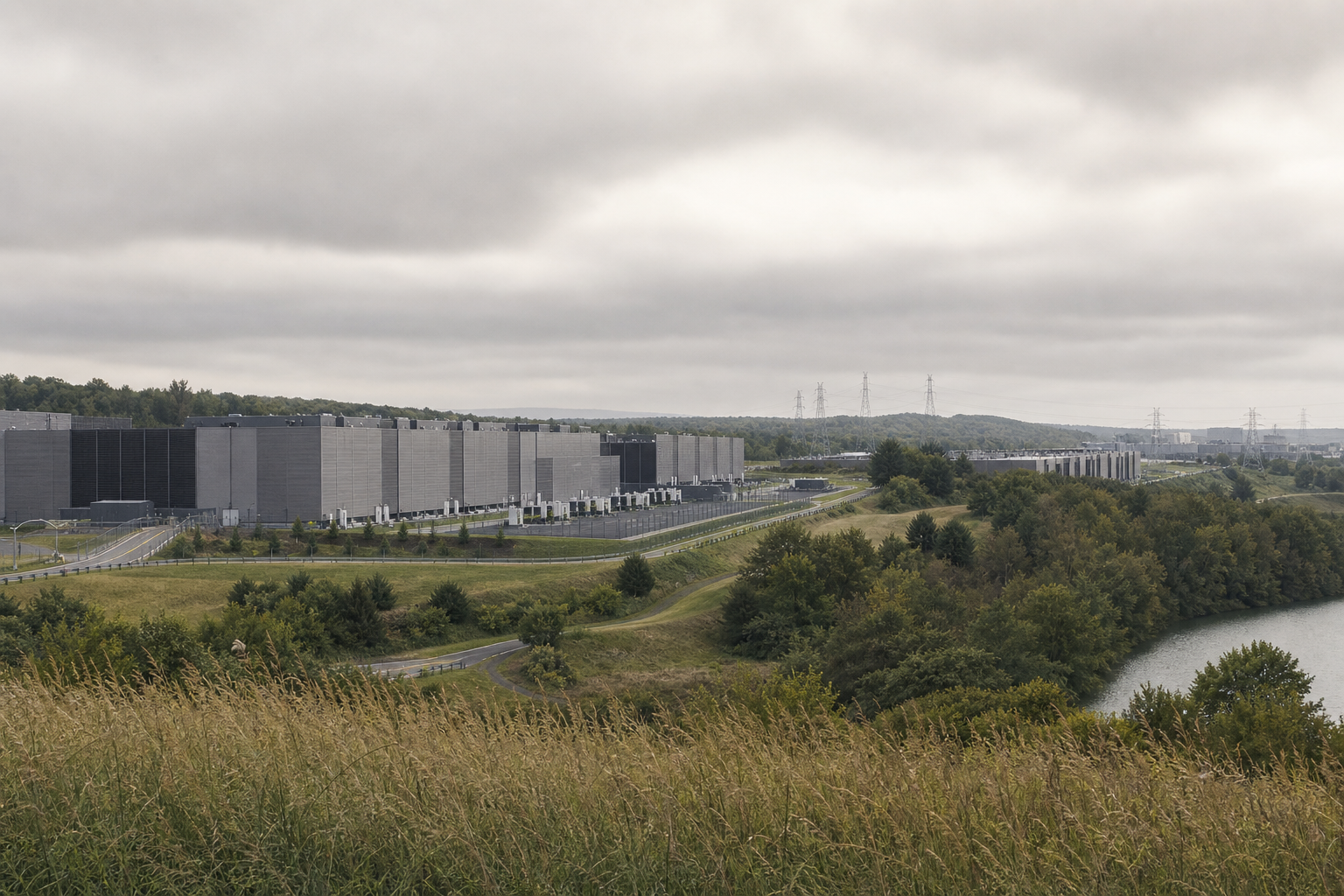
The North American data center market in 2025 operated at the edge of its physical limits. Inventory climbed to ~8,155 MW of capacity in H1 2025, yet vacancy dropped to a historic low of roughly 1.6%. In practical terms, any newly delivered capacity was immediately absorbed.
Demand was dominated by hyperscale cloud providers and large enterprises scaling AI workloads. Training and deploying large AI models, along with accelerating cloud adoption, drove unprecedented requirements for large contiguous blocks of power and space. Northern Virginia (Ashburn) remained the world’s largest data center hub, seeing enormous net absorption and an ~80% increase in its construction pipeline to around 2,078 MW. Major U.S. markets like Phoenix, Dallas, Silicon Valley, and Atlanta likewise recorded near-record leasing, with local vacancies in the 1–3% range.
Construction activity reached new highs. At mid-year 2025, approximately 5,242 MW was under construction across primary North American markets — about 60% higher than a year earlier — and an estimated 74% of that pipeline was pre-leased before completion. In practice, almost every serious project already had an anchor customer.
The real constraint was power. Utilities in top markets struggled to deliver enough electricity to support new projects. Operators faced delays in securing substations and interconnections, forcing tenants to commit to capacity well before it came online. As a result, power availability and delivery timelines became the decisive factors in site selection, more than land cost or even tax incentives.
Capital Markets & Development Trends
Capital deployment into data centers in 2025 was enormous. Traditional real estate investors, infrastructure funds, and cloud companies all expanded their exposure:
M&A and joint ventures proliferated, including private equity stakes in operators and cloud–REIT partnerships to fund hyperscale campuses.
Asset trades were selective but rich — top-tier stabilized facilities traded at estimated ~5–6% cap rates, indicating cap rate compression even in a high-rate environment due to strong growth expectations.
Global investment into data centers continued to show “dramatic growth,” with major investors highlighting materially increased 2025 data-center budgets.
Land and power access became the true “scarce resources.” In Northern Virginia, parcels with guaranteed power access commanded large premiums, and operators pursued their own substations or new transmission solutions. Secondary and emerging markets gained traction as alternatives to traditional hubs:
Regions with available power and fiber connectivity — examples include emerging U.S. markets (like Columbus) and select global locations with cool climates or ready renewable resources.
Builds increasingly targeted high-density AI workloads. New deployments were designed for power densities in the range of 300–400 watts/sq. ft., far above legacy server loads. This drove investments in enhanced cooling (including liquid cooling solutions) and electrical infrastructure upgrades.
Lease structures evolved:
More contracts tied pricing to energy costs, with escalators or pass-throughs for power.
Reservation-style agreements emerged where customers paid to reserve future capacity years ahead of delivery.
Effective rents (including power components) for large requirements increased at double-digit rates year-on-year.
The capital markets effectively treated data centers as critical infrastructure, not just a niche property subtype, and funded speculative construction with confidence that any “spec” capacity would be absorbed quickly.
Policy & Regulatory Factors
Data center growth in 2025 forced regulators to confront land use, power, and environmental trade-offs.
In Loudoun County, Virginia (Data Center Alley):
Officials tightened zoning, eliminating by-right development for data centers in many zones and requiring special exceptions and enhanced design standards (addressing noise, height, and aesthetics).
Coordination with Dominion Energy intensified as the utility struggled to keep up with demand. State regulators approved a special high-usage rate class for data centers to ensure they contribute to grid upgrade costs.
Elsewhere in Virginia, some counties implemented or considered moratoria on new data center approvals pending further impact studies, particularly where new high-voltage transmission lines were contentious.
Other regulatory themes:
Environmental scrutiny: backup diesel generators and enormous power draws led to concerns about emissions. Some jurisdictions linked tax incentives to green building standards or renewable-energy usage.
Tax incentives: states remained aggressive in competition.
Georgia extended its data center tax exemptions into the next decade, despite debates about pausing them.
Kansas became the 37th state to adopt data center sales tax exemptions in 2025, waiving sales tax on qualifying IT equipment and construction spending above certain thresholds. Legislatures in multiple states commissioned studies to evaluate the fiscal cost/benefit of such incentives.
Grid planning: grid operators and utilities (e.g., ERCOT in Texas, Dominion in Virginia) began planning major transmission upgrades and new capacity allocations specifically to accommodate forecast data center growth.
Broader policy issues such as data privacy, localization, and sovereignty also influenced where certain facilities were sited, but the most immediate real estate impacts in 2025 came from zoning constraints, power pricing structures, and incentive frameworks.
➤ 2026 Outlook - Data Center
The sector’s momentum is expected to continue, if not intensify, into 2026:
Demand drivers: AI workloads, continued cloud migration, and emerging technologies (VR/AR, edge computing) all require vast additional computing power. Major cloud providers have already telegraphed increased capital expenditure guidance for data centers.
Vacancy: likely to remain below 2% through 2026, with many assets effectively fully leased at delivery. Industry forecasts suggest restrictive vacancy conditions could persist through at least 2027 due to long lead times on power and construction.
Rents: wholesale data center rents are expected to rise another 5–10% in 2026, especially in power-constrained hubs. High-density AI deployments will continue to command premium pricing.
Site selection: “Power is the new real estate” — developers will prioritize locations with available, reliable electricity and supportive regulatory environments, including secondary markets and select international nodes (e.g., regions with abundant renewables or cooler climates).
Capital flows: financing remains abundant, with forward-sale and sale-leaseback structures likely to proliferate as cloud providers recycle capital from owned facilities into leased platforms.
Risks center around power and permitting rather than demand: slower grid upgrades, more restrictive zoning, or permitting delays could push deliveries out, but that would mainly defer, not destroy, demand. Customers have few alternatives and will wait for capacity.
Overall, 2026 is poised to be another top-of-the-table performance year for data centers: effectively full occupancy, rising NOI, heavy capital investment, and further geographic expansion in search of power and land.
Multifamily did not break in 2025 — it digested a historic supply surge and enters 2026 with shrinking pipeline risk and intact structural demand.
CRE360.ai — Daily Signals & Commercial Real Estate Intelligence
Part of the 2025 Year-End Intelligence Series.
▼ EDITORIAL DESK TOP PICKS
❝A $57.5 million deal marks a bold strategic shift as Stratus Properties sells the seven-building Lantana Place retail portfolio, reshaping the future of Austin’s commercial landscape.
From hands-on retail experience at Warby Parker to a strategic leadership role at CBRE, JLL veteran Ebere Anokute brings a fresh, competitive edge to the retail research landscape.
Coty appoints Procter & Gamble veteran Markus Strobel as executive chair and interim CEO, just days after the beauty giant’s $750 million exit from Wella signals a pivotal new chapter.
🛍️Retail
❝Crane Worldwide Logistics expands its U.S. footprint with a full-building warehouse lease in York, Pennsylvania, reinforcing its growth strategy at MRP’s Expressway Commerce Park.
Electro Technical Industries leases over 300,000 square feet across eight buildings, expanding its presence in Houston’s NW Reservoir district.
Samsung Biologics moves into the U.S. with its first manufacturing plant, acquiring a two-building Rockville, Maryland facility for $280 million.
🏭Industrial
❝At Napa Valley Marriott, Hotel Tech-in’s Preferabli platform elevates the guest experience by pairing wines to individual tastes and crafting personalized regional itineraries.
Omni Hotels & Resorts returns to South Florida with its 801-key Fort Lauderdale waterfront flagship.
At Napa Valley Marriott, Preferabli’s platform pairs wines to guests’ tastes and curates personalized regional experiences.
🛏️Hospitality
❝Luxury apartments boom in San Antonio as lower-rated units struggle to keep tenants amid rising competition.
InterVest and MetroLoft secure $867 million to transform 111 Wall St. into 1,568 apartments, one of the largest office-to-residential conversions in the U.S.
Denver’s multifamily market gets a breather from construction slowdowns, offering key insights as it heads into 2026.
🏘️Multifamily
❝Union Pacific may shift jobs to Omaha if its Norfolk Southern deal is approved, continuing its post-2021 relocation strategy from Virginia to Atlanta.
Blue Star secures a discounted deal with Wells Fargo, taking full ownership of its historic 10-story Chicago office building.
Big Ten Network stays riverside in Chicago, signing a long-term lease extension for its TV studio.
🏙️Office
❝A PE-backed group acquires a leading building services provider, signaling a new chapter of growth and expansion.
🏙️Distress
▼ EDITORIAL DESK TOP PICKS
❝Nespresso turns its New York flagship into a full coffee experience, adding a bar, tastings and classes to draw visitors across both floors
Chicago’s retail market is dividing, with surging demand for small-format spaces and growing availability in large-box locations.
Levi’s makes a bold board move by adding a former Target marketing chief, as On and Hoka emerge as Black Friday standouts.
🛍️Retail
❝FedEx Freight posts a tough quarter as weak market conditions persist, even while progress toward its 2026 LTL spinoff stays on track.
Orange County’s industrial construction keeps moving forward, even as demand softens and rents continue to slide.
Denver’s industrial market is cooling, with analysts warning of more turbulence ahead as the sector looks toward 2026.
🏭Industrial
❝Hotel bookings and ADR soar in 2026 FIFA World Cup host cities, with some North American locations seeing volumes double ahead of the games.
Marriott Vacations settles EEOC claim after revoking a Seventh-Day Adventist employee’s Sabbath accommodation under new management.
Hilton’s Signia brand goes global, with new openings and signings in Jordan, Egypt, India, and Taiwan.
🛏️Hospitality
❝Global real estate adviser Pembroke expands its Boston portfolio with the 280-unit Pento apartments in Cambridge.
Reno’s apartment market looks set for further recovery in 2026, as slowing supply additions help drive vacancy improvements.
Self-storage sees a seasonal dip in December 2025, but investment totals rebound strongly compared to the first post-pandemic years, according to Yardi Matrix.
🏘️Multifamily
❝InterVest and Metro Loft secure an $867M construction loan to convert 111 Wall Street.
Hines steps in as asset manager for landmark Baltimore development as Under Armour CEO’s investment group exits future phases.
Athletic retailer Alo snaps up another Los Angeles office, in one of the neighborhood’s priciest deals of the year.
🏙️Office
❝A timber company acquires two Arnold Laver sites out of administration.
Toolstream, the tools distributor, collapses — buyers are being sought.
🏙️Distress

Get Data Centers 2025 Recap & 2026 Outlook in your inbox
Overview of Data Centers performance in 2025 and what to expect in 2026