📢Good morning, today’s Signals are brought to you by CRE 360 Signal™.
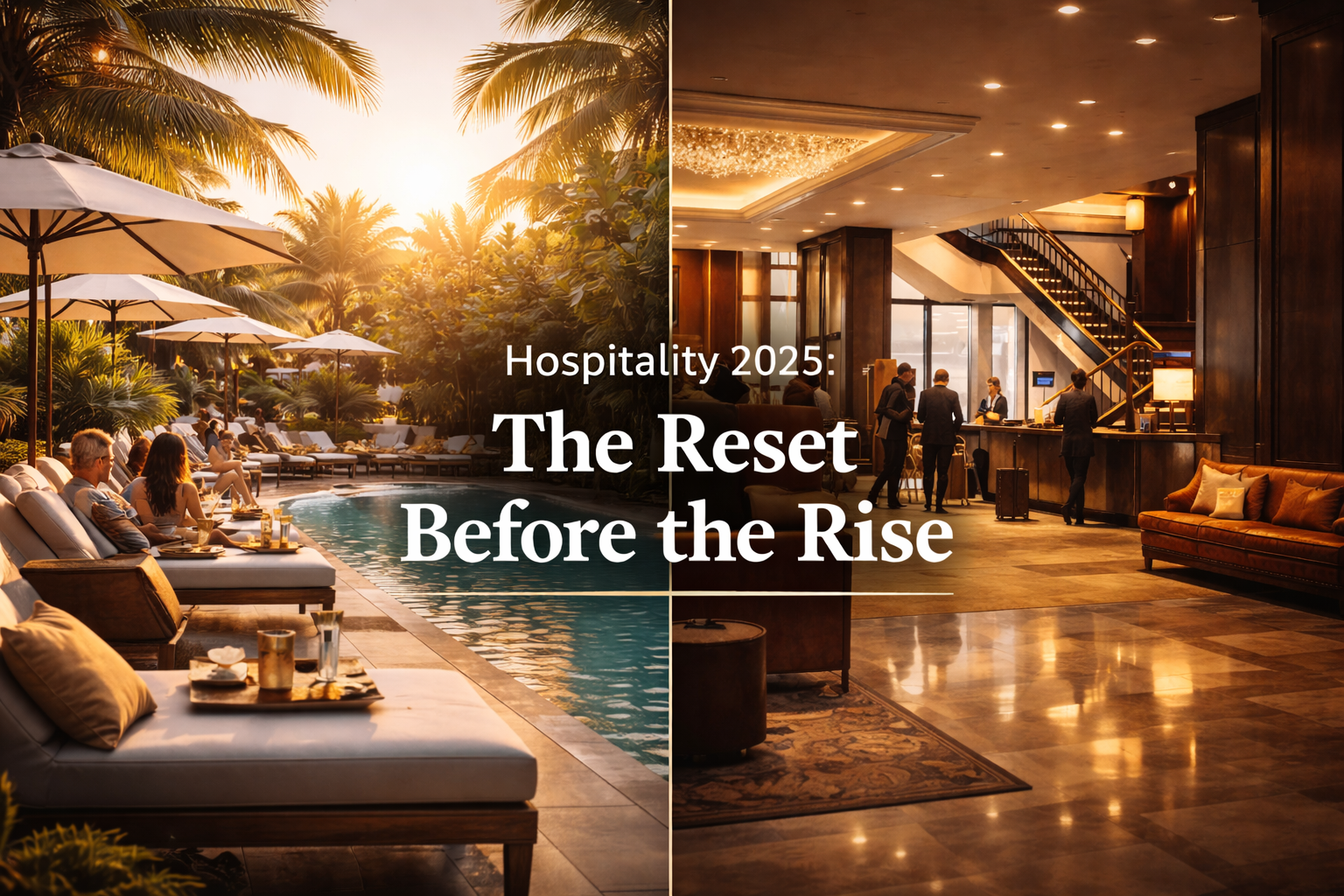
The hospitality sector cooled modestly in 2025 after several years of exceptional recovery, yet performance remained historically strong. Occupancy drifted slightly lower as new supply and softer leisure travel created mild pressure, while ADR largely plateaued after three years of heavy gains. Extended-stay properties again led the industry, maintaining strong occupancy, stable rate performance, and investor appeal. Rising labor and operational costs constrained margins, but hotel fundamentals overall remained resilient. The sector enters 2026 on steadier footing, supported by improved group travel, growing international tourism, and minimal new supply.
🎧 Busy to read? Catch the Daily Podcast (Subscribe on YouTube, Apple, Spotify)➤ SIGNAL
➤Key Highlights
Occupancy softened slightly in 2025, averaging 62–63%, with Q3 occupancy down 1.5% YoY as supply growth (~0.9%) outpaced demand (-0.6%).
ADR plateaued, rising just 0.1% YoY in Q3; RevPAR declined 1.4%, giving back a small portion of the post-pandemic pricing surge.
Leisure remained the demand anchor, but business and group travel improved — some cities (e.g., St. Louis) posted double-digit RevPAR gains from convention activity.
Extended-stay hotels outperformed, maintaining an ~11.4-point occupancy premium over the broader hotel market and experiencing smaller RevPAR declines.
Alternative accommodations expanded quickly — short-term rentals up ~30% vs. 2019 and cruise volumes up ~14%, adding competitive pressure.
Hotel operations faced rising labor and insurance costs, keeping margins flat to slightly lower despite record-high ADR levels.
Investment activity cooled; financing tightened, but cap rates held in the 7–8% range for limited-service and extended-stay assets, with distress limited relative to office.
2026 outlook turns modestly positive, with expected RevPAR growth in the low single digits, stronger inbound tourism, and major events (e.g., 2026 FIFA World Cup) providing uplift.
2025 Performance
Hotel occupancy softened in 2025 as modest supply growth outpaced a slight dip in demand. National occupancy averaged 62–63%, down about 1.5% year-over-year in Q3. Rates flattened — ADR was essentially unchanged (+0.1%), and RevPAR declined 1.4%, marking the first notable cooling after a strong 2021–2024 rebound. Despite these dips, RevPAR levels remained close to historic highs.
Leisure travel continued to be the dominant driver of demand. Resort and drive-to destinations saw occupancies around 91% of 2019 levels, still strong but affected by more Americans choosing international trips in 2025. Business and group travel ticked higher: urban and convention hotels experienced improved midweek performance, with markets like St. Louis achieving 13% YoY RevPAR growth due to stronger convention activity. Conversely, markets like Houston and New Orleans saw weaker results as they lapped 2024’s hurricane-recovery surges.
A defining theme was extended-stay outperformance. These hotels held an 11.4-point occupancy advantage over the total U.S. hotel average, with far milder RevPAR declines than traditional hotels — especially in the economy extended-stay segment. Their stable customer base (project workers, long-stay relocations, insurance housing) provided insulation against leisure softness.
Alternative lodging accelerated. Short-term rental demand was ~30% higher than 2019, and cruises — fully restored to pre-pandemic capacity — saw ~14% higher passenger volumes, pulling some discretionary travel away from hotels. Even so, hotels retained pricing strength relative to pre-pandemic norms.
Financial & Operational Trends
Record-high ADR helped operators offset inflation, but rising costs created margin pressure. Labor shortages persisted, with hotels reporting ~17 job vacancies per 100 rooms (up 12% YoY), forcing wage increases across housekeeping and front-of-house roles. Insurance and utility costs rose as well, keeping expense growth slightly ahead of revenue growth.
Performance relative to 2019 varied by property type:
Highway/interstate hotels — ~96% of 2019 occupancy
Resort hotels — ~91% of 2019 occupancy
Urban hotels — improving midweek but still lagging driven by international travel gaps and a slower corporate recovery
Group travel outlook was favorable, with 2025–26 pacing metrics above 90% of pre-COVID norms. International inbound travel improved meaningfully — with strong growth from Europe and Latin America — though Chinese tourism remained below 2019 levels.
Extended-Stay Segment
The extended-stay subsector remained one of the strongest performers in commercial real estate. Key metrics include:
Occupancy premium: ~11% above national hotel averages
ADR resilience: Minimal rate declines even in softer markets
Stable RevPAR: Economy extended-stay RevPAR declines were only ~20% of those seen in traditional economy hotels
Investor demand: Attracted new development activity in Sun Belt markets due to stable margins and predictable demand
Extended-stay properties continued to appeal to infrastructure project workers, disaster-response needs, relocating families, and corporate travel — providing a durable base that insulated the segment from leisure volatility.
Capital Markets & Investment
Hotel investment volume slowed in 2025 due to higher borrowing costs and broader macro uncertainty. Financing was more expensive and required more equity, leading to fewer deals. Lenders commonly imposed 50–60% LTV caps for acquisitions, especially for full-service hotels.
Despite tighter underwriting, limited-service and extended-stay hotels remained liquid, with cap rates generally in the 7–8% range. Premium resort assets also continued trading at healthy valuations, supported by persistent demand for high-end leisure travel.
Distress remained modest compared to office. CMBS delinquency rates for hotels hovered around 4–5%, only slightly elevated. Some urban assets that struggled during 2020–2021 were sold out of foreclosure, but these cases were isolated. Many institutional and family-office investors began positioning for a potential upcycle in 2026, anticipating rate cuts and steady demand.
Hotel REITs had a volatile year tied to rate movements, but most restored dividends as operating cash flows normalized.
Policy & Regulatory Factors
Regulatory developments in 2025 tended to support hotels indirectly:
Short-term rental restrictions tightened in major cities, especially New York City, boosting hotel weekend occupancy.
Tourism policy normalized — full U.S. visa services were restored, aiding inbound demand.
Labor regulations contributed to higher wages in some major markets, pushing operators toward more tech-enabled staffing models.
Tax adjustments — several tourist-heavy markets implemented or debated occupancy tax increases for infrastructure or municipal revenue.
Sustainability incentives from the Inflation Reduction Act encouraged some hotels to invest in energy-efficient upgrades.
These policy shifts reduced competitive pressure from unregulated accommodations, supported international travel, and nudged operators toward modernization.
➤ 2026 Outlook - Industrial
The 2026 outlook for hospitality is modestly optimistic. Industry forecasters expect low single-digit RevPAR growth, led by ADR increases of ~2% and flat-to-slightly higher occupancy. Several tailwinds support this:
Strengthening international tourism, including gradual recovery from Asia
Continued rebound in group and corporate travel
Major global events, including the 2026 FIFA World Cup, expected to drive large spikes in travel to host cities
Persistent demand for extended-stay accommodations
Minimal new hotel supply (<1% net growth), helping stabilize pricing
Cost pressures may ease slightly if labor markets loosen, and hotels’ post-pandemic operational changes (opt-in housekeeping, mobile check-ins) will help maintain margins. Risks include macroeconomic weakness or a recession, which would directly impact travel budgets.
Overall, 2026 is shaping up as a year of steady normalization, with RevPAR potentially returning to or surpassing 2019 levels in several segments.
CRE360.ai — Daily Signals & Commercial Real Estate Intelligence
Part of the 2025 Year-End Intelligence Series.
▼ EDITORIAL DESK TOP PICKS
❝Under activist pressure and amid a leadership shake-up, Target makes bold moves to rescue slumping sales — will it pay off or backfire?
🛍️Retail
❝Data centers are turning into mini power hubs — can on-site gas turbines keep up with the AI boom?
🏭Industrial
❝US hotel deals are rebounding after a midyear pause, but tariffs and sluggish rate cuts could still trip up 2025’s growth.
From EAST Miami to JW Marriott Phoenix, the year’s priciest hotel deals reveal where luxury meets big-money bets.
🛏️Hospitality
❝Big moves in real estate: Newmark, Cresa, and CBRE shake up teams — who’s climbing and who’s switching lanes?
🏘️Multifamily
❝Inside KSR Capital: 5 revealing questions with Mark Seruya you won’t want to miss.
🏙️Office
❝A £47m modular buildings maker gets a new lease on life — who snapped it up from administration?
🏙️Distress

Get Hospitality 2025 Recap & 2026 Outlook in your inbox
Overview of Hospitality & Extended Stay performance in 2025 and what to expect in 2026