➤ Key Highlights
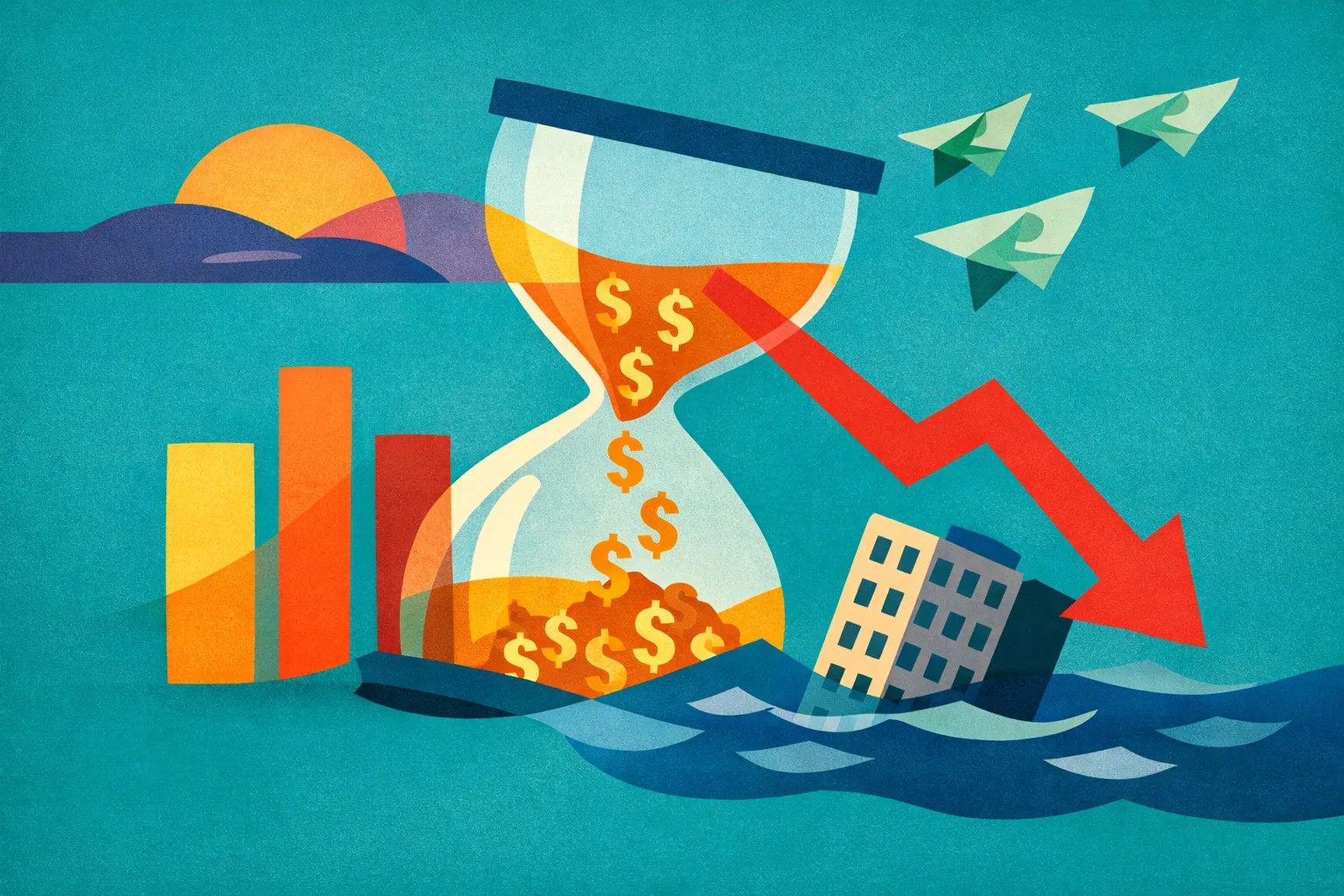
Publicly traded private-credit funds are headed for their worst year since 2020, sharply underperforming equities.
The Cliffwater BDC Index is down mid-single digits YTD, versus a strong double-digit gain in the S&P 500.
Many BDCs are trading below NAV, reflecting investor concerns around credit quality and dividend durability.
Large banks are winning back leveraged-loan and sponsor financings, reversing years of private-credit dominance.
Regulatory easing and balance-sheet capacity are restoring banks’ pricing and execution edge.
The power shift suggests a rebalancing of capital sources heading into 2026.
Public private-credit vehicles—particularly business development companies—are underperforming meaningfully in 2025, marking their weakest year since the pandemic era. According to reporting by Bloomberg, the Cliffwater BDC Index is down roughly 6–7% year-to-date, while broader equities have surged. At the same time, large banks including Citigroup, Goldman Sachs, and JPMorgan Chase are reclaiming market share in leveraged lending and deal financing—areas private credit had dominated when banks were constrained.
This isn’t just about short-term performance. Private credit thrived in a high-rate, regulation-heavy environment where banks pulled back. That environment is shifting. As banks regain flexibility, they’re offering competitive pricing, speed, and certainty—undermining the core value proposition of many private-credit vehicles. For investors, discounts to NAV and pressure on dividends raise questions about underwriting discipline and loss recognition. For sponsors and borrowers, it changes who controls the capital stack—and on what terms.

⚠️ Why it matters now
Expect capital flows to rotate rather than collapse. Private credit won’t disappear, but its growth rate likely slows as banks selectively re-enter attractive segments. Watch for tighter spreads, more conservative structures, and a bifurcation between top-tier private lenders and weaker platforms. If defaults tick up, listed vehicles will feel it first. 2026 deal markets may look far more bank-led than recent history suggests.
Stop Reading Headlines
Subscribe to CRE 360 Signal™ Newsletter to Move Smarter in Today's CRE Market.Start Understanding the Market
➤ TAKEAWAY
Private credit’s easy-win phase is over. As banks regain footing, the market is recalibrating—pricing risk more honestly and redistributing power back to balance-sheet lenders. For capital allocators and dealmakers, this is a signal to reassess assumptions about who truly controls credit in the next cycle.
Never miss a Signal
Get the daily brief that busy CRE professionals rely on.