THE SIGNAL. The BLS June Producer Price Index released July 15 showed inputs to new nonresidential construction up 7.1% year over year. Contractors bid prices for new nonresidential buildings rose roughly 3.5% over the same stretch about half the pace. AGC and ABC economists reiterated the split on July 23 inputs remain sharply higher year over year even after a 1.1% month over month dip in June.
The tariff regime is the engine. Steel aluminum and copper intensive goods now carry duties up to 50% with downstream equipment such as transformers panelboards and conduit at 15 to 25%. Earlier in 2026 construction input prices spiked at a 12.6% annualized rate the fastest since early 2022. Diesel dropped 18.4% month over month in June but was still 65.8% higher than a year earlier.
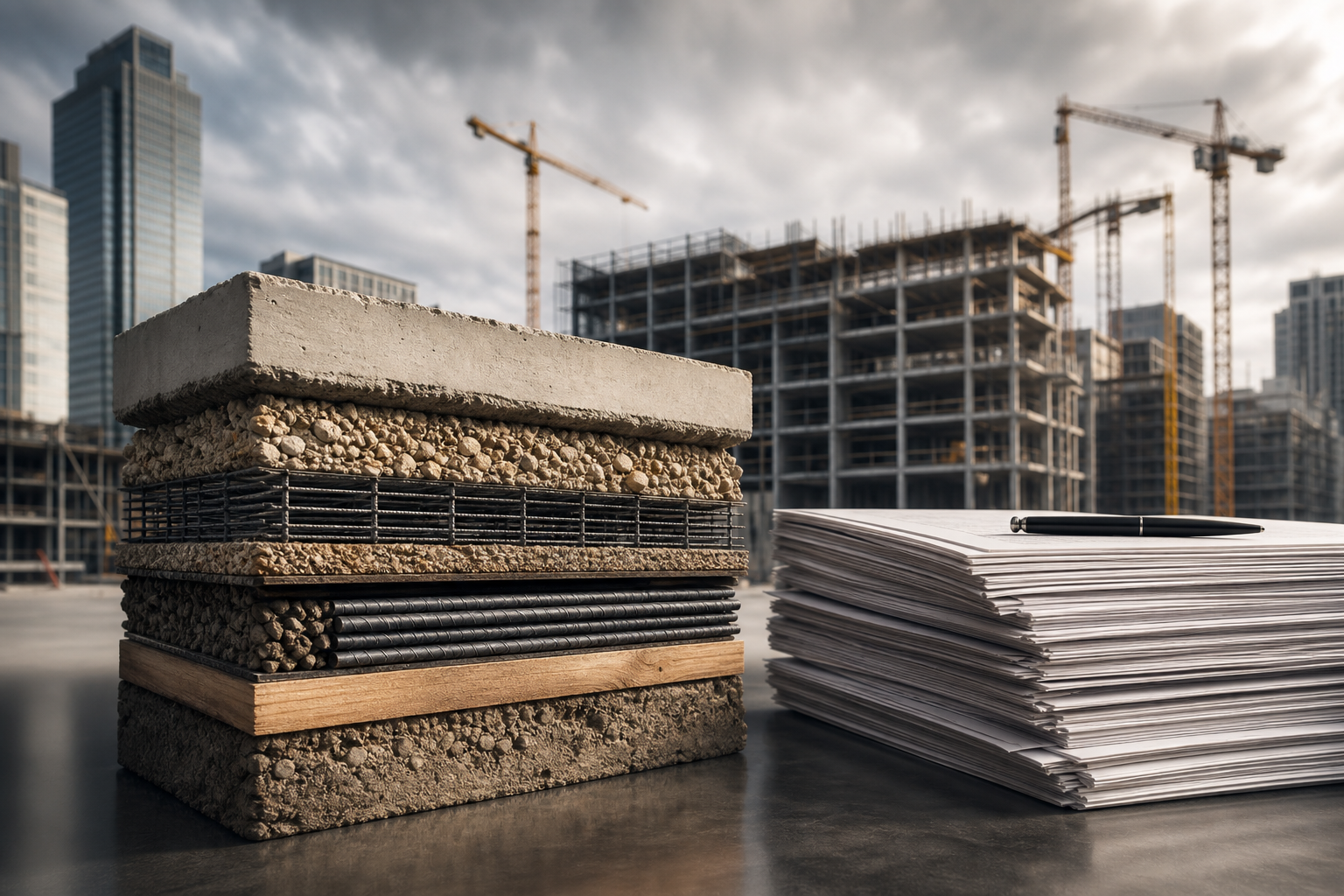
OUR READ. Materials inflation and bid inflation have decoupled and that decoupling is the whole story. In a functioning cycle when inputs rise bids rise with them and the owner pays the difference. Right now inputs run at double the bid pace which means the contractor not the owner is absorbing the spread to win work in a thinner pipeline.
That looks like good news for owners. It is not not cleanly. A contractor bidding below its own input curve is buying revenue at a loss to keep crews busy. It works until the balance sheet runs out. The risk has not disappeared it has changed shape from hard cost overrun during the job to counterparty insolvency mid job. A stalled project with a failed GC is far more expensive than an honest escalation clause.
This is why the cheapest bid is now the one that deserves the most diligence. The aggressive number may reflect a lean efficient builder or a desperate one pricing to survive. Telling them apart is underwriting not procurement. And the escalation did not leave it moved from the invoice where you could see it to the contractors income statement where you cannot.
STAKEHOLDER LENS. Developers escalation reserves and payment and performance bonds are the insurance against a builder that priced to lose. Lenders contractor credit belongs in the loan file next to sponsor credit. Contractors the teams that survive have the balance sheet to carry the spread and consolidation favors the well capitalized. Owners choose a builder that can finish then reserve for the escalation the bid is hiding.
Key Takeaways
When bids rise slower than the materials that build the job the difference does not disappear it sits on your contractors balance sheet until it cannot. Underwrite the builder who can finish and reserve for the cost the low bid is not showing you.
When bids rise slower than inputs someone eats the difference make sure it is not you
The risk shifted from cost overrun to contractor counterparty failure
The cheapest bid is now the one to diligence hardest
Escalation moved from the invoice to the contractors income statement
Whether contractors keep absorbing input inflation into 2027 or push it into bids and how many mid sized subs fail before they do. If the pipeline reflates while tariffs hold the suppressed cost re enters pricing quickly and every pro forma written against todays soft bids gets repriced.
BLS Producer Price Index June 2026 released Jul 15 2026; AGC and ABC construction economics commentary Jul 23 2026; Construction Dive 2026 Tariffs drove construction input prices up; Cushman and Wakefield 2026 The Impact of Tariffs on U.S. CRE Construction Costs
Get The Bid Beneath the Bid in your inbox
Materials cost twice what the bids admit and contractors are eating the difference.