➤ SIGNAL
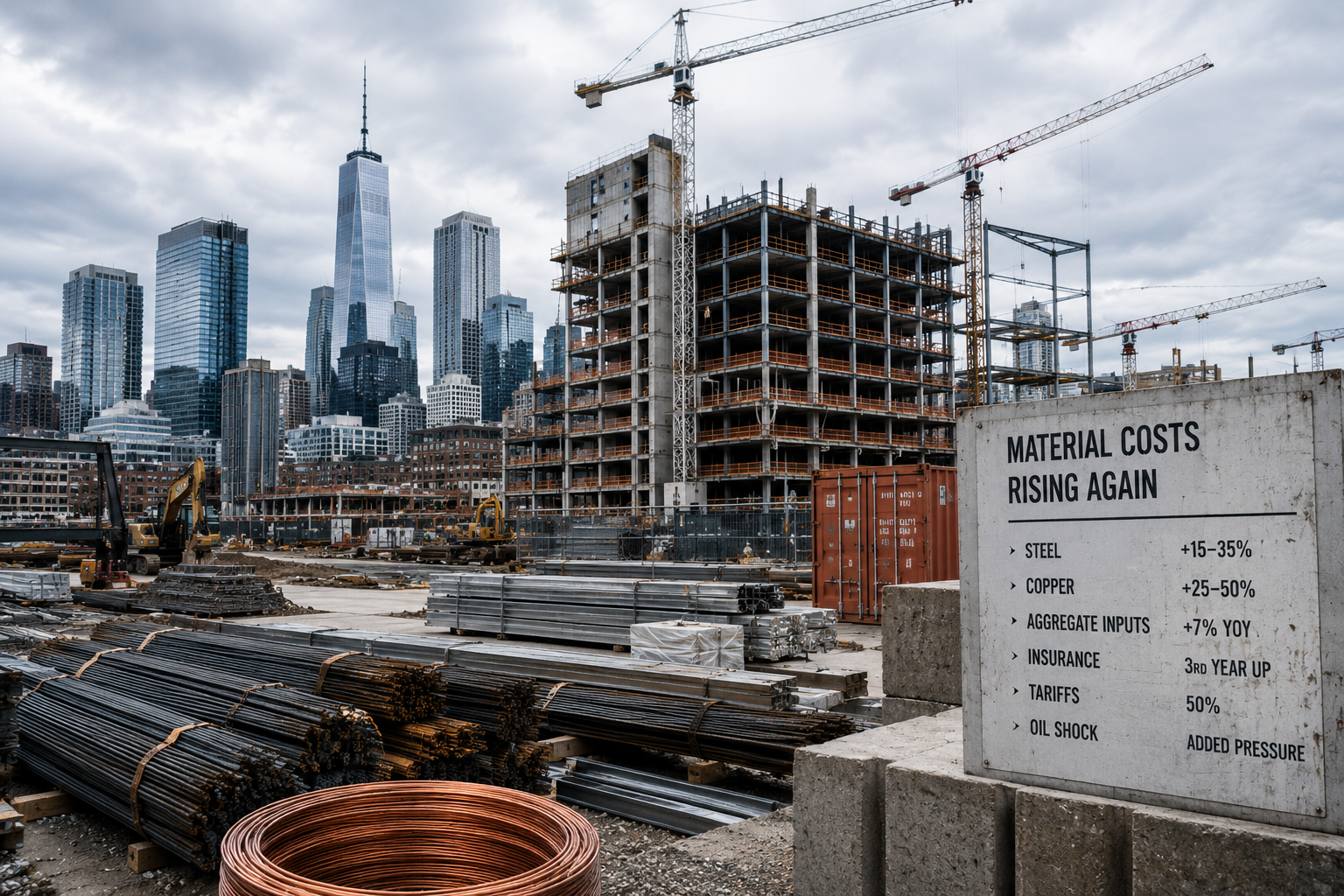
The cost-inflation story didn't end — it changed shape. Materials had been easing off the summer-2025 tariff peak, but a +6% materials line and a +3% total-project line are still a feasibility tax on every ground-up deal. Layer in steel and copper moving 15–50% and the new oil shock raising energy and freight, and the all-in cost to build is grinding higher again at the exact moment debt is most expensive.
The under-discussed multiplier is insurance. When replacement cost rises, insured values rise, and premiums priced off value rise with them — a third straight year of increases. For a developer, that compounds the problem twice: higher hard costs and higher carrying costs on the completed asset, both eroding the yield-on-cost that justifies breaking ground.
Implications
Developers: Re-run feasibility with steel/copper escalators and current insurance quotes — pro formas built on 2024 inputs understate cost by mid-single digits or more.
Owners/operators: Insurance is behaving like a second interest rate; budget it as a structural NOI drag, not a line item.
Lenders/investors: Cost re-inflation widens the spread between replacement cost and acquisition price — strengthening the case for buying existing assets below build cost.➤ TAKEAWAY
It is getting more expensive to build into the most expensive money in fifteen years — which is exactly why buying beats building right now.
Cushman & Wakefield / ULI / ABC — Q2 2026 · Construction · Supply Chain · Development · Related coverage
Never miss a Signal
Get the daily brief that busy CRE professionals rely on.