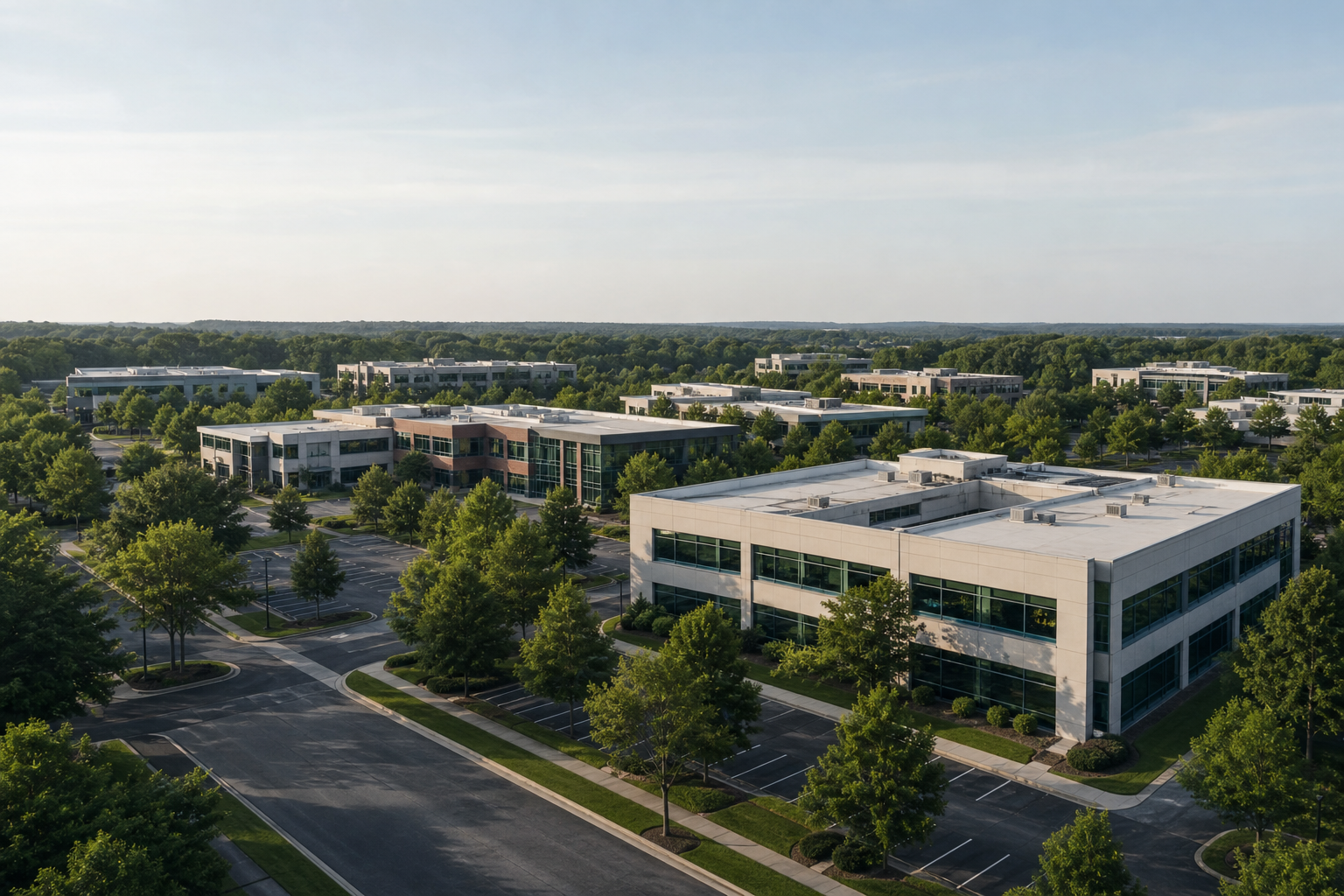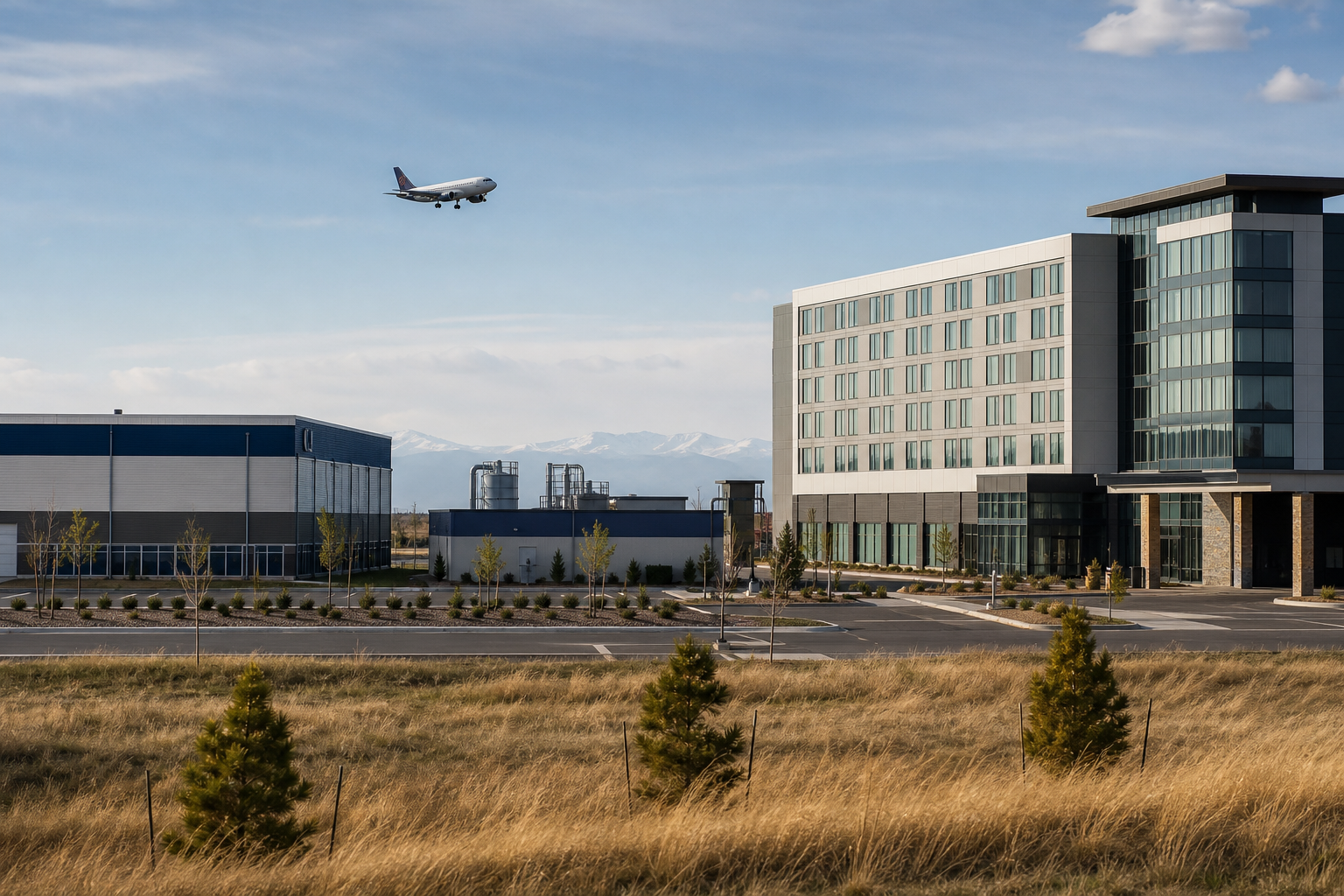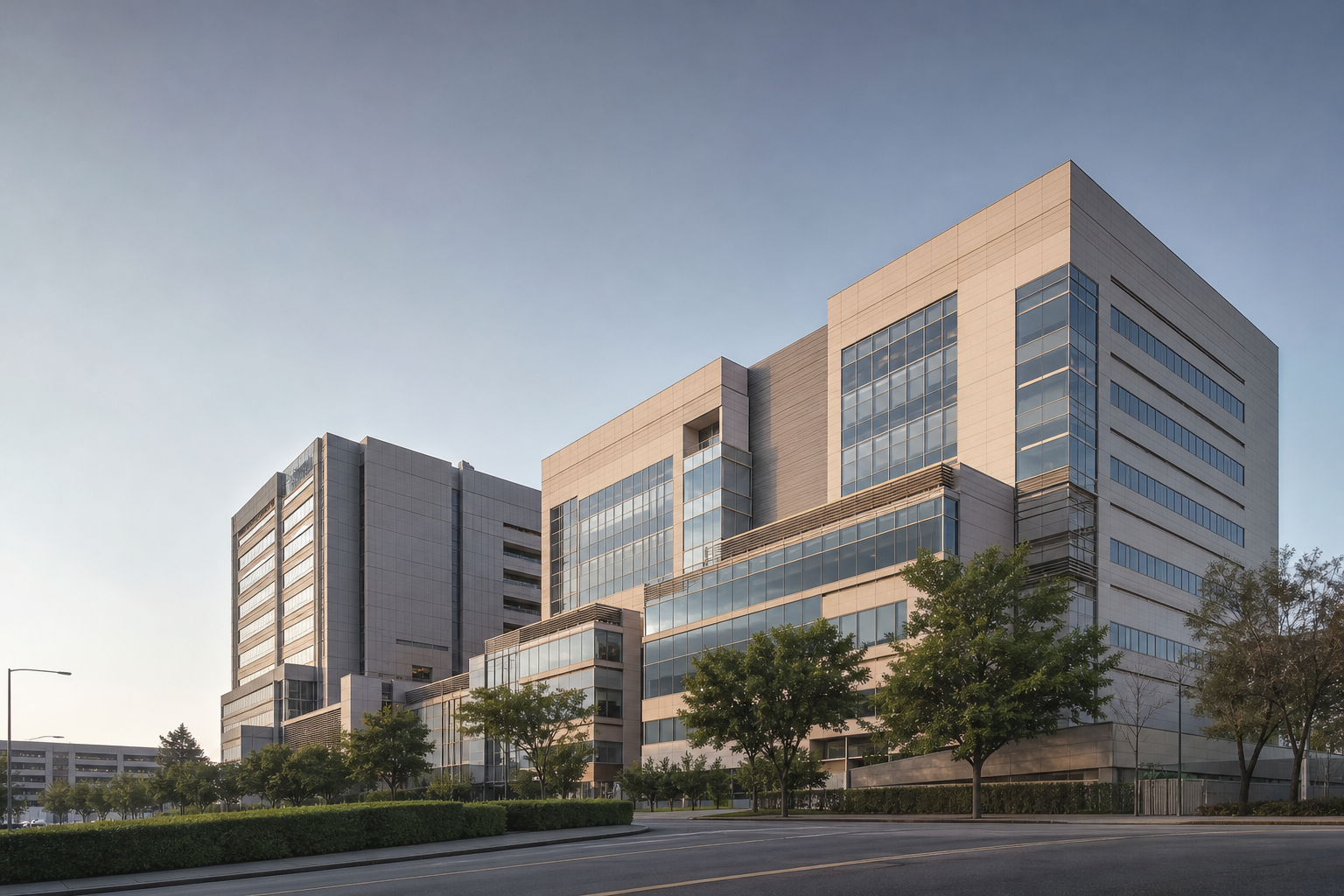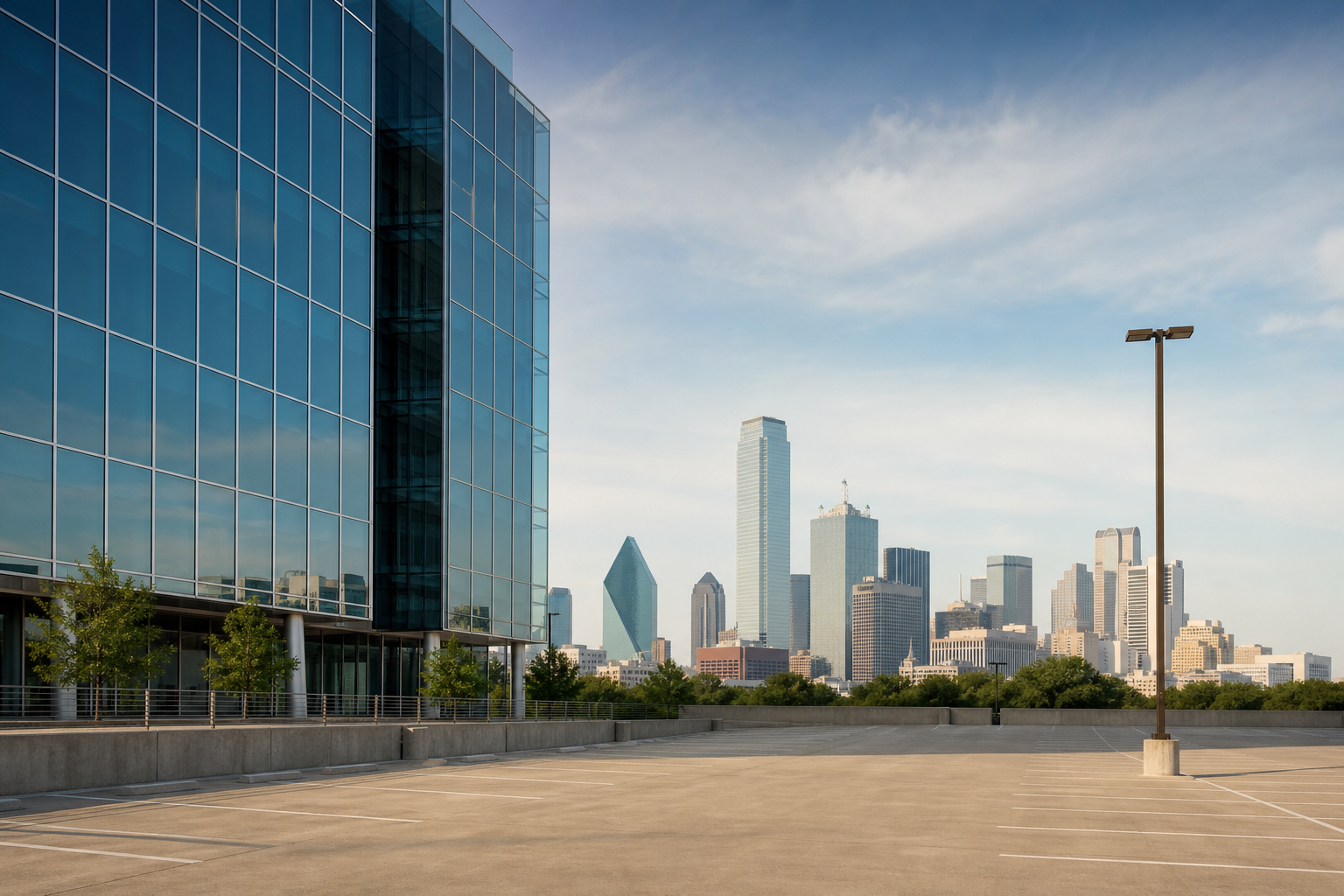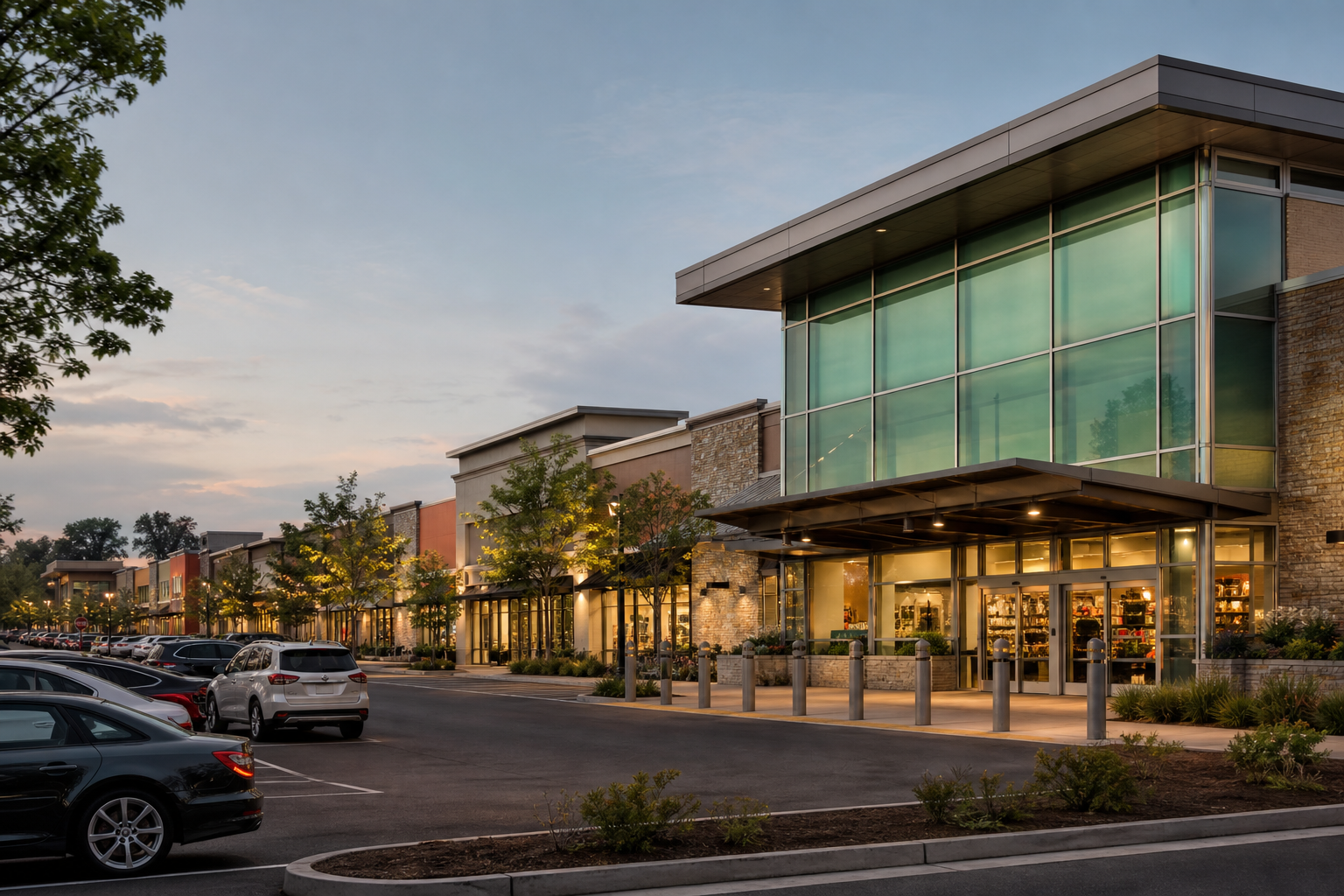
Green Street's price index rose 4.1% over the past year and still sits 14% under its 2022 peak. Strip retail is back within 2% of a record; office is on the floor. Same index, two markets — and cap rates that won't move, not demand, decide which one your asset lives in.
THE SIGNAL
Two numbers ran the market in June. Commercial property prices are up 4.1% over the trailing year — and still 14% below the peak set in 2022. Both are true, and the space between them is the whole story.
Underneath the blended line there is no single market. Strip retail is up about 9% year-over-year and sits just 2% off its all-time high. Industrial holds its lead at an index reading of 225.5, up 4% on the year but still roughly 11% under its 2022 peak. Malls are basically at peak — down 1%, up 5% year-over-year. Office and net lease are still on the floor, dragging the average down while the winners print new highs.
The reason the gains stay modest, per Green Street's research desk, is that cap rates won't compress. Without multiple expansion, price can only rise as fast as income — a far slower engine than the re-rating that drove 2021.
OUR READ
Strip out the noise and 2026 is a repricing recovery gated by financing math, not a demand recovery. When the exit cap won't fall, the tailwind that flattered every 2021 model disappears, and value has to be manufactured at the asset — leasing, retention, cost control, basis.
That inverts what "conservative" means. For three years, penciling a slightly lower exit cap read as prudence. Today it is the aggressive assumption. The disciplined case holds the exit cap flat to today and makes the deal work on cash flow alone. A deal that only clears on cap-rate recovery isn't a deal — it's a wager on the one thing the index says isn't happening.
And the spread is now wide enough to drive allocation by itself. Strip retail near records and office near lows aren't two points on one curve — they're two markets sharing a price index. Capital that treats "CRE" as one asset class is mispricing both ends.
The pattern repeated on every beat that crossed the desk this week. Life-science demand is up 44% year-over-year while landlords of older labs still carry ~32% vacancy. Hotel capital put roughly 73% of deals into upscale-and-above and walked past the middle. Wells Fargo wrote a $125M loan against a trophy Denver block while commodity assets still can't find debt. PGIM cleared a leased Coral Gables office at ~$281/SF the same week a gateway tower got re-marked to a fraction of its basis. One market, one rule: quality clears, everything else waits.
STAKEHOLDER LENS
Buyers: Underwrite a flat exit cap. If the deal needs compression to clear your hurdle, it's a bet — price it like one.
Sellers: Strip retail and well-leased industrial have a live window near highs. Office and net-lease owners are still price-takers.
Lenders: Sticky cap rates cap the recovery in your collateral value — a rising tape won't bail out extend-and-pretend.
Developers: Cost of capital, not demand, is the binding constraint. Basis discipline is the whole edge.
KEY TAKEAWAY
Whether cap rates stay stuck through the back half turns on the rate path and Q2 REIT earnings, which start landing in late July. If NOI surprises to the upside in the strong sectors, the spread widens before it narrows. Watch the first prints — not the recaps
The bottom is in. But with cap rates stuck, this recovery is earned deal-by-deal and sector-by-sector — not ridden.
TODAY'S TOP SIGNALS
Property Prices Are Rising, But the Cap Rate Won't Let Them Run
An Ex-Bitcoin Miner Just Signed a $19 Billion AI Landlord Lease
Sun Belt Office Still Trades — PGIM Exits Coral Gables at $97.8M
Sources: Green Street Commercial Property Price Index (June 2026 print) via CRE Daily, Connect CRE, and Real Estate Daily News. Cross-beat references drawn from JLL/Bisnow (life sciences), CoStar/Hotel Dive (hotels), and Commercial Real Estate Direct (Larimer Square, The Ponce). Figures current as of July 12, 2026 and subject to revision.
Related coverage
Get The Recovery Has a Ceiling in your inbox
Prices are up 4.1% and stuck 14% below peak. Sticky cap rates — not demand — decide who gets the recovery.