📢 CRE 360 Signal™.
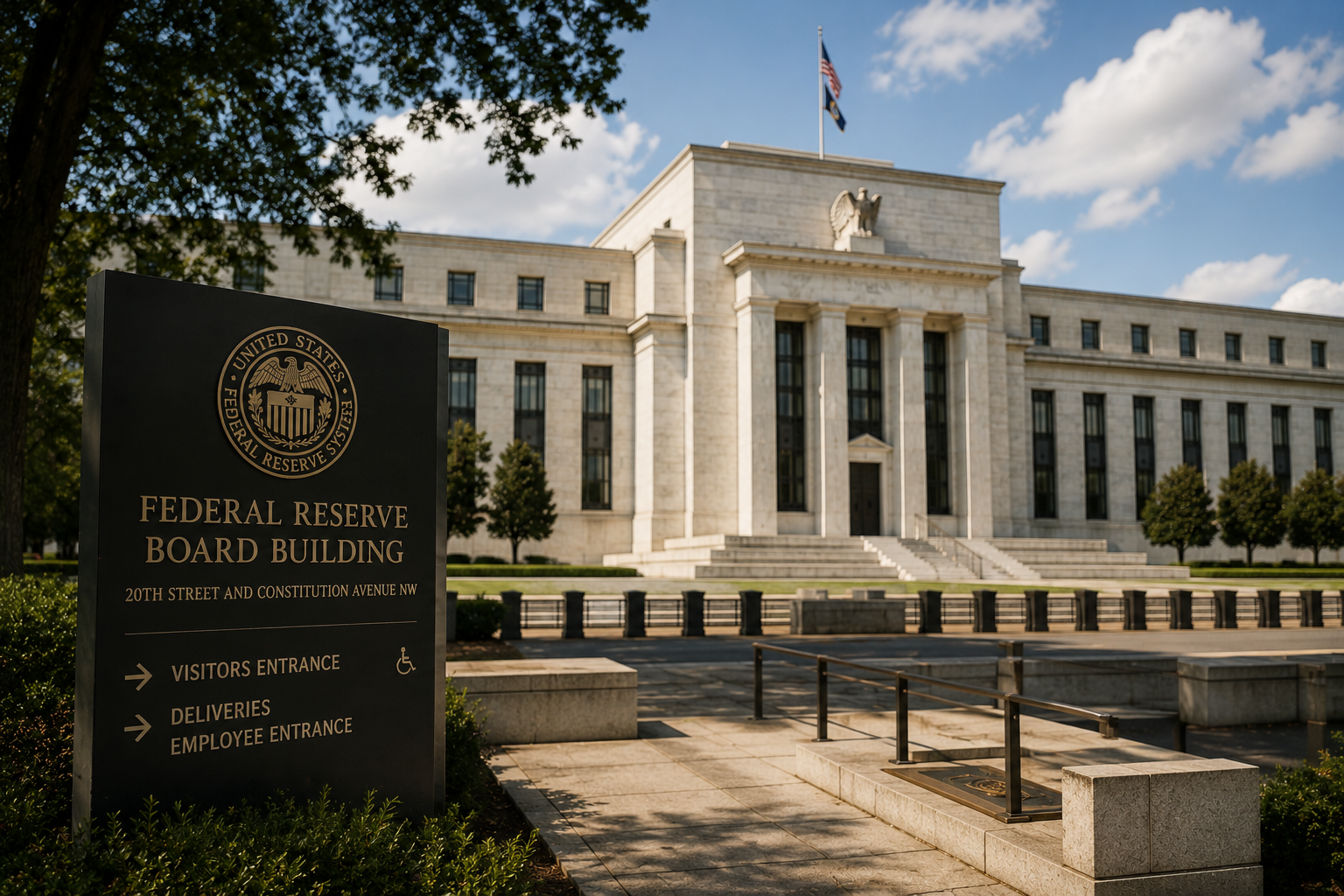
The May 20 release of the April 28–29 FOMC minutes did two things at once: it formally identified commercial real estate as a sector where credit conditions remain distinctly tight, and it pushed the modal rate-cut path later than markets had been pricing.
🎧 Catch the Wekkly Podcast (Subscribe on YouTube, Apple, Spotify)➤ SIGNALS
In a sentence that doesn't usually appear in FOMC minutes, the Committee wrote: "Conditions remained somewhat restrictive for commercial real estate (CRE) because of a combination of high financing costs and relatively tight underwriting requirements." The federal funds target was held at 3.50%–3.75%. The Desk-survey median path now shows two 25 bp cuts pushed into Q3/Q4 2026 and Q1 2027, later than the previous survey. And options markets are pricing roughly a 30% probability of a hike by Q1 2027, not a cut.
Two things matter about that paragraph. The first is that the Committee has carved CRE out as a separately-identified credit channel. Standard FOMC practice treats credit conditions as a single aggregate — household, business, financial. Singling CRE out is a signal that the Fed sees something distinct happening there worth noting to the public record. It is the closest the Committee has come to naming the sector as a transmission concern.
The second is the path. Macro context drives the timing: April CPI re-accelerated to 3.8% headline and 2.8% core year over year, with the Middle East conflict cited as a key driver. Treasury yields moved up across 2- and 10-year tenors over the intermeeting period. The "rate cuts are coming this summer" assumption that anchored a meaningful share of refi underwriting through Q1 2026 is no longer in the document.
IMPLICATIONS
Sponsors holding 2021-vintage debt with 2026 maturities need to re-baseline. If the model assumed a rate cut in Q3 2026 would meaningfully widen the refi window, that assumption has now formally moved out. The bridge between coupon-locked-loan economics and prevailing refi pricing won't close on the timeline most pro formas assumed.
Allocators sizing distressed-equity strategies should treat the minutes as confirmation that the catalyst for a fresh leg of stressed sales is now intact: tight CRE credit, no near-term cut, persistent core inflation. The setup for forced sales in undercapitalized stressed multifamily and office equity remains intact through year-end.
Lenders pricing new originations should note that the Fed's own framing now treats CRE underwriting tightness as the prevailing condition, not a temporary overshoot. That gives cover to maintain spreads and structure that the market had been assuming would loosen by mid-year. The "lender's market" window has formal Fed language behind it through at least Q4.
Key Takeaways
The Fed didn't change rates on April 29. It changed something quieter — it told the public CRE is the sector where the brakes are still on, and the foot is going to stay there longer than the market assumed.
CRE 360 Signal™ — Commercial Real Estate Intelligence
▼ EDITORIAL DESK TOP PICKS
Capital Markets / Debt / Refinancing
Korea Post expands into AI data centers and overseas real estate — Korea Post plans to raise alternative investments to 20% of assets, targeting AI infrastructure and global CRE.
UK CRE lending hits highest level in a decade — New commercial real estate lending volume in the UK surged, intensifying refinancing competition among lenders.
AvalonBay–Equity deal signals changing multifamily credit conditions — GlobeSt says large public apartment REIT consolidation reflects shifting financing dynamics and investor expectations.
Commercial mortgage lending reaches five-year high — CBRE’s Lending Momentum Index climbed to its strongest level since 2021 as multifamily and non-agency lending accelerated.
Kayne Anderson closes $5.12B opportunistic real estate fund — The oversubscribed raise suggests institutional capital is preparing for aggressive CRE deployment.
Office / Leasing / Conversions
AI-driven workforce shifts are reshaping office demand — New office demand is increasingly concentrated in premium assets and AI-linked tenant clusters.
Milwaukee office-to-apartment conversion lands $114M financing — A former office tower secured HUD-backed financing for one of Wisconsin’s largest conversion projects.
San Jose office conversion secures $74.1M financing package — The former Bank of Italy office redevelopment highlights growing lender support for adaptive reuse.
Metro Boston healthcare property trades for $32.1M — Investors continue targeting medical office and healthcare assets as defensive CRE plays.
Los Angeles value-add apartment asset sells for $10M — South Park multifamily demand continues attracting private investors despite broader market volatility.
Retail / Mixed-Use / Consumer Demand
San Antonio lifestyle center acquired by Rio Capital and Triangle Capital — The Legacy retail and mixed-use center sale reflects renewed liquidity for open-air retail assets.
JLL brokers sale of premier San Antonio shopping center — Institutional buyers continue favoring stabilized lifestyle retail properties in high-growth Sun Belt markets.
ICSC 2026 shows retail rebound driven by experiential and lifestyle formats — Retail recovery is increasingly tied to entertainment, dining, and mixed-use experiences.
San Diego retail building refinanced with $24M loan — Life-company lenders remain active in urban retail refinancing for stabilized assets.
Open-air retail continues attracting institutional capital — ICSC reports grocery-anchored and open-air retail assets remain among the strongest-performing property types.
Industrial / Logistics / Data Centers
EdgeConneX announces €3B Italy data-center expansion — The company plans multiple Lombardy campuses totaling more than 300 MW of future AI infrastructure capacity.
Data-center backlash intensifies across U.S. municipalities — Moratoriums, power concerns, and ratepayer pushback are increasingly slowing hyperscale approvals.
AI could add 330M square feet of CRE demand over the next decade — Cushman & Wakefield says AI adoption will reshape demand across office, industrial, and infrastructure assets.
Apartment construction surge offsets decline in single-family starts — Multifamily starts remain resilient as rental housing demand continues supporting development pipelines.
Tejon Ranch reports positive commercial real estate EBITDA in Q1 — The California land and mixed-use developer reported ongoing momentum across its CRE portfolio.

Related coverage
Get The Fed Wrote CRE Into Its Own Paragraph. in your inbox
April minutes name commercial real estate as separately restricted — and the cut path moved out.