Construction costs rose 7.1%. The real risk is who is absorbing it.
Everyone underwriting a ground-up deal right now is watching the wrong number. The headline — construction input prices up 7.1% year-over-year — reads like a budget problem: costs are high, price the contingency, move on. The number that actually determines whether your project delivers is the one underneath it. Inputs rose 7.1%. The bids contractors are winning rose about 3.5%. Builders are eating the gap.
The Signal. The producer price index for inputs to new nonresidential construction climbed 7.1% from June 2025 to June 2026, per federal data — roughly double the ~3.5% increase in contractors' bid prices over a comparable stretch. The input index dipped 0.5% in June, a reminder that the path up is volatile, not that it has reversed. The pressure is tariff-driven and still live: steel, aluminum, and copper items carry a 50% tariff as of April 2026, with derivatives at 25%. A 2026 AGC contractor survey found 53% of builders rank materials costs among their top concerns for the year.
Our Read. The spread is the story. When input prices run at 7.1% and the bids builders win run at 3.5%, contractors are absorbing roughly half the inflation to stay competitive on award. That is a rational response to a soft bidding environment — win the backlog, protect the crews, bet that costs ease. It is also a quiet transfer of risk. The tariff did not disappear because it is not in the bid. It moved onto the builder balance sheet.
That changes what a low bid means. For two years, owners have treated a competitive number as a win. In a market where the winning bid sits below input inflation, the low number can signal a contractor buying work it cannot fully fund — and the exposure does not show up in the pro forma. It shows up eighteen months in, when a subcontractor two tiers down runs out of margin and walks, and the schedule and the budget both break at once.
The June 0.5% dip is a trap for the complacent. It is noise inside a 7.1% annual climb powered by metals tariffs that remain in force. Anyone reading one soft month as relief is underwriting a reversal the policy backdrop does not support. The base case is continued input pressure against bids that cannot fully keep up — so the margin cushion contractors use to smooth it keeps thinning.
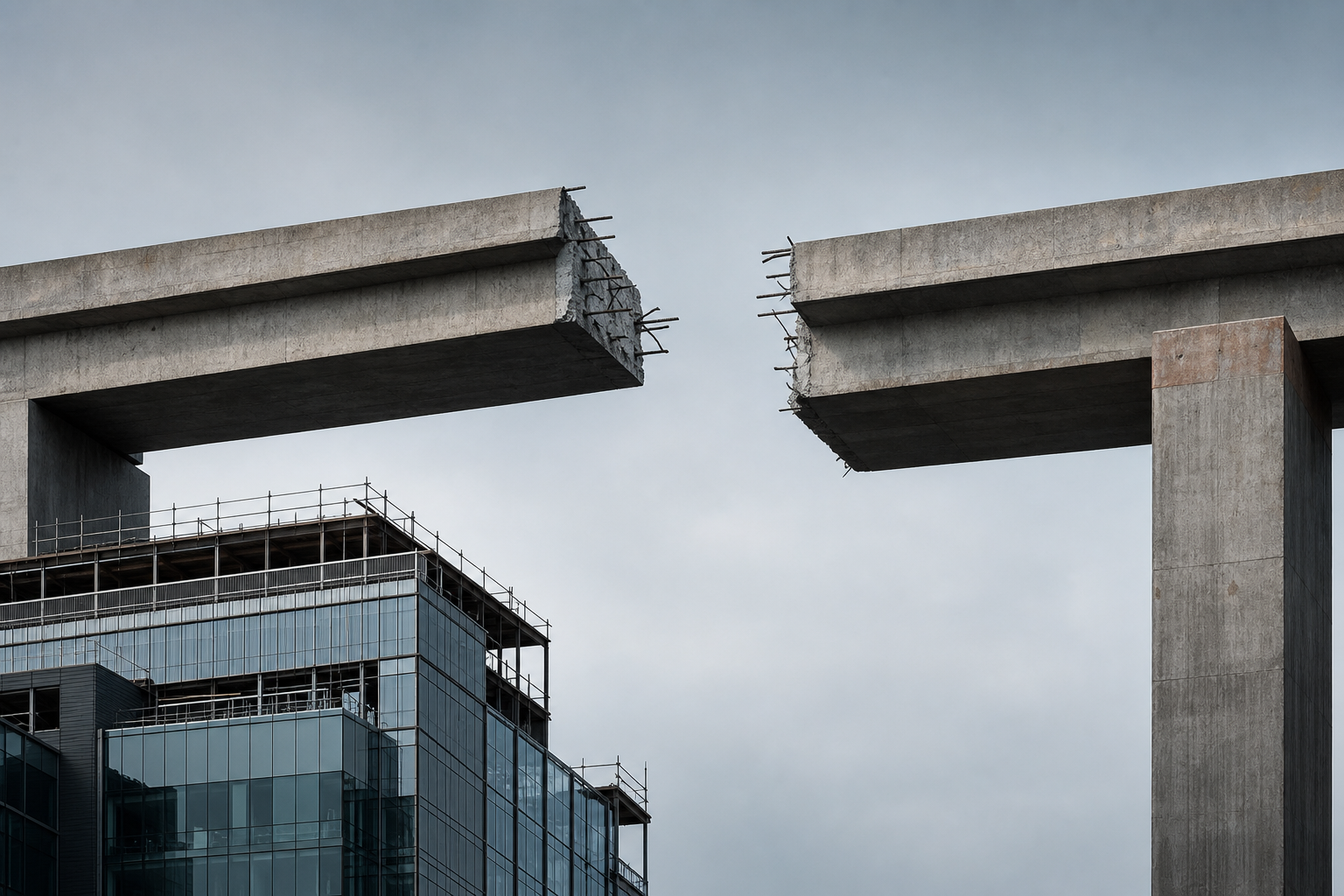
The structural read is that delivery risk has migrated from the owner budget line to the builder solvency. The cost of a project and the ability to complete it have partially decoupled. You can have a fully priced, fully financed deal and still lose the schedule because the counterparty carrying your bid was thinner than the number suggested.
Stakeholder lens. Owners and developers should underwrite the contractor as hard as the cost — GC and subcontractor balance-sheet health, bonding capacity, and backlog concentration are diligence items now, and contingency should be sized to input inflation, not bid inflation, because the two have split. General contractors are managing a real squeeze: absorbing to hold share works only while reserves last. Lenders should treat GC margin and sub-tier health as leading indicators of completion risk on funded construction loans. For anyone buying a project mid-build, the counterparty balance sheet is part of the asset.
Related coverage
Key Takeaways
Construction costs up 7.1% is the headline; contractors winning work at 3.5% is the risk. The tariff that is not in the bid did not vanish — it moved onto the builder balance sheet, and it has turned cheapest bid into a solvency question. Underwrite the contractor, not just the cost.
The gap between input costs (+7.1%) and bid prices (+3.5%) is the story, not the headline number
Contractors absorbing tariff inflation move delivery risk from the owner's budget to their own balance sheet
Whether contractors can keep absorbing — the answer depends on how long tariffs hold and whether award volume firms enough to let builders push more cost into bids. Also open: whether the June dip extends or reverses in the back half, which sets how fast the cushion erodes. What is settled is the mechanism: input costs are outrunning bids, and the difference is being financed by the people building the buildings.
Construction Dive — Construction costs dropped in June, will likely tick up again (June 2026 input PPI), July 2026. Associated General Contractors of America — Construction input vs. bid prices; 2026 Construction Hiring & Business Outlook Survey. Cushman & Wakefield — The Impact of Tariffs on U.S. CRE Construction Costs, 2026.
Get The Gap Beneath the Number in your inbox
Construction input prices are climbing twice as fast as the bids builders are winning — moving the tariff off the owner's budget and onto the contractor's balance sheet, and turning the cheapest bid into a solvency question.