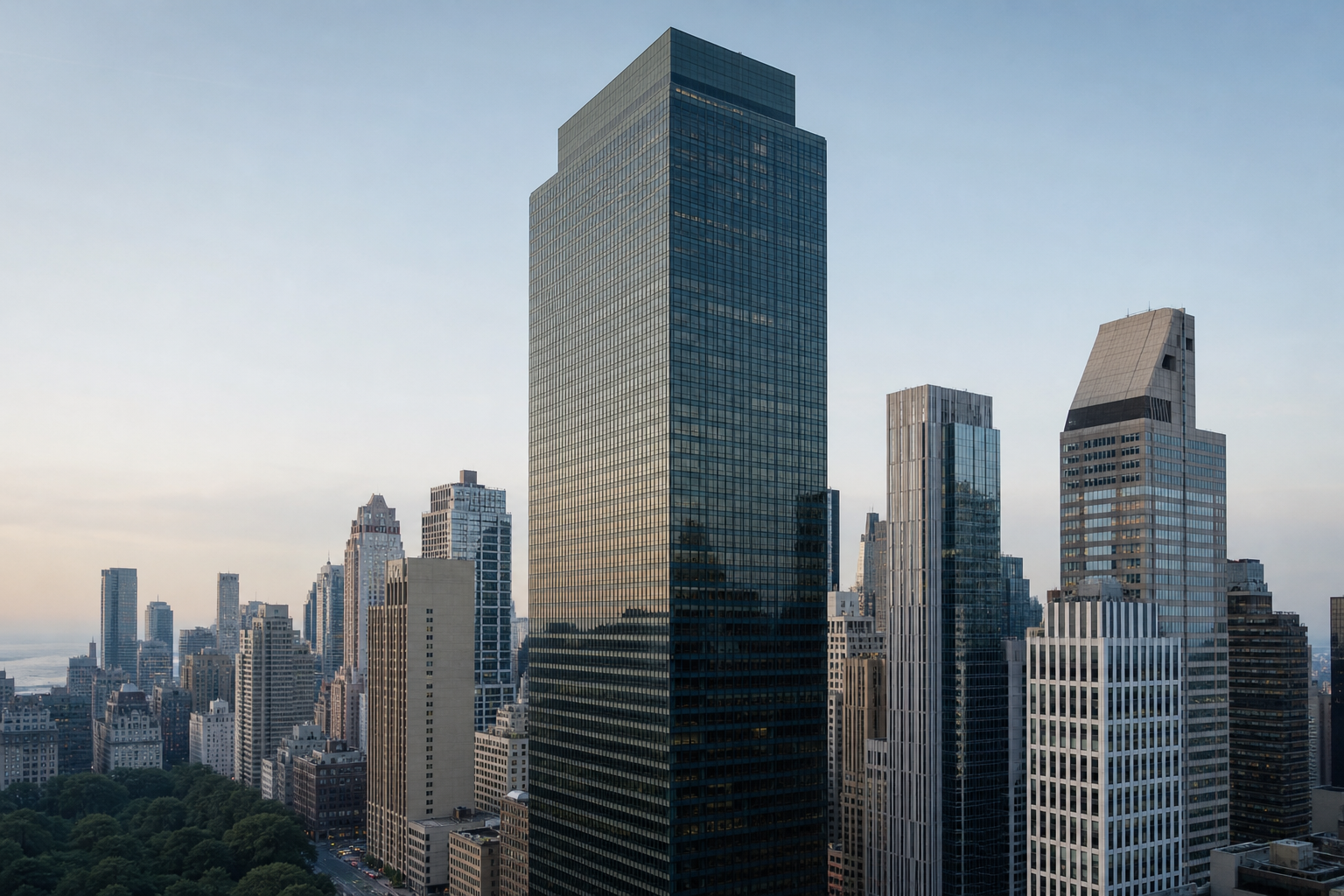
The Signal. Office posted its best demand mark since 2020. Per CBRE and JLL's mid-July figures, four-quarter rolling net absorption reached +14.3 million square feet — the seventh straight quarter of improvement. Vacancy slipped to 18.6%, but prime vacancy fell 80 basis points in a single quarter to 12.7%, and available sublease space is now down 28% from its peak. The pipeline behind that demand is the thinnest in 14 years, with only about 19.7 million square feet under construction nationally.
Q2 2026 landed this week, and across three property types the numbers rhyme: demand is climbing, construction has collapsed, and the money funding the rebound now runs through debt funds at a premium. The recovery is real. Almost no one is building for it.
Industrial told the same story at larger scale. First-half leasing hit 491 million square feet — up 27% year-over-year and the third-strongest H1 on record, trailing only the 2021-22 boom. Midyear vacancy eased to 6.9%, quarterly absorption cleared 60 million square feet, and deals over 750,000 square feet led the way as big-box occupiers returned. Retail closed the set: net absorption swung to +10.2 million square feet in Q2 after a negative Q1, vacancy held at a tight 4.4%, and asking rents rose 2.4% year-over-year — on completions near historic lows. Three property types, one mechanic: demand recovering into a starved pipeline.
Implications / Our Read. The instinct is to celebrate the demand. The sharper read is in the denominator. What links office, industrial, and retail this quarter is not that tenants came back — it's that no one built for them coming back. Deliveries are at a 14-year low in office, restrained in industrial, and near historic lows in retail. When absorption climbs into a pipeline that can't expand, the outcome isn't just lower vacancy; it's pricing power migrating back to owners of the right product.
That right-product qualifier is the whole game. This is a bifurcated recovery. In office, prime vacancy is falling six times faster than the overall market — the trophy tier is tightening while commodity space stays stranded. In industrial, the demand is concentrated in the largest, most powered, most intermodal-connected boxes. In retail, it's the well-located open-air and grocery-anchored centers. The averages are recovering; the tails are not. Underwriting the average is how you misprice both ends.
Then there is the cost of the money. CRE lending is back to a five-year high on CBRE's Momentum Index — but the composition inverted. Debt funds and mortgage REITs now write 53% of non-agency loans, up from 19% a year ago, while banks fell to 22%. Q2 all-in rates averaged 6.62%, and borrowers are paying a 329-basis-point premium for private credit on purpose, trading coupon for certainty of execution. The recovery is real, but it is being financed expensively and outside the banks.
And the supply drought is not destiny everywhere. This week Hillwood broke ground on a 1.2-million-square-foot spec box at AllianceTexas — 40-foot clear, 3,000 amps, a private bridge to BNSF intermodal, bank-financed — lifting its pipeline there to 8.2 million square feet. The lesson isn't that the pipeline is full; it's that deliverable supply is concentrating in the few developers who own powered, rail-served, entitled sites. Scarcity of supply is really scarcity of buildable supply.
Stakeholder lens. For owners of prime assets — trophy office, big-box logistics, grocery-anchored retail — the mandate is to underwrite rent growth, not just stabilization: the competing pipeline that would cap you doesn't exist. For owners of commodity product, this recovery is not a rescue; the tail is still where obsolescence lives. For developers, the absence of supply is the opportunity, but the gate is infrastructure position and financing — only powered, connected, well-located sites pencil, and only sponsors who can absorb private-credit pricing will start them. For lenders and equity, the debt-fund share gain is structural, and the 329-basis-point premium is now a competitive variable in the capital stack, not a footnote.
Related coverage
Key Takeaways
Across office, industrial, and retail, Q2 2026 says the same thing three times: demand is recovering into the emptiest pipelines in a decade, the gains are concentrated at the top of each market, and the capital funding it now costs 329 basis points more through debt funds than through banks. The recovery is real — the question is who owns the product it can't replace, and who can afford to finance building more.
This is a bifurcated, supply-starved recovery — office (+14.3M SF), industrial (491M SF H1), and retail (+10.2M SF Q2) are all absorbing demand into the emptiest pipelines in a decade, with gains concentrated at the top of each market
The money repriced: debt funds now write 53% of non-agency loans (from 19%), banks fell to 22%, and borrowers pay a 329-bps private-credit premium on purpose
Deliverable supply is concentrating in the few developers who own powered, rail-served, entitled sites — Hillwood's 1.2M SF spec start is the tell
Whether the demand holds long enough to meet a pipeline that takes years to respond — a recovery this dependent on flight-to-quality can stall if the macro turns before commodity space either fills or exits. Also open: whether banks re-enter CRE lending on any timeline that matters, or whether the debt-fund premium becomes the permanent price of leverage. And whether the concentration of deliverable supply in a handful of master-planned hubs is a durable moat or simply the first wave of starts before capital chases the scarcity. What's settled is the shape of the trade: the recovery is bifurcated, supply-starved, and financed at a premium.
CBRE — Q2 2026 U.S. Office Figures, July 2026; JLL — U.S. Office Market Dynamics, Q2 2026; Commercial Observer — Manufacturing, Big-Box Leasing Fuel U.S. Industrial Reset in 2026, July 2026; CBRE — Q2 2026 U.S. Industrial & Logistics Figures; Colliers — U.S. Retail 2026 Q2, July 2026; CBRE — Lending Momentum Index, 2026; GlobeNewswire — 700+ Lender Term-Sheet Data: Private Credit Premium Hits 329 Basis Points, July 20, 2026; REBusinessOnline / D CEO — Hillwood Breaks Ground on 1.2 MSF Spec at AllianceTexas, July 2026
Get The Recovery Nobody Built For in your inbox
Office, industrial, and retail are all recovering into the emptiest pipelines in a decade — and paying up to finance it.