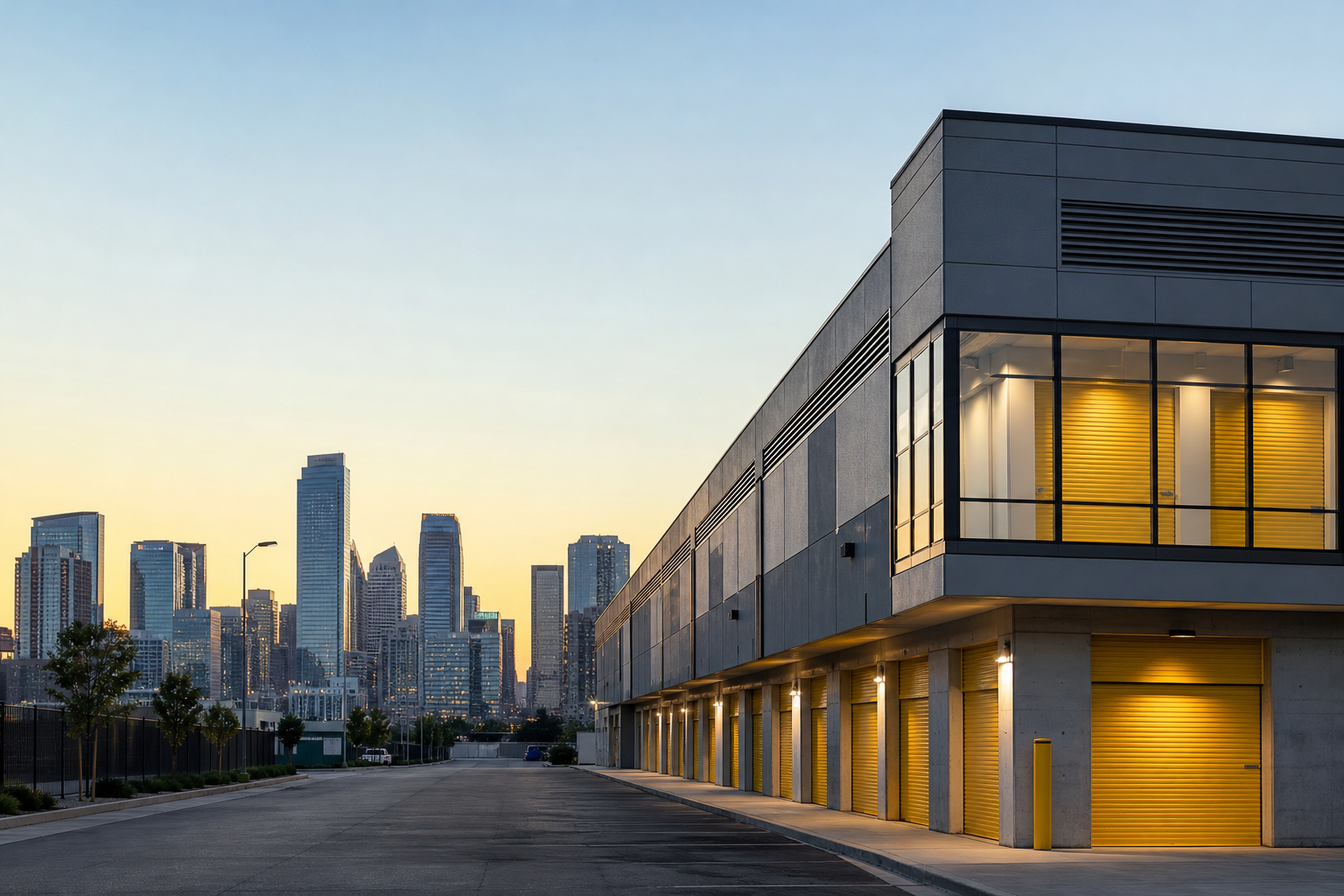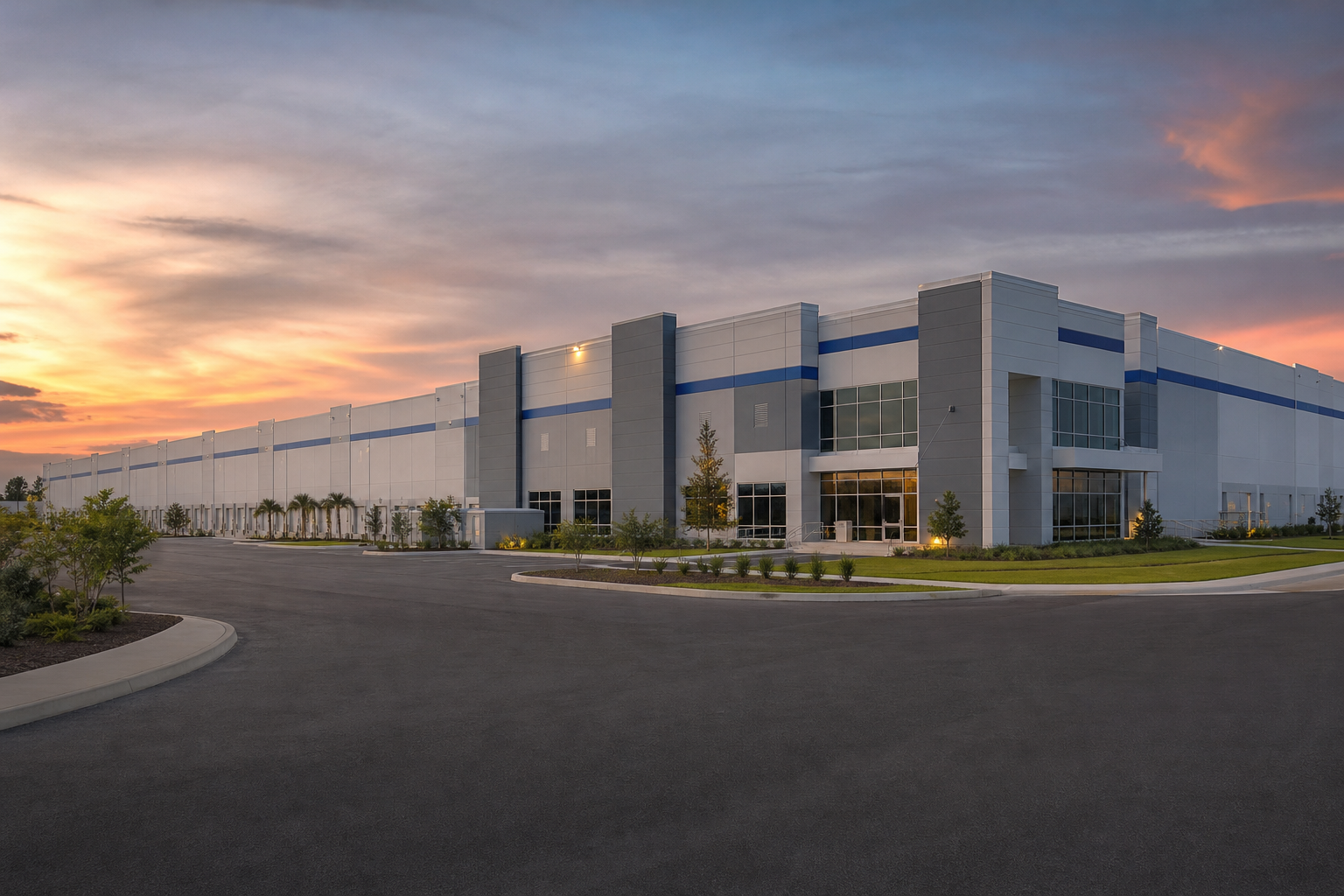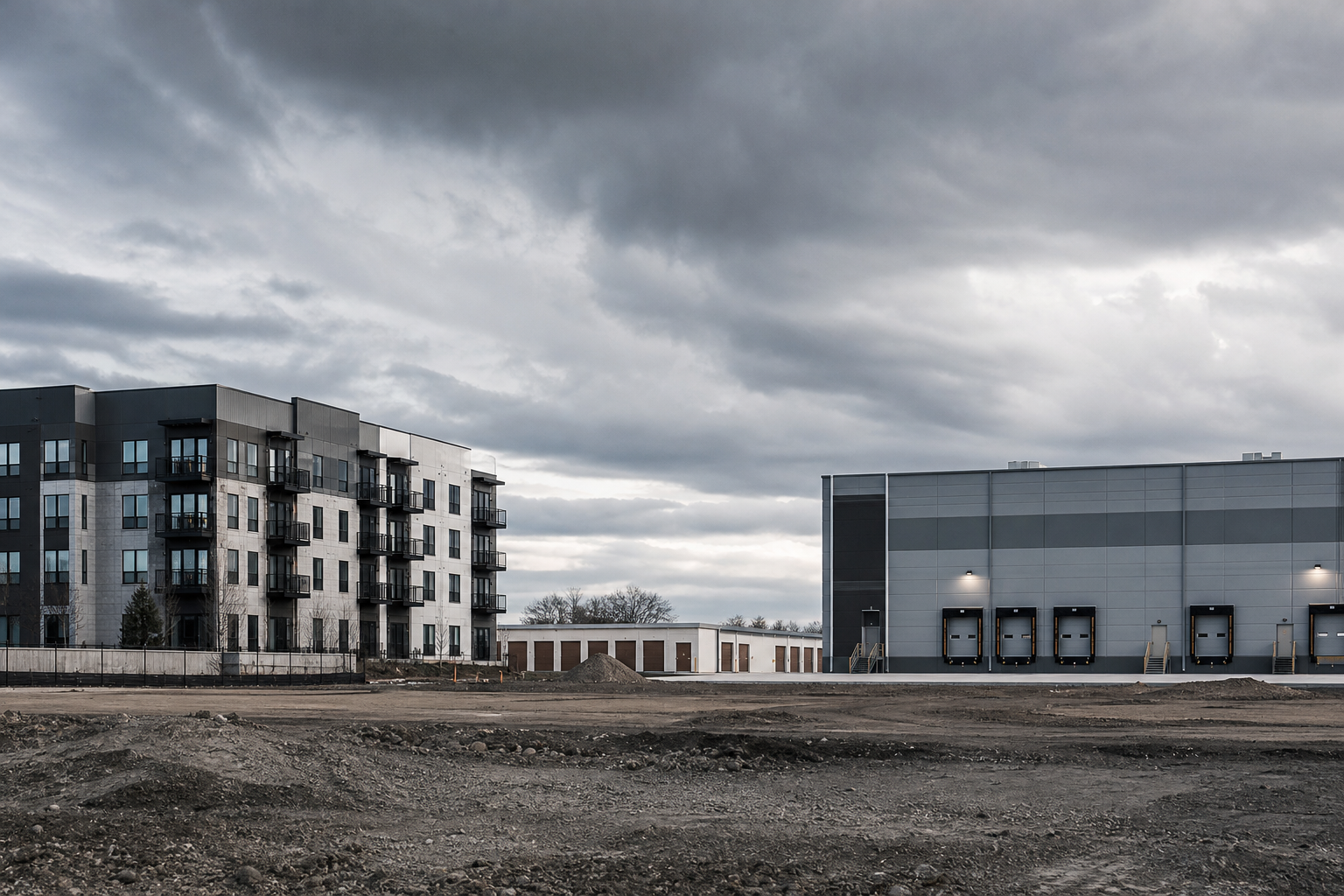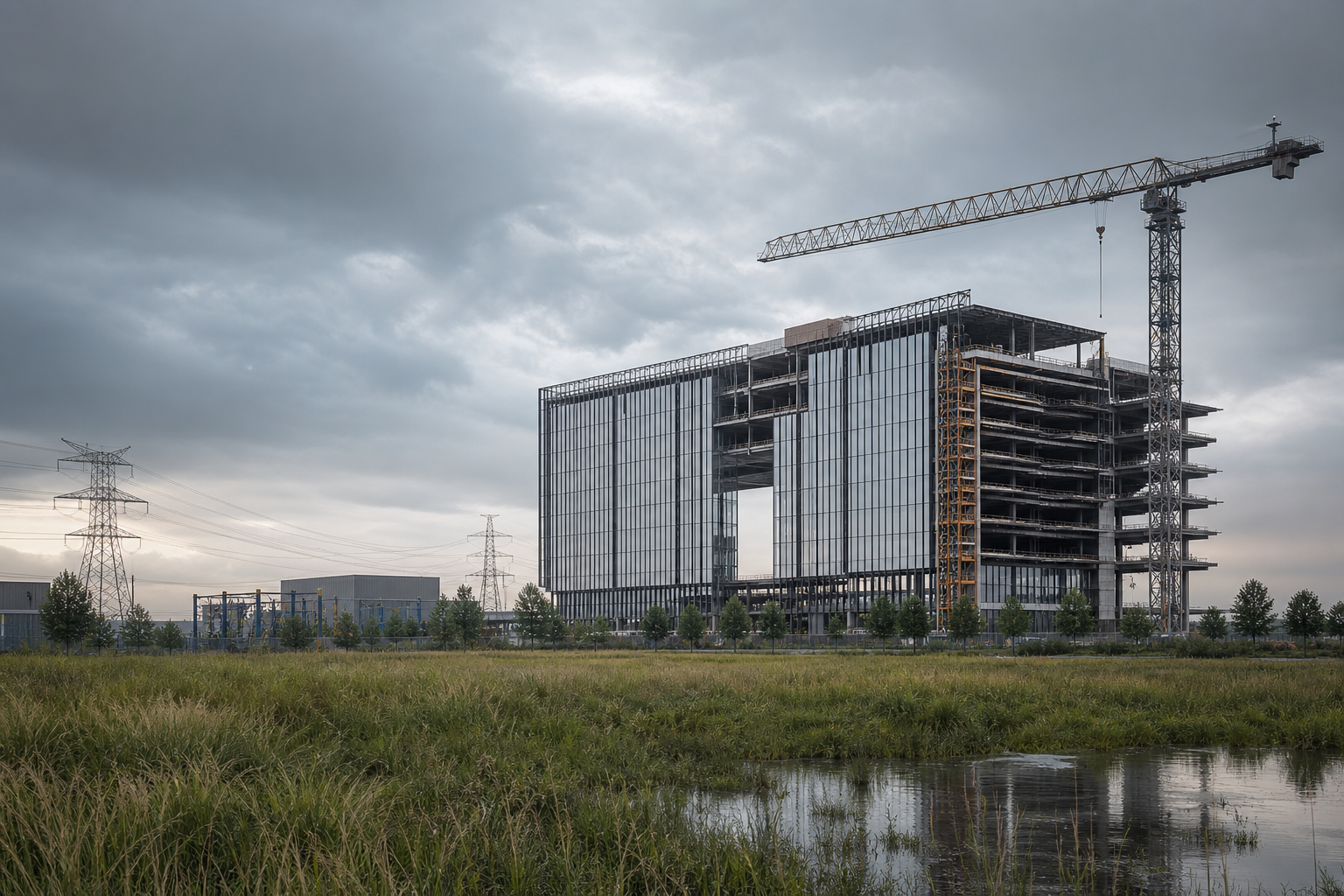
The Signal. This week Terra completed Phase One of Upland Park — 578 apartments, now leasing — on a Miami-Dade park-and-ride site, the first delivery in a $1 billion, 47-acre transit-oriented development built as a public-private partnership with the county. Full buildout runs past 2,000 units plus roughly 282,000 square feet of retail and 414,000 square feet of commercial. It is billed as the county's largest TOD. On the same day, a different structure surfaced in West Texas: Liberty Energy and PowerBridge formed a joint venture to support a planned 2-gigawatt data-center campus, pairing a developer's campus assets with a power operator's generation. Two deals, two asset classes, one shared move — solve the binding constraint before you build.
A 578-unit first phase just delivered on a county park-and-ride while private starts sit near multi-year lows. The difference isn't the market. It's the structure.
The backdrop. Both land in a market where private ground-up has largely stopped. Multifamily starts sit near multi-year lows heading into 2027; industrial and office pipelines have thinned to the vanishing point outside build-to-suit. Capital is cautious, cost is high, and the open market will not underwrite a speculative basis. And yet cranes are still turning on a specific kind of project.
Our Read. The common thread is not optimism. It is de-risking. Every ground-up deal has one variable that decides whether it pencils — the binding constraint. For most multifamily, it is land basis and entitlement. For data centers, it is power. The deals that still clear are the ones that removed that variable at the front of the pro forma, before committing vertical capital.
Terra did not buy a site at a market price and fight for density. It partnered with a county that contributed publicly held, transit-zoned land. That single move deletes the two line items that have frozen most apartment starts — land cost and entitlement timing — and leaves execution risk, which a builder can actually price. The P3 is not a subsidy story; it is a basis story.
Liberty and PowerBridge are doing the identical thing one constraint over. In a world of multi-year interconnection queues, they are bringing generation to the table first and treating the campus as the load that monetizes it. The scarce, underwritable asset is committed power. Control it, and the campus is financeable; skip it, and no amount of demand gets you banked. The megawatts come before the building — that is the whole model.
Line these up against the deals that are not happening and the pattern sharpens. Speculative apartments at a market land basis, data centers sited ahead of power, offices built on hope — those are the projects sitting in drawers. The market has not stopped funding construction. It has stopped funding unconstrained construction. It will still write a check when the hardest risk is retired up front by someone else's land, someone else's power, or a partnership that shares the balance sheet.
Stakeholder lens. For developers, the takeaway is procedural: identify your binding constraint, then structure it out before you underwrite vertical — through a P3, a land contribution, a power JV, or a pre-lease — because the capital markets are pricing the constraint, not the concept. For public agencies, station-area and surplus land is now a direct housing- and infrastructure-supply lever. For lenders, the credit question has shifted from 'is there demand' to 'is the binding constraint retired' — an unentitled site or an unpowered campus is not a thin deal, it is an unbankable one. For investors, the return is increasingly earned in the structuring, not the lease-up.
Related coverage
Key Takeaways
Private starts didn't stop because nobody wants the buildings. They stopped because the open market won't fund an unretired constraint. The deals still breaking ground — a county-land TOD, a power-first data campus — all did the same thing: they made the hardest risk someone else's problem before committing a dollar of vertical. Underwrite the constraint, not the concept.
Whether the P3 template scales beyond a handful of land-rich counties, or stays a Miami-and-a-few-others story. And whether 'powered land' JVs can actually deliver generation on the timelines the campuses need, or whether power becomes the new entitlement bottleneck. What is settled is the selection rule: in this market, the ground-up that gets built is the ground-up that solved its hardest problem before the shovel.
Connect CRE — Terra Completes First Phase of $1B Miami-Area Mixed-Use Project, July 22, 2026; Florida YIMBY — Phase One Completed at $1B Upland Park Transit-Oriented Development, July 2026; Miami-Dade County — Upland Park public-private partnership (project background); PTC / company release — Liberty Energy and PowerBridge Form JV to Support 2 GW Powered Data Center Campus, July 22, 2026; CRE360 prior coverage — multifamily supply cliff / starts near multi-year lows
Get Who's Still Building in your inbox
The only ground-up that pencils today solved its hardest constraint before breaking ground — land and entitlement via public-private partnership, power via joint venture.